Refined Products, LNG, Gasoline, Jet Fuel
July 08, 2025
FACTBOX: Trump tariffs could reshape Asian oil, LNG, steel trade flows

US President Donald Trump's move to impose 25% tariffs on "any and all" imports from Japan and South Korea, along with varying rates on 12 other Asian nations, could significantly disrupt critical energy flows and reshape steel trade patterns across the Pacific Rim.
The tariff letters, posted on social media on July 7, set an Aug. 1 implementation date but left room for negotiations. South Korea has already dispatched top officials to Washington to seek a "mutually beneficial" deal, while Japan and Indonesia are pursuing their own diplomatic channels to address the tariff threats.
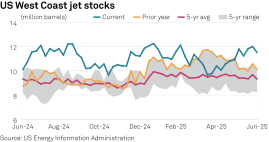
The tariffs could significantly alter established trade flows in energy products and steel across the Pacific Basin, S&P Global Energy analysts said. The timing is particularly challenging for West Coast fuel markets as regional refining capacity faces major reductions in the coming years.
The following are key facts about the potential impact of new US tariffs:
Trade flows
- South Korea is the largest jet fuel supplier to the US, with exports reaching 4.46 million barrels in May 2025, the highest monthly volume since August 2021, according to Korea National Oil Corp. data.
- US PADD 5 (US West Coast) imported approximately 150,000 b/d of jet fuel and 17,000 b/d of gasoline from South Korea in June. Volumes were higher in late April/early May after a fire at Valero's 145,000 b/d Benicia refinery.
- South Korean refiners believe oil products may be exempt from the tariffs based on previous US customs documents but are seeking confirmation from their Trade Ministry as uncertainty persists.
- China's steel exports to the 14 countries facing US tariffs accounted for about 30% of China's total steel exports over January-May 2025, according to China Customs data.
- China's domestic steel demand remains weak due to ongoing property sector challenges, making exports of steel and steel-intensive manufactured goods crucial for the country's steel industry.
- Industry sources believe China's steel exports in the second half of 2025 are unlikely to match the strong performance seen during March-June, when overseas buyers rushed shipments ahead of potential tariff implementations.
- South Korea is considering increasing LNG imports from the US as part of negotiations to address trade imbalances, while Indonesia is also evaluating potential US LNG imports, though specific volumes remain undetermined.
- Bangkok on July 7 said it would pursue increased purchases of US LNG to reduce Thailand's trade surplus with the US. In 2025, Thailand has imported 710,000mt of US LNG, representing around 11% of total Thai imports this year.
Prices
- PADD 5 fuel prices could face upward pressure if South Korean and Japanese fuel imports are disrupted, particularly during refinery maintenance periods when the region is most dependent on imports.
- Platts assessed Los Angeles CARBOB gasoline at 233.5 cents/gal July 8, up 1.42% day over day and the strongest since June 20.
- Platts assessed Los Angeles jet fuel at 244.86 cents/gal July 7, up 2.14% day over day and the strongest since July 2.
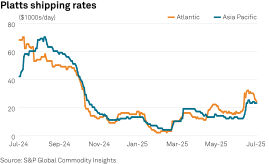
- The cost freight for a medium range clean tanker booked on a South Korea-USWC trip was assessed by Platts at a lump sum of $1.715 million July 8, the lowest since June 19.
- The Platts JKM, the benchmark reflecting LNG delivered to Northeast Asia, was assessed at $12.619/MMBtu July 8, up 26.4 cents day over day and the highest since June 26.
- Asian steel prices have been declining steadily over the past two years, with the Platts HRC SS400 CFR Southeast Asia assessment at $447/mt on July 8, down 22.7% from Jan. 2, 2024.
- Analysts predict that US tariffs on Asian nations could further depress regional steel demand, potentially accelerating the downward price trend and increasing trade tensions within Asia.
Infrastructure
- Phillips 66 plans to close its Los Angeles refinery in Q4 2025, and Valero plans to close the 145,000 b/d Benicia refinery in April 2026. These closures are expected to reduce regional crude runs next year and make PADD even more dependent on imports.
- China's domestic steel demand remains weak due to ongoing property sector challenges, making exports of steel and steel-intensive manufactured goods crucial for the country's steel industry.
- Industry sources believe China's steel exports in the second half of 2025 are unlikely to match the strong performance seen during March-June, when overseas buyers rushed shipments ahead of potential tariff implementations.

Editor: