Electric Power, Energy Transition, Emissions, Renewables
October 17, 2025
Cross-border clean energy imports: powering Singapore’s future
Singapore is taking decisive steps to secure its energy future through cross-border electricity imports.
On June 13, Singapore and Indonesia signed a landmark agreement to establish policies and regulatory frameworks that will enable cross-border electricity trade within the next 12 months.
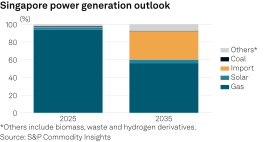
This agreement is a significant milestone for seven projects in Riau Islands and Sumatra in Indonesia, with a combined capacity of 3.4 GW, supporting Singapore's ambition to import up to 6 GW of clean power by 2035. This represents one-third of the city-state's electricity mix by 2035, according to Singapore Energy Market Authority's target.
Why clean power imports are pivotal for Singapore's low-carbon future
Singapore is the only country in Southeast Asia that submitted an enhanced 2035 Nationally Determined Contribution target, aiming to keep emissions below 45-50 million mtCO2e, up to 23% lower than current levels. Achieving this goal is a formidable challenge for an island nation with limited natural resources, making the success of clean power imports essential for meeting climate objectives.
Beyond environmental targets, cross-border electricity imports will diversify Singapore's energy mix, reducing reliance on imported natural gas and mitigating exposure to global energy price volatility. This transition is especially relevant in light of the global energy crunch in late 2021, which led to a rise in wholesale power prices by more than fourfold in Singapore in 2022 from 2020 levels, according to calculations by S&P Global Energy analysts, and the exit of several retail electricity providers.
Furthermore, as Singapore continues to serve as a regional data center hub, access to clean power will be vital for attracting new investments and sustaining growth in digital infrastructure.
Key challenges to advancing clean power imports
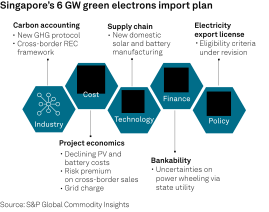
Despite the clear benefits, several challenges must be addressed to advance to the next phase of clean power imports:
High upfront capital expenditure: The Singapore-Indonesia cross-border project could cost about S$300/MWh, according to Energy estimates, reflecting grid charges and backup costs, approximately 17% above the prevailing retail electricity rate in Singapore. Offtakers purchasing electricity directly from the wholesale market are required to pay Renewable Energy Certificate, or REC, prices of around S$130-140/MWh, according to Energy estimates, for developers to recoup their costs.
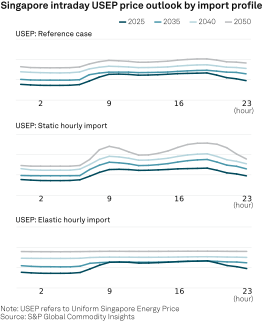
Uncertain REC settlement cost:Wholesale market prices are expected to face downward pressure as imports act as quasi-baseload generation. Intraday prices will also evolve into different hourly patterns depending on import behavior, leading to varying commercial implications for sellers and buyers. For instance, static hourly imports that inject power at a constant rate are likely to increase intraday price volatility. This allows buyers to reduce REC procurement costs by purchasing more power during morning and evening peaks.
Regulatory framework: Regulatory challenges remain, particularly in Indonesia, where electricity export licenses required for all cross-border projects have yet to be issued. Details on export licenses, including wheeling fees and license terms, are expected to be updated within the year, which will be pivotal for reaching financial close. Additionally, a study on cross-border REC regulatory frameworks in Southeast Asia is underway by the International Tracking Standard Foundation, or I-TRACK, which is essential for ensuring renewable energy consumption claims align with international standards required by offtakers and lenders for financing decisions.
These commercial and regulatory challenges are complex and require multilateral dialogue. Once policymakers and industry stakeholders address these issues, Singapore's bold ambitions could herald a new era for clean power trade, and potentially serve as a model for the ASEAN Power Grid, which aims to interconnect the electricity networks of 10 Southeast Asian member states by 2045.
Further reading: Securing offtake for Singapore's cross-border power imports
