


Crude Oil, Agriculture, Grains
October 08, 2024
Commodity Tracker: 5 charts to watch this week

By Staff
HIGHLIGHTS
1. Russian oil exports recover to three-month high despite OPEC+ pledges
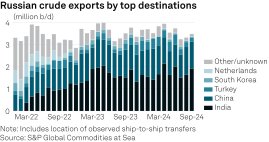
What's happening? Russian oil exports rose in September with crude flows recovering to a three-month high, according to tanker tracking data, despite a pledge by Moscow to boost its compliance with OPEC+ output cuts. Crude shipments from Russian ports averaged 3.48 million b/d in September, up 165,000 b/d or 5% from August and from an eleven-month low of 3.24 million b/d in July, according to S&P Global Commodities at Sea. At the same time, Russian oil product exports recovered from a post-pandemic low as the peak summer demand season ended but Moscow's ongoing gasoline export ban limits the export recovery.
What's next? Russia's crude exports may see little additional upside given Moscow's pledge to compensate for overproducing through the first half of 2024. The pledge to OPEC+ includes a transition to crude production rather than crude export cuts during the third quarter. Russia on average produced 480,000 b/d above its output target during the first six months of 2024, according to assessments by secondary sources. After hitting record highs, Russian oil revenues may also continue to rise helped by the narrowing of the Urals discount to Brent and the rise in the average export price.
2. Russian wheat price hits three-month high amid drought and supply cuts

What's happening? Worsening drought and reduced production forecast have boosted Russian wheat prices to the highest level since late-June. As of Oct. 7, Platts, part of S&P Global Energy, assessed the price of FOB Russia's 12.5% protein content at $231 per metric ton for the end of October to the first half of November loading. More Russian regions -- Oryol most recently -- declared an emergency on extreme drought conditions.
What's next? The Russian Grain Union intends to appeal to the Russian agriculture ministry with a proposal to review the methodology for distributing the export quota for the second half of the season. Meanwhile, in Turkey, Russia's key exporter, millers are awaiting an announcement from the ministry on whether imports are allowed to resume after Oct. 15. TBuyers said they expect the ban to be postponed until the end of the year on high local wheat stocks. However, most millers have been pushing for the ban to be lifted amid quality concerns of the domestic wheat. Russia is expected to harvest 82.1 MMt of wheat in 2024-2025 and set to export 47 MMt, according to Platts data.
3. European LNG Bunker prices climb on geopolitical tensions, winter worries
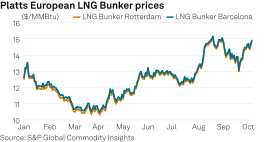
What's happening? European LNG bunker prices reached five-week highs on Oct. 4, eroding the premium to the cargo market, as concerns grow over escalating conflicts in the Middle East and winter uncertainties. Platts assessed the Rotterdam and Barcelona LNG bunker fuel prices at $14.804/MMBtu and $14.905/MMBtu, respectively, on Oct. 4, both up 46 cents/MMBtu on the week. This also brings the premium of LNG bunker fuel Rotterdam to DES Northwest Europe to $1.938/MMBtu, the lowest since Aug. 9 at $1.884/MMBtu, according to Energy data.
What's next? While the wider LNG market is structurally bearish, with gas storage levels at 94.42%, according to Aggregated Gas Storage Inventory Data, uncertainties about how the upcoming winter heating season is adding to a bullish sentiment.
4. Rising trends in Asia's biofuel sector
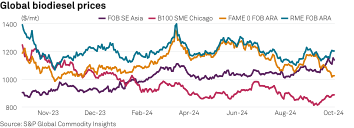
What's happening? The Asian biofuel landscape is experiencing a significant policy push. Indonesia has mandated that all international flights integrate sustainable aviation fuel into their fuel mix by 2027. Similarly, South Korea will require departing international flights to use a 1% SAF blend starting in 2027. The Philippines is increasing its coconut methyl ester blend in diesel from 2% to 3% effective October 1, 2024, with plans to raise it to 4% in 2025 and 5% in 2026. This initiative aims to improve fuel mileage, support local coconut farmers, and promote cleaner energy. Meanwhile, Thailand has extended its biofuels subsidy till September 2026, bolstering feedstock demand and infrastructure while navigating challenges from the rising adoption of electric vehicles.
What's next? As these countries implement biofuel policies, industry stakeholders will closely monitor their impact. The success of Indonesia's SAF mandate and South Korea's blend requirement could significantly boost regional demand for sustainable fuels. The Philippines' gradual increase in coconut methyl ester will not only enhance fuel efficiency but also strengthen local agriculture. Thailand's extended subsidies for biofuels will further stabilize feedstock demand for biodiesel and ethanol while being supported with robust fuel infrastructure, even as electric vehicle adoption rises. These developments are likely to shape investment strategies and operational decisions within the biofuel sector in the coming years.
5. Brazil diesel demand to grow
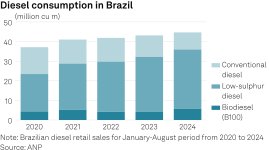
What's happening? Full-year 2024 diesel consumption is set to slight increase in Brazil, despite weaker expectations for agricultural production in the country, which reached record levels in the first half of 2023. Monthly diesel retail sales hit their highest this year at 6.2 million cu m in August, up 0.5% from July but representing a year-on-year drop from 6.2 million cu m.
What's next? Total diesel demand will rise by 2.5% in 2024, according to Energy analyst. The demand outlook remains positive for gasoil fuel, but imports are set to fall 14% year on year. That will be mainly a result of the higher biodiesel blending mandate (set to 14% in March) and stronger local refinery rates, the analyst added.
Reporting and analysis by Robert Perkins, Vivian Iroanya, Megan Gildea, Samyak Pandey, Kauanna Navarro