Research — october 5, 2026
How AI is changing the growth outlook across industries
AI is increasingly reshaping corporate growth plans far beyond the companies building AI models and accelerators. As hyperscalers expand data-center capacity, demand is cascading through the infrastructure stack, from memory and networking chips to data centers, power, industrial equipment and cloud computing. Visible Alpha consensus shows how this spending is beginning to change revenue mixes, pricing power and investment priorities across companies in Asia, North America, Europe and Australia.
Below, we look at how that shift is playing out across the AI infrastructure ecosystem, from memory and semiconductors to data centers, connectivity, industrial equipment, cloud computing and power.
Semiconductors and memory
The semiconductor industry is at the center of the AI investment cycle, but the impact is spreading well beyond the companies making AI accelerators. Rising demand for computing, memory and connectivity is creating new growth opportunities across the chip industry, while manufacturers are redirecting capacity toward AI-related products. Visible Alpha consensus shows some of the sharpest growth expectations in the group, particularly for memory and AI-specific chips.
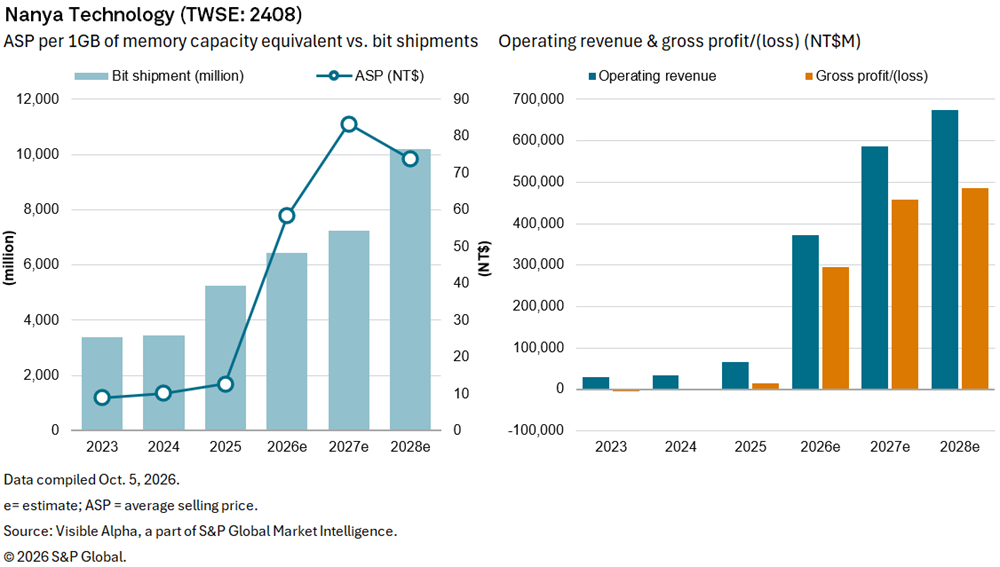
Nanya Technology Corp. (memory semiconductor): AI-driven demand is tightening the DRAM market, with pricing expected to do much of the heavy lifting behind a more than fivefold increase in Nanya’s 2026 revenue.
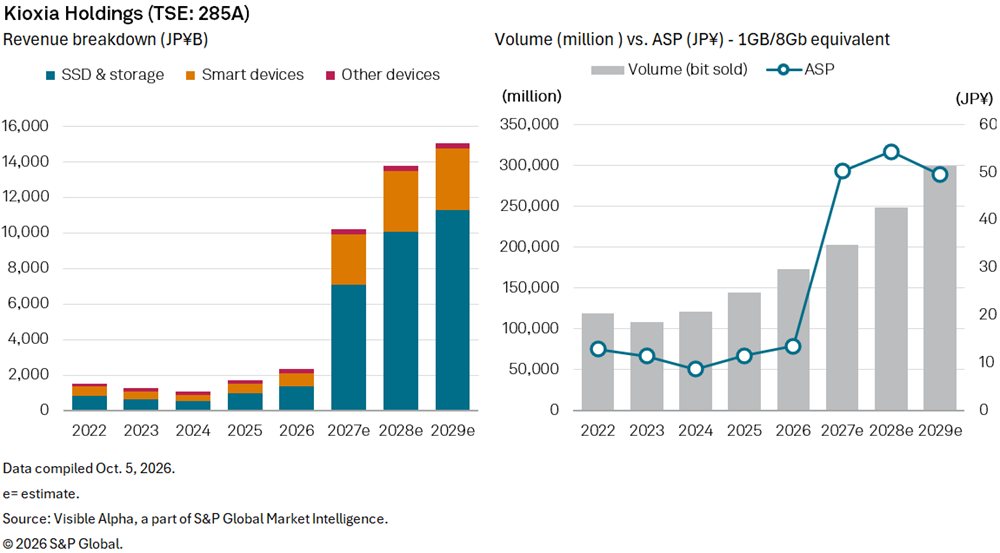
Kioxia Holdings Corp. (memory semiconductor): AI workloads are driving demand for high-capacity enterprise SSDs, helping push Kioxia’s expected FY27 revenue growth to 319% as NAND pricing and storage demand strengthen.
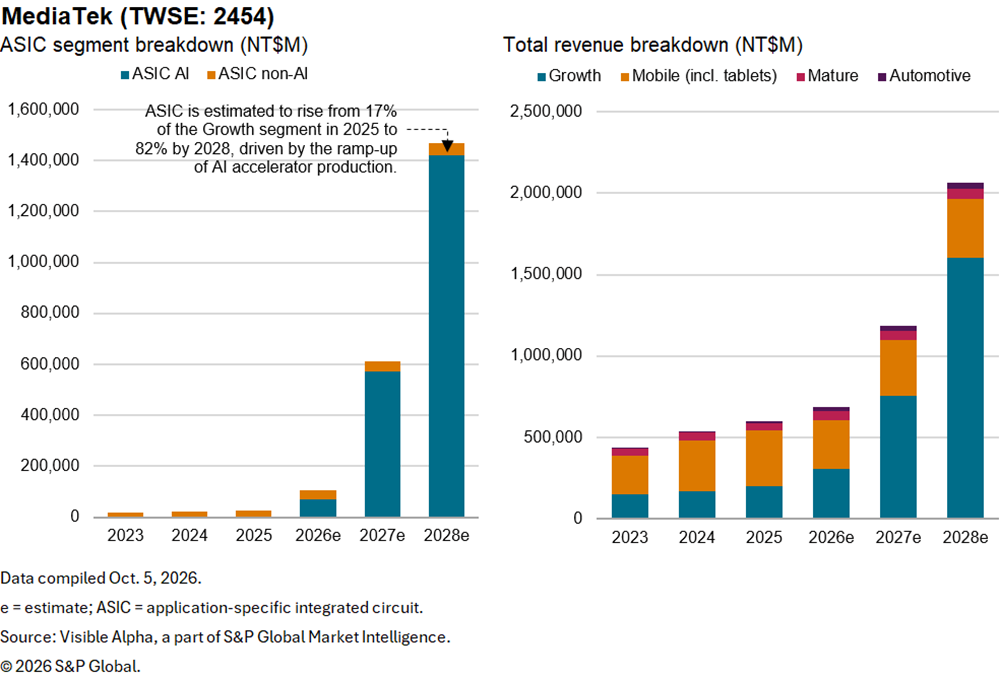
MediaTek Inc. (fabless semiconductor): Hyperscalers’ growing use of custom AI accelerators could turn AI ASICs into a major new growth engine for MediaTek, with revenue forecast to climb from NT$69.9 billion in 2026 to NT$1.4 trillion by 2028.
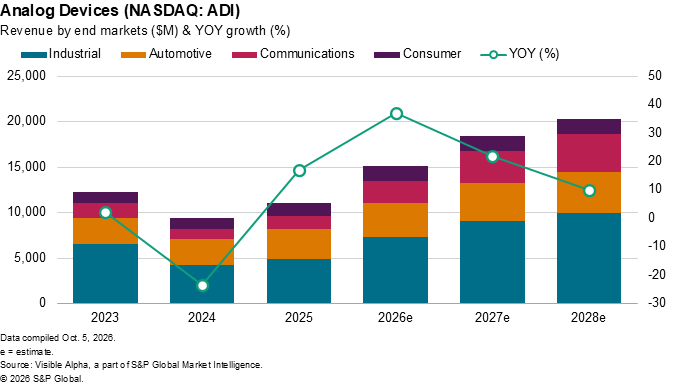
Analog Devices Inc. (semiconductors): ADI is expanding its exposure to AI at the edge, with its Alif Semiconductor Inc. acquisition adding AI-enabled chips for industrial, robotics and other applications while AI data-center demand boosts its communications business.
Data centers and real estate
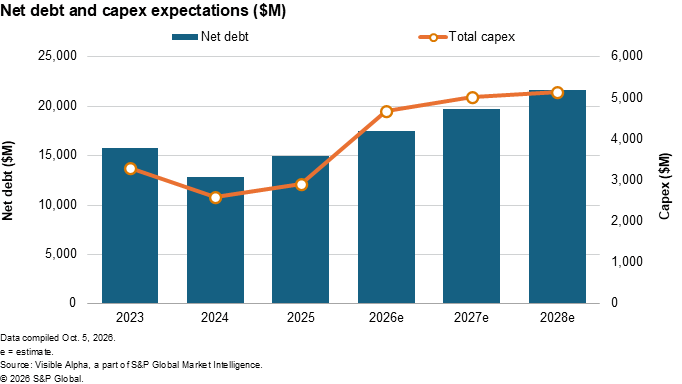
The rapid expansion of AI computing is translating directly into demand for physical data-center capacity. Developers and REITs are expanding pipelines to accommodate hyperscalers, while the scale of investment required is pushing capital spending and leverage higher. The data points to a structural shift in commercial real estate toward infrastructure supporting cloud and AI workloads.
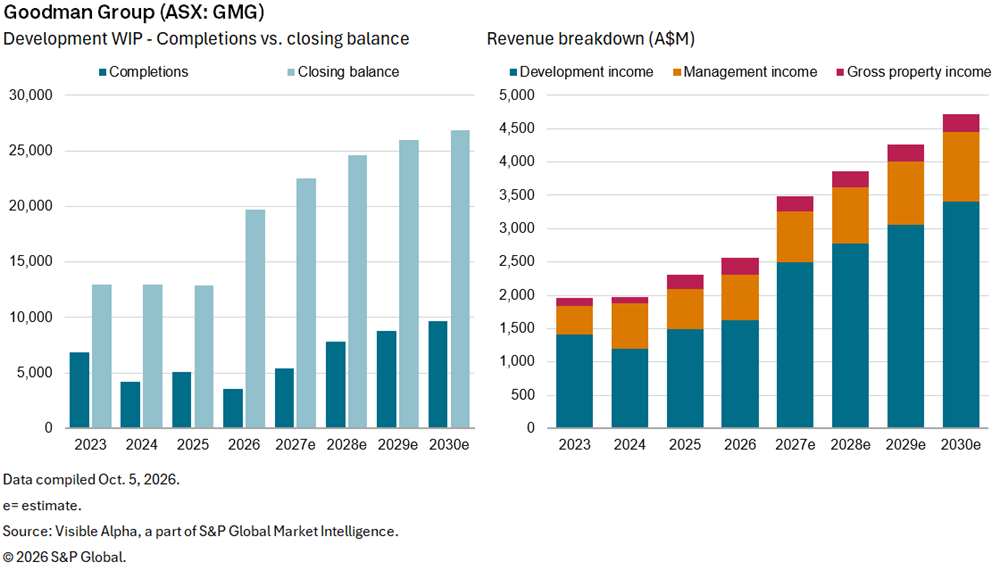
Goodman Group (property and data centers): Data centers now account for 78% of Goodman’s development pipeline, positioning AI infrastructure as an increasingly important driver of earnings growth for the Australian property REIT. Read more >
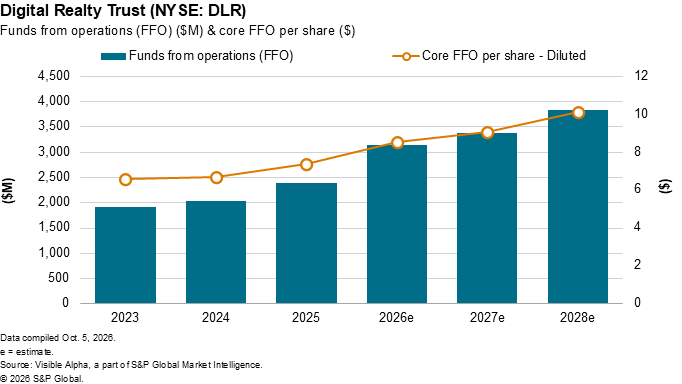
Digital Realty Trust Inc. (data center REIT): AI and hyperscale demand are supporting an expected 11% compound annual growth rate in core FFO through 2028, but capturing that growth will require billions of dollars in additional capital spending.
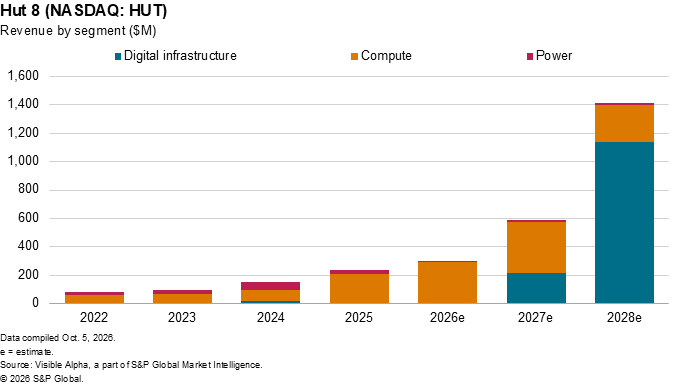
Hut 8 Corp. (digital infrastructure): AI data centers are set to transform Hut 8’s business mix, with Digital Infrastructure revenue forecast to rise from just $5 million in 2026 to $1.2 billion by 2028.
Connectivity and cloud infrastructure
AI is also creating new growth opportunities for the networks and cloud platforms that connect and power data centers. For some companies, AI is accelerating an existing connectivity business; for others, it is driving a move into compute and cloud infrastructure. The scale of the opportunity is increasingly being reflected in major customer commitments and sharply higher capital spending.
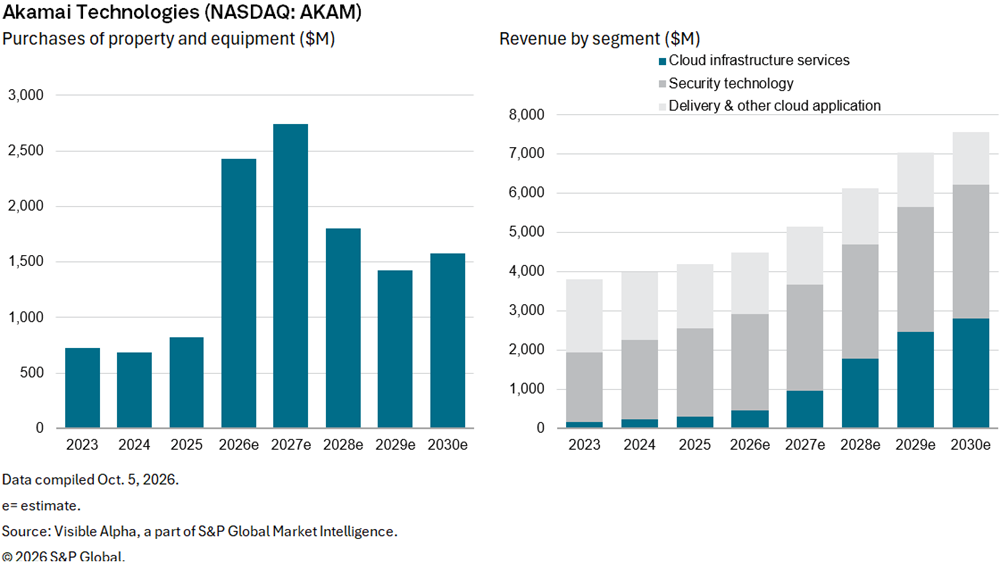
Akamai Technologies Inc. (cloud and cybersecurity): Akamai’s $11.6 billion, seven-year agreement with Anthropic marks a major step-up in its cloud infrastructure ambitions. Visible Alpha consensus expects Cloud Infrastructure Services revenue to rise 50% to $471 million in 2026 and reach $2.8 billion by 2030, while property and equipment purchases are forecast to jump 184% this year to $2.3 billion.
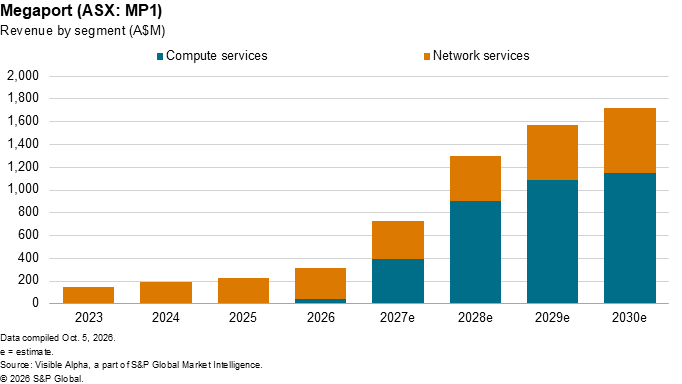
Megaport Ltd. (network connectivity): The Australian connectivity provider is moving up the AI infrastructure stack, with Compute Services revenue forecast to surge from A$44 million in FY26 to A$331 million in FY27.
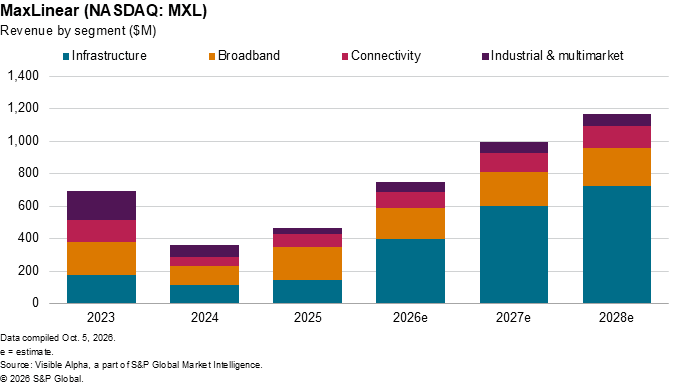
MaxLinear Inc. (communications semiconductors): AI-driven data-center traffic is accelerating demand for optical connectivity, helping drive a 169% increase in Infrastructure revenue in 2026 while more established markets decline.
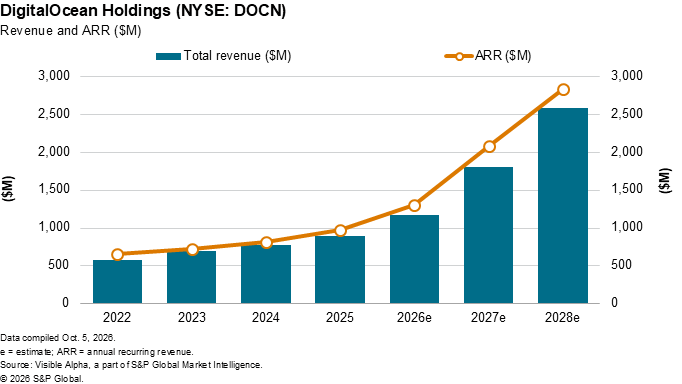
DigitalOcean Holdings Inc. (cloud infrastructure): AI and cloud adoption are supporting continued growth at DigitalOcean, with revenue expected to rise 27% as larger customers increasingly account for the company’s expansion.
Power and energy
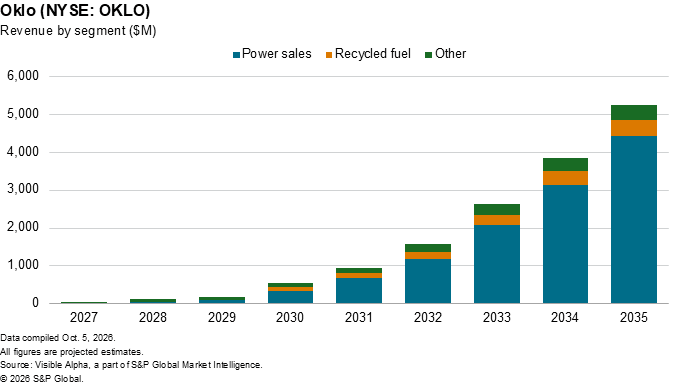
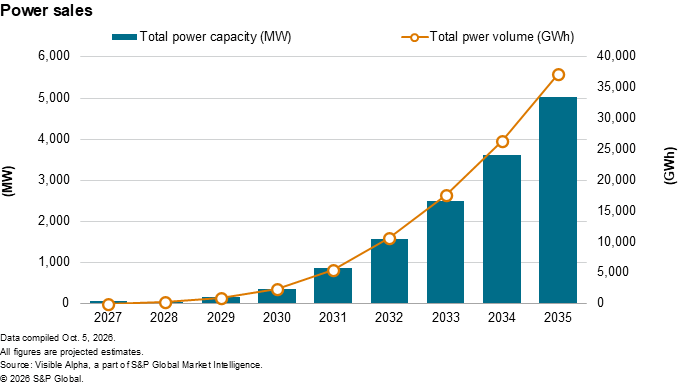
The AI infrastructure boom is increasingly becoming an energy story. Data centers require large and reliable electricity supplies, creating potential opportunities for power generators and nuclear developers while adding another layer of capital investment to the AI ecosystem. The opportunity is significant, although companies such as Oklo Inc. remain dependent on regulatory and commercial milestones.
Oklo Inc. (nuclear energy): The AI buildout is extending into the power market, creating a potential long-term opportunity for nuclear developers as data centers seek reliable, low-carbon electricity, although commercial and regulatory milestones remain critical.
Read more >
The bigger picture
Taken together, these companies illustrate how AI is becoming a cross-industry investment cycle rather than a narrow technology trend. The first-order beneficiaries are the companies supplying compute, memory and networking capacity; increasingly, the gains are spreading to the real estate, industrial, cloud and energy companies needed to build and power that infrastructure.
The numbers also show that the impact is not uniform. For some companies, AI is accelerating an existing business; for others, it is creating an entirely new revenue stream. In memory, pricing is becoming a key driver of earnings, while in data centers and power, the opportunity is translating into higher capital requirements. For companies such as Megaport, Akamai and Hut 8, meanwhile, AI is beginning to reshape the underlying business mix.
The result is a chain reaction in which AI demand is influencing what companies sell, where they invest and, in some cases, the businesses they are becoming.
This article was published by Visible Alpha, part of S&P Global Market Intelligence and not by S&P Global Ratings, which is a separately managed division of S&P Global.
Content Type
Products & Offerings


