Crude Oil, Refined Products, LPG
April 14, 2026
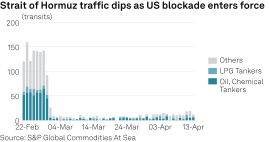
Strait of Hormuz traffic dips as US enacts blockade

Editor:
HIGHLIGHTS
Hormuz traffic drops as US blockade begins
Ships stay in Iranian waters amid mine warnings
First non-Iranian LPG cargo loads since March
A dozen vessels transited the contested Strait of Hormuz April 13, a drop of seven transits from the day before, as the US blockade of Iran's ports came into effect, according to an April 14 report from S&P Global's Commodities At Sea.
Most of those ships clung to the confines of Iranian territorial waters, the report said, after Iran advised vessels to use a specific pathway inside its territorial waters because anti-ship mines were present.
Six oil and chemical tankers transited the strait on April 13, four of which are sanctioned by the US, CAS data showed.
Windward analyst Ami Daniel wrote in a LinkedIn post that a US-sanctioned Handysize tanker, after initially reversing course, eventually left the Strait of Hormuz in what he said was "first indication" of Iranian output moving out of the Gulf after the announcement of the US blockade.
Eight ships left the Strait of Hormuz April 13, while five went in, including one ship owned by the Vietnamese government that appears to be approaching Ruwais in the UAE to load LPG, the report said. It would mark the first non-Iranian LPG cargo loaded in the Persian Gulf since March 6, and the first loading at Ruwais since March 3.
Cosco's VLCC Cospearl Lake went through the Strait of Hormuz April 11, the first with non-Iranian crude sailing to China since Feb. 28. He Rong Hai, with Saudi crude, also went through the strait and is headed to Myanmar's Maday Island Oil Terminal, which has a pipeline to southwestern China.
China, the primary buyer of Iranian crude, would be the country most impacted by the US blockade.
"We should safeguard the authority of international rule of law, reject selective application, and prevent the world from returning to the law of the jungle," China's President Xi Xinping said April 14 after a meeting with the crown prince of Abu Dhabi.
The UAE has also been vocal that the Strait of Hormuz must be open to free navigation.
"The Strait of Hormuz has never been Iran's to close or restrict navigation in," ADNOC CEO Sultan al-Jaber wrote in an April 12 post on X. "This behavior is illegal, dangerous, and unacceptable, and the world cannot bear its consequences or allow it to happen."
Inside the Gulf, the only non-Iranian crude cargo to load in April was 1 million barrels of Upper Zakum crude from the UAE, but the vessel has not yet left the Strait of Hormuz.
