Energy Transition, Hydrogen
April 28, 2026
Shell readies Europe’s largest refinery for green hydrogen

Editor:
HIGHLIGHTS
Holland Hydrogen 1 construction near completion
200-MW electrolyzer to supply 10% refinery need
EU hourly matching rules raise costs by Eur2/kg
Shell is poised to start renewable hydrogen operations at Europe's largest refinery, with its Holland Hydrogen 1 electrolyzer close to completion as the company gears up to meet expanding European green fuel regulations.
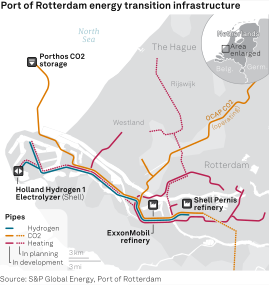
The 200-megawatt renewable hydrogen plant will produce 60 metric tons/day to supply Shell's nearby 404,000 b/d Pernis refinery in Rotterdam from later in 2026.
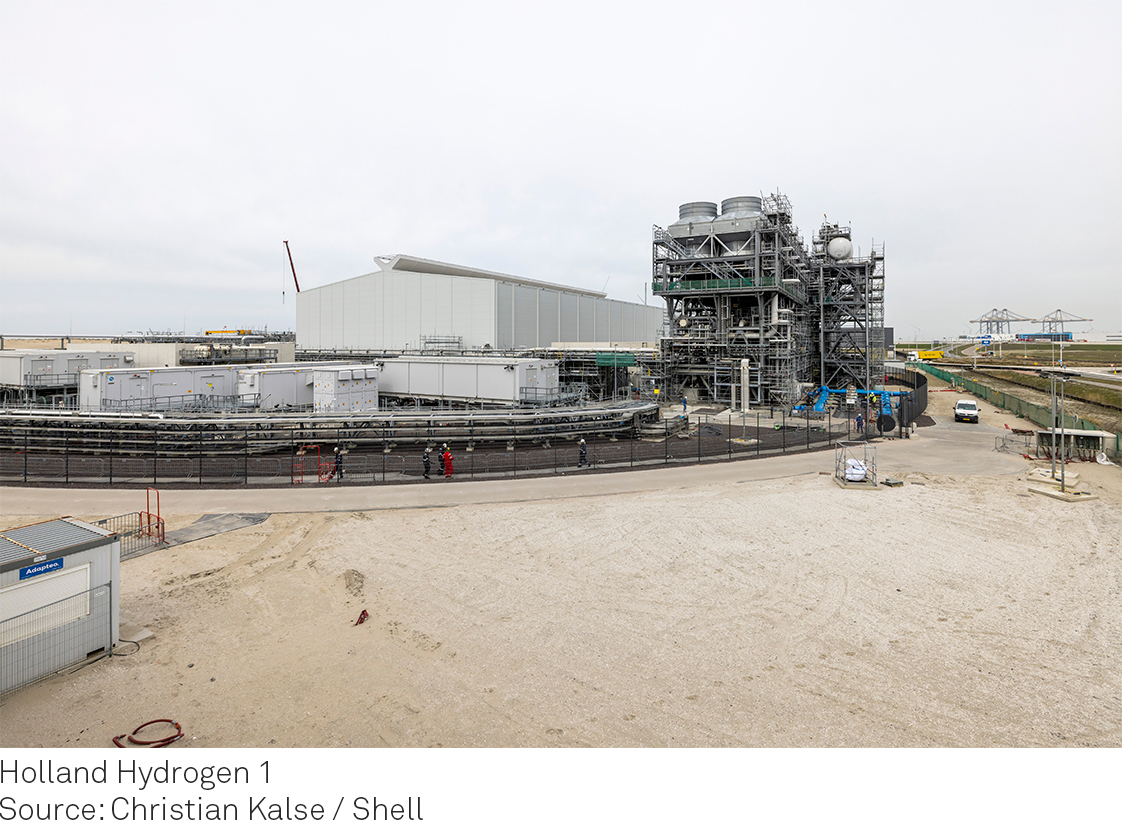
The site sits at the end of the Maasvlakte man-made extension to the Port of Rotterdam, built on land reclaimed from the sea.
The electrolyzer hall at Holland Hydrogen 1 stands ready to receive the green hydrogen production cells, which will be assembled in an adjacent building before installation. A complex collection of pipes and storage tanks arranged in 10 rows will each house a 20-MW alkaline electrolysis stack from manufacturer Thyssenkrupp Nucera.
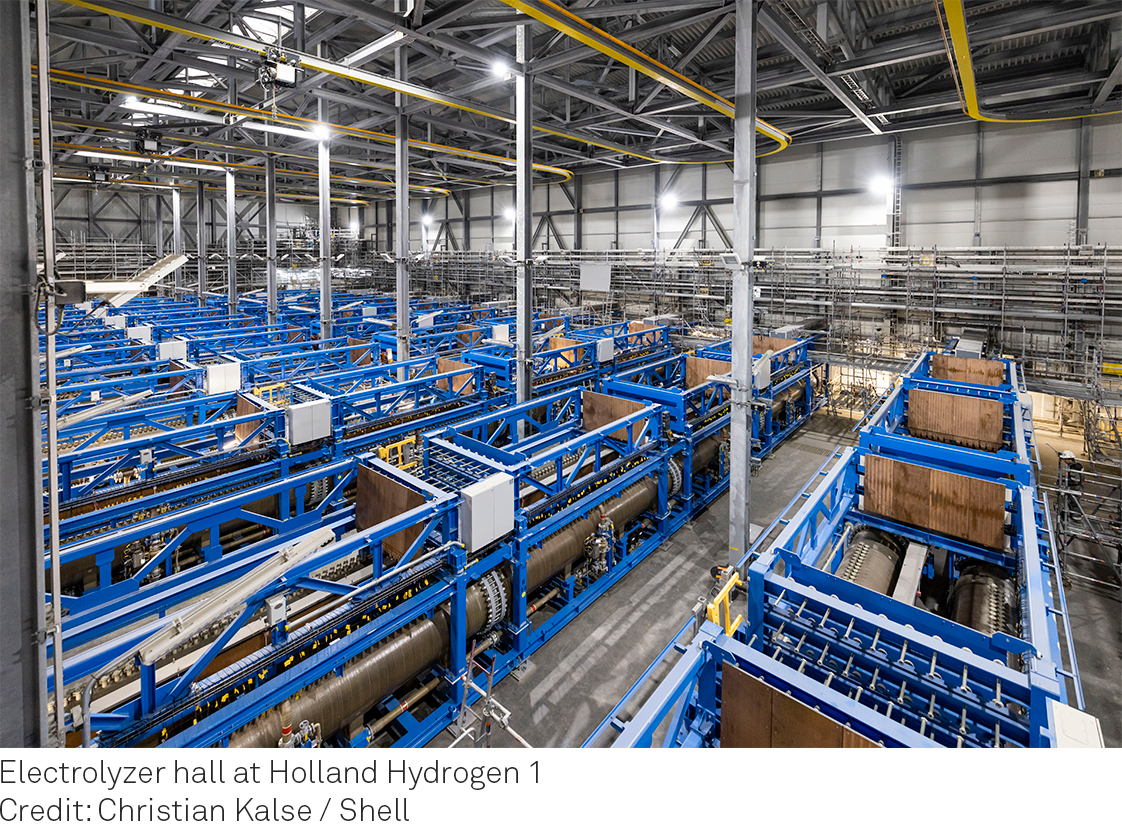
The electrolyzer cells are the last pieces to be installed at the plant, triggering the start of the manufacturing warranty.
The cells will be fed with high-purity demineralized water mixed with a potassium hydroxide electrolyte, with the hydrogen sent to the compressors for the pipeline and oxygen vented into the air.
The compressors are hemmed in on three sides by giant, thick concrete walls to shield the adjacent area from any blast in the event of an accident.
The weld connecting the 32-km pipeline to the electrolyzer was completed in March, while work is ongoing at the refinery to connect the other end.
Shell has a throughput and connection agreement with pipeline operator Gasunie, and other producers are lined up to share the pipeline in the future. Air Liquide's 200-MW ELYgator electrolyzer is under construction next to Holland Hydrogen 1.
At Pernis, a sprawling industrial complex the size of a town, Shell operates its own hydrogen pipeline network, with supplies from its own gas-fed steam methane reformer, by-product hydrogen from refinery operations and third-party production from nearby industrial gas companies.
At full capacity, the electrolyzer will provide around 5%-10% of the refinery's hydrogen needs, while the volume supplied will fluctuate according to the production profile, which will track offshore wind power generation on a monthly basis.
"Over time, we figured out how to do this," Shell's head of hydrogen, Andy Beard, said. "It's not easy, you see the complexity."
The refinery could balance hydrogen consumption through unit optimization or by taking less from third-party suppliers, he said, speaking to Platts on April 22 in a temporary portacabin office overlooking the electrolyzer construction site.
Balancing act
To count as green hydrogen under EU regulations, grid-connected power feeding the electrolyzer must be matched to renewable generation monthly, moving to hourly matching from 2030.
The electrolyzer will take power via the grid from the 759-MW Hollandse Kust Noord offshore windfarm it owns with Eneco through the CrossWind joint venture, which started production in December 2023.
Shell will ramp the electrolyzer up and down according to wind generation each, assessing spot power prices against the hydrogen price, and optimizing production accordingly, Beard said.
The company will sell hydrogen to the refinery at market rate for tax calculation reasons. If power prices are high and hydrogen prices are low, trading managers could sell the power to the grid rather than run the electrolyzer.
Hydrogen is used in the refinery to crack longer hydrocarbon molecules into more valuable products such as jet fuel and diesel, and to desulfurize crude oil and fuels.
The plant will be one of the first electrolyzers of this scale operating in the world, and Beard said Shell would learn how best to run the electrolyzer before considering expansion at the site, though noted it had space to accommodate another 200-MW facility next to HH1.
The company is also close to finishing another 100-MW electrolyzer -- Refhyne II -- at its Rheinland refinery in Germany.
Onerous policy
Holland Hydrogen 1 will meet the additionality criteria under EU rules, whereby electrolyzers must come online within three years of the new renewable capacity, but by starting by the end of the year the facility will also have a 10-year exemption from this criterion.
The project timeline was pushed back from the original schedule, largely to align with regulatory developments, Beard said.
The move to hourly matching would reduce electrolyzer utilization by 20%, and push up production costs by around Eur2/kg, Beard said.
Platts, part of S&P Global Energy, assessed the cost of EU-compliant green hydrogen production via alkaline electrolysis in the Netherlands, backed by renewable power purchase agreements, at Eur7.93/kg ($9.27/kg) on April 27.
Many in the industry are calling on the EU to relax the hydrogen production rules for early movers.
"We are hopeful that people see the merit in addressing some of these rules because it's a cost that is unnecessary at this stage in the industry," Beard said. He emphasized the need for "surgical" policy changes that avoid creating years of regulatory uncertainty.