Refined Products, Jet Fuel
April 07, 2026
Indonesia raises fuel surcharge cap, airlines hike fares as jet fuel costs rise
By Mia Pei, Shu ling Lee, and Anita Nugraha
Editor:
HIGHLIGHTS
Indonesia raises fuel surcharge cap to 38%
Jet fuel prices rise above $200/barrel mark
Airlines across Southeast Asia hike fares
Indonesia will raise the maximum fuel surcharge to 38% for both jet and propeller aircraft, from 10% for jets and 25% for turboprops, as part of measures to mitigate the impact of higher fuel costs, Coordinating Economic Affairs Minister Airlangga Hartarto said April 6.
"To keep domestic airfare increases affordable for the public, the government is trying to cap ticket price hikes at around 9%–13%," Hartarto said at a press conference.
He said that jet fuel prices at Jakarta's Soekarno-Hatta airport rose to Rupiah 23,551/liter ($1.30) as of April 1, from Rupiah 13,656/liter ($0.80) previously, and that fuel accounted for around 40% of airline operating costs.
The surcharge increase will be supported by temporary fiscal measures, including Rupiah 2.6 trillion ($152 million) in subsidies through the removal of 11% VAT on airline tickets, effective for two months and subject to review.
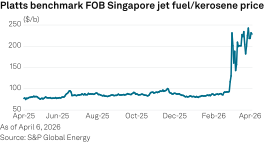
Platts, part of S&P Global Energy, assessed the benchmark FOB Singapore jet fuel/kerosene outright price at $228.76/b at the 0830 GMT April 6 Asian close, remaining above $200/b for the sixth consecutive trading session.
The FOB Singapore jet fuel/kerosene cargo crack spread against the front-month cash Dubai -- a measure of the product's relative strength to the crude it is refined from -- was assessed at $108.56/b on April 6, hovering near $100/b since March 27, Platts data showed.
Regional airlines raise fares
AirAsia X announced at a press briefing on April 6 that it has implemented a network-wide fuel surcharge, citing higher jet fuel prices and market volatility.
The long-haul low-cost carrier headquartered in Malaysia has raised fuel surcharges by about 20% and fares by 31% to 40%, joining regional airlines in explicitly passing through higher costs.
This came against a backdrop of fuel surcharges adjustment by regulators across Southeast Asia in response to tightening supply and rising prices.
In the Philippines, the Civil Aeronautics Board raised the applicable fuel surcharge to Level 8 for tickets issued April 1–15, up from the Level 4 fuel surcharge the country has been implementing since August 2025, allowing airlines to impose higher fees on both domestic and international routes. This was followed by President Ferdinand Marcos Jr. declaring a national energy emergency.
Under Level 8, the fuel surcharge for domestic flights could range Philippine peso 253-787, and for international flights it is Philippine peso 835.06-6,208.98, depending on the distance.
In Vietnam, the Civil Aviation Authority of Vietnam said March 23 that more than 60% of airlines had already implemented or planned fare increases or fuel surcharges, with increases ranging from 5% to 20% or separate charges of Dong 130,000 to over Dong 10 million per ticket.
Thai Airways International has established a special fuel surcharge, charged at the time of ticket issuance between April 1 and May 31, for flights departing from Japan to Bangkok, it said on its website March 24.
Elsewhere in the region, governments have taken varying approaches. While Indonesia and the Philippines have adjusted their fuel surcharge caps, Thailand, another country that centrally regulates the systems, has yet to announce a new nationwide fuel surcharge framework, though aviation and fuel markets remain under pressure amid supply disruptions.
Singapore has delayed the implementation of the SAF levy framework by six months.
Similar to Singapore, which has a market-driven fuel surcharge system, Malaysia has not set a surcharge cap but allows airlines to apply fuel surcharges within existing pricing structures, with carriers like AirAsia X adjusting their fees accordingly.
