Natural Gas, LNG
April 28, 2026
BP monitoring EU gas storage as Middle East war persists: deputy CEO

By Matt Hoisch
Editor:
HIGHLIGHTS
Sustained Hormuz disruptions could deepen shortages
Underscores gas volatility remains below 2022 levels
BP Q1 gas production up slightly YOY
BP is monitoring the EU's natural gas storage fill levels as the company gauges gas price development over the near term amid the sustained supply shock from the ongoing conflict in the Middle East, deputy CEO Carol Howle told analysts April 28 on the energy firm's first-quarter results call.
"We're watching that very carefully," she said. "Continued disruptions to the Strait of Hormuz have the potential to increase the shortages that we're seeing in the market."
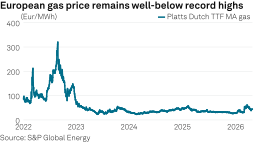
Howle said that while gas prices have risen in the wake of the trade disruptions from the Middle East war, they remain well below levels seen after Russia's full-scale invasion of Ukraine in 2022.
"We haven't seen the extent of volatility in those gas markets as we saw previously," Howle said.
The Platts-assessed month-ahead Dutch TTF natural gas price has risen as high as Eur61.94/megawatt-hour since the Middle East war began. That is still far from the all-time high of Eur319.975/MWh reached in summer 2022. Platts is part of S&P Global Energy.
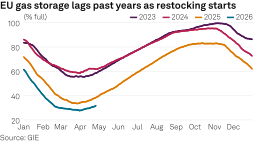
EU gas storage continues to trail levels seen at the same time in recent years. Stocks were about 31.8% full as of April 26, according to the latest data from Gas Infrastructure Europe. At the same time in 2025 and 2024, storage sites across the EU were filled to 38.4% and 61.7%, respectively.
BP portfolio
Howle said on the April 28 call that BP's portfolio is sufficiently diversified to "make sure that we work very closely to meet our supply commitments."
The company said in its results that about 5% to 10% of its liquefied natural gas portfolio is sourced from the Middle East.
While BP reported "exceptional" oil trading results over the first quarter, the company said its gas marketing and trading was "average."
The company produced some 4.1 billion cubic feet/day (116 million cubic meters/d) of gas in its gas and low-carbon energy arm during the first quarter, it said. This rose slightly compared to about 4 billion cubic feet/day in Q1 of 2025.
BP's oil production and operations arm produced about 2.4 Bcf/d of gas over the first quarter, up from about 2.3 Bcf/d over the same period last year.
