Natural Gas
February 17, 2026
Ukraine’s Naftogaz faced 229 Russian attacks in 2025

By Matt Hoisch
HIGHLIGHTS
Higher than 172 strikes seen across 2022-24
Attacks hinder domestic gas production, spur imports
Ukrainian gas storage 17.4% full as of Feb. 15: GIE
Naftogaz faced the highest number of Russian attacks on its infrastructure in 2025 since Russia's full-scale invasion began, forcing the Ukrainian state-owned oil and gas company to compensate for lost domestic gas production with increased imports, it said Feb. 17.
Russia targeted Naftogaz equipment 229 times last year, it said. This was more than the 172 attacks seen in the previous three years combined.
The company faced the lion's share of last year's attacks in the second half of 2025, with 158 strikes seen from July to December, according to Naftogaz.
"A direct consequence of the attacks has been the loss of domestic production, which has forced the company to import additional volumes of gas to ensure the stable passage of the winter heating season," Naftogaz said in the Feb. 17 statement.
The recent escalation has come amid a relentless effort from Moscow to cripple Ukraine's energy system.
"2025 was unprecedented in terms of the scale of attacks on our infrastructure — the intensity of shelling was far higher than in the previous years of the war," Naftogaz CEO Serhiy Koretsky said in the Feb. 17 statement. "Despite this, we continue to supply the country with gas and support the resilience of the energy system."
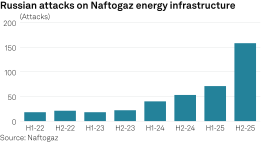
The Naftogaz figures offer some of the most comprehensive data yet on the scale of Russia's heightened energy assault.
Deputy energy minister Roman Andarak said in November 2025 that Ukraine had lost 40% of its domestic gas production since Russia's full-scale invasion.
Ukrainian gas imports in January rose nearly 16-fold year over year to 23.6 million cu m/day, according to a recent analysis by S&P Global Energy CERA. Poland was the dominant supply source, providing around 43% of imports.
Gas storage has also supported Ukraine in recent months.
Total Ukrainian gas stocks were around 9.7 Bcm as of Feb. 15, according to data compiled by CERA.
Some 4-5 Bcm of the total storage is estimated to be cushion gas required for the sites' technical operation.
Storage data published by Gas Infrastructure Europe showed working Ukrainian gas stocks at 55.7 TWh (5.3 Bcm), or 17.4% full, as of Feb. 15.
Ukraine's push to weather the rest of winter comes as European gas prices fall from recent highs.
Platts, part of S&P Global Energy, assessed the benchmark Dutch TTF month-ahead gas price at Eur30.86/MWh on Feb. 16, down 4.87% day over day. The index has slid about 24% since reaching a recent peak of Eur40.69/MWh on Jan. 30.

Editor: