Refined Products, LPG
May 04, 2026
India sharply boosts LPG output as Middle East war disrupts imports
HIGHLIGHTS
India's LPG production up 30.8% YOY in March
Refiners prioritize cooking gas over petrochemicals
Indian refiners raised LPG production by more than 30% in March to offset import shortages caused by the Middle East conflict, a trend expected to continue in the coming months, according to government data and industry sources May 4.
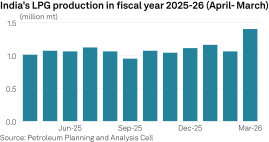
As cargo flow disruptions through the Strait of Hormuz persisted, India's LPG production rose 30.8% year over year and 32% month over month to 1.4 million metric tons in March, data from the Petroleum Planning and Analysis Cell showed.
"Impressive LPG production volumes in March were made possible as domestic refiners accelerated production to set aside any possibility of a severe supply shortage of cooking gas," said a senior petroleum ministry official who declined to be identified.
Over January-March, India's LPG production rose 11% year over year to 3.62 million mt, PPAC data showed, while full-year output for fiscal year 2025-26 (April-March) stood at 13 million mt, up 2.5% year over year.
Overall LPG demand in FY 2025-26 stood at 33.2 million mt, up 6% year over year.
Sharma said LPG supply to domestic households was accorded top priority by the federal government since the outbreak of the Middle East war to avoid major shortages, adding that no dry-outs had been reported at LPG distributors.
Production could rise further
Analysts said domestic LPG production in April and May could rise further as refiners have been directed not to divert propane and butane for petrochemical use.
"The rising domestic production trend could continue for a few more months," said DLN Sastri, former director of refining at the Federation of Indian Petroleum Industry.
India relies on the Gulf region for about 60% of its LPG consumption. The Middle East conflict has prompted urgent government intervention to secure alternative supplies and encourage the use of kerosene and coal in restaurants and other lower-priority sectors to ease supply pressures.
Analysts also said that if the war persists, India may need to rely more on long-haul spot cargoes, potentially raising freight costs and impacting domestic prices.
India has an average LPG yield of about 7.5%, according to S&P Global Energy CERA. LPG typically accounts for up to 10%-11% of total refining output when advanced processes are employed.
To significantly increase LPG production, a refinery must either adopt advanced processing technologies or process a substantially larger volume of crude oil. As Indian refineries typically operate above their nameplate capacities, there is limited scope to further increase refinery runs, CERA analysts said.
As the Indian government directs oil refiners to boost LPG output and ensure supplies to households and priority sectors, diverting LPG components such as propane and butane from high-value petrochemical feedstocks and gasoline blending could significantly erode petrochemical unit margins, according to CERA.
"All refineries are operating at high capacity with adequate crude inventories, while sufficient stocks of petrol and diesel are being maintained. Domestic LPG production from refineries has been increased to support domestic consumption," the petroleum ministry said in a statement May 3.
