Crude Oil
April 28, 2026
Prolonged war could send oil up to $115/b, with surplus returning by 2027: World Bank

Editor:
HIGHLIGHTS
Analysis finds 11% price rise for every 1% output fall
Supply expected to decline 1.5 mil b/d in 2026
Global oil stock draws to buffer consumption
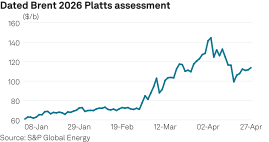
A 1% reduction in oil production due to a geopolitical shock typically leads to crude prices rising by more than 11%, the World Bank said April 28, forecasting that Brent would average $86/barrel in 2026 if there is no further escalation of the war in the Middle East.
A prolonged war or a more serious disruption to oil flows could push Brent prices to $115/b in 2026, the bank said in its latest commodity markets outlook.
"At the onset of a significant geopolitical oil shock, a surge in uncertainty over future supplies and global economic conditions can drive risk premia higher, reflecting both efforts to secure physical stocks and speculative market responses," the World Bank said. Supply shocks also lead to "greater inventory building in the medium term as a form of self-insurance."
The international development bank's baseline scenario expects the most acute phase of Middle East trade disruptions to end in May, with shipping volumes transiting through the Strait of Hormuz gradually returning to prewar levels by October.
Global oil supply is expected to fall by 1.5 million b/d in 2026, according to the outlook.
A marginal decline in global oil consumption would be prompted by higher prices and "proactive policy efforts to limit consumption amid shortages in some countries," said the World Bank, basing its outlook on data from the International Energy Agency.
The latest shock, with the largest oil supply loss on record, "deepens a trend of structurally weak oil consumption in recent years," the bank said.
Oil stocks, including volumes held on water, would substantially buffer consumption through the middle of 2026, according to the bank, with global supply-demand balances expected to return to surplus late in the year as production recovers to 108.3 million b/d in the second half of 2026.
But "lingering geopolitical risk premiums and the aftereffects of a period of severe dislocations and intense uncertainty" would persist, the World Bank said.
Brent oil prices could fall to $70/b in 2027, according to the bank.
Risk scenarios
The severity of the current shock would be determined by the degree of damage to commodity production capacity in the Middle East, as well as the duration of shipping disruptions through the Strait of Hormuz, the bank said.
Another critical factor, according to the World Bank, is the extent to which alternative oil sources or egress routes can substitute for volumes shipped through the strait.
"Emergency oil reserves, newly accessible oil in transit and other sources such as biofuels could substantially attenuate for several months the total shutdown of exports through the strait," the bank said.
Brent prices could average around $95/b if delays in the recovery of Hormuz shipping volumes occur, without additional material damage to oil infrastructure, according to the bank. Prices could climb as high as $115/b if both additional damage to oil infrastructure and delays in resolving impediments to trade occur, it said.
The organization also highlighted downside risks to its baseline assumptions, including faster-than-expected electric vehicle adoption, further negative shocks to global economic growth and higher-than-expected supply primarily in 2027.
Strait of Hormuz shipping disruptions could also be resolved faster than assumed, the bank said.
Overall, oil supply disruptions driven by geopolitics tend to be especially destabilizing for commodity markets, according to the World Bank's analysis of previous crises.
The 11% rise in oil prices for every 1% reduction in production is nearly twice what previous studies had assumed, the bank said.
