Crude Oil, Refined Products, Maritime & Shipping
March 17, 2026
Trump says US doesn't need NATO help for Strait of Hormuz shipping

HIGHLIGHTS
NATO rejection 'pretty shocking,' Trump says
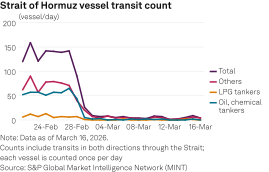
Strait traffic dropped to four ships March 16
Crude releases not enough to mitigate: analysts
The US no longer needs or wants its European allies to send warships to escort commercial tankers through the effectively shuttered Strait of Hormuz, President Donald Trump said March 17 after leaders of North Atlantic Treaty Organization members declined his request.
In a statement posted to his social media platform Truth Social, Trump confirmed that most NATO countries informed the US they would not join the military action, despite agreeing that Iran should not be allowed to develop nuclear weapons. The president characterized the alliance as a "one-way street" where the US protects member nations but receives little support in return.
"Because of the fact that we have had such Military Success, we no longer 'need,' or desire, the NATO Countries' assistance — WE NEVER DID," Trump wrote.
Later March 17, during a bilateral meeting with Irish Prime Minister Micheál Martin, Trump said the NATO response was "pretty shocking."
"I've long said that, you know, I wonder whether or not NATO would ever be there for us," Trump said. "So this was a great test, because we don't need them, but they should have been there."
The statements marked a sudden reversal from March 16, when Trump told reporters "numerous countries have told me they are on the way" and said Secretary of State Marco Rubio would announce the participating countries at a later time.
Traffic through the strait -- through which over 20 million b/d or crude and petroleum products typically flow -- remained at a crawl March 16, according to the latest S&P Global Commodities at Sea data. Just four ships using AIS made the journey through the Strait, down from nine on March 15.
The effective closure of the strait has sent oil prices surging and led to widespread production shut-ins among Gulf producers. Platts assessed Dated Brent at $103.32/b March 17, up 46% from Feb. 27, one day before the first US and Israeli attacks on Iran. Crude and condensate loadings averaged 10.1 million b/d through March 16, down from 18.8 million b/d in February. Platts is part of S&P Global Energy.
The Trump administration, alongside the International Energy Agency, agreed to release roughly 400 million barrels of crude and fuel products from strategic reserves. According to a March 16 S&P Global Energy CERA analysis, those releases can mitigate "some pain in April and May, but only if the conflict is short-lived."
"The aggregate release volume is significant and does provide a material supply buffer to the system in the short-term, but as long as Hormuz remains shut, it will remain a race against the clock," the analysts wrote. "Unless flows resume, more strategic releases may be required to stave off a move into a more destructive demand crisis."

Editor: