Chemicals, Solvents & Intermediates, Olefins
March 26, 2026
WPC 2026: Chemical sector at an inflection point after downturn; war disrupts recovery

Editor:
HIGHLIGHTS
Middle East war disrupts price normalization
Oversupply remains a concern as market stabilizes
This content is part of a series exploring key themes from the World Petrochemical Conference by S&P Global being held in Houston from March 23-27.
After a long downturn, the chemical sector is expected to recover, though the war in the Middle East has interrupted the normalization of prices, according to specialists David Badal, head of chemicals at Morgan Stanley, and John Roberts, managing director at Mizuho Securities USA.
During the World Petrochemical Conference 2026, Badal said that, before the war in the Middle East, commodity prices were already rising, recovering from historic lows, until the conflict began, and prices surged.
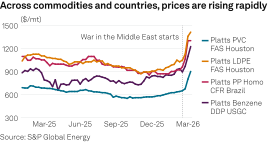
Badal highlighted that the cycle's length has been an additional factor putting pressure on the sector's perceived value. He said that this downturn cycle is "very long," which has led many investors to question "whether this is even an investable sector."
Badal noted that, historically, investors typically viewed downturns as a "great time to buy." However, he emphasized that this time is different: few participants are willing to undervalue the sector and agree to sell.
Even so, Badal maintained that the recovery perspective remains on the horizon. Explaining what drove the current downturn cycle, Badal attributed it to overcapacity, weak demand, and rising costs, including energy and decarbonization.
Roberts sought to frame the moment as part of a prolonged adjustment, not a structural rupture. "It's not an existential crisis, but a really long cycle," he stated.
Discussing his expectations for the sector's recovery after the downturn, he said that the industry typically operates with a dynamic where "capacity follows demand."
