Agriculture, Biofuels, Vegetable Oils
May 04, 2026
Brazil bimonthly biodiesel contracts for May-June make marginal recovery

Editor:
HIGHLIGHTS
Brazil biodiesel fees rise around Real 115/cubic meter
War drives prices up, but distributors maintain pressure
Blend increase to B16 remains uncertain
Logistics differentials for Brazilian biodiesel contracts between producers and fuel distributors for May and June period increased marginally, following higher costs due to geopolitical conflict, but were contained by seasonal demand and uncertainties around the country's blend increase.
Considering the average of the eight regions assessed, the differentials were more than Real 115/cubic meter higher than the March-April period, when contract levels dropped around Real 460/cubic meter. However, in the year-to-date figures, despite the recent increase, the fees remain more than Real 900/cubic meter lower than the levels recorded at the end of 2025.
Platts, part of S&P Global Energy, surveyed 48 companies April 24-30 to calculate the simple average differential, or "fee" as it is commonly called, for biodiesel term contracts across the key regions highlighted in the map. One company told Platts it was out of negotiations during the period.
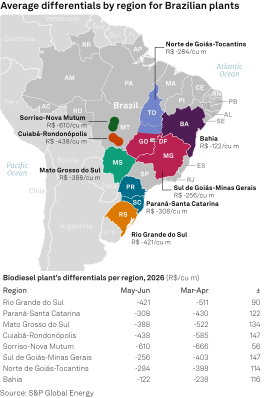
Fees varied less in the Sorriso-Nova Mutum region in Mato Grosso state, where the increase from the previous two-month period was Real 56/cubic meter.
Timid increase amid war pressure
The increase in negotiated levels was modest and limited compared to the initial expectations of the biodiesel mills, which aimed for a cost recovery of around Real 600/cubic meter to cover the rising raw material prices accelerated by the Middle East war.
When the March-April contracts were traded, the Platts FOB Paranagua soybean oil assessment was recorded at $1,099.01/mt on Feb. 28, in its most liquid contract. Expressing an increase of more than 5%, Platts' assessment for June loading was at $1,158.31/mt on April 30.
In addition to effects on the main raw material for the biofuel, other manufacturing components, such as methanol, were also affected by war disruptions. According to market participants, methanol could vary from 5%-20% in the biofuel composition, generating a similar impact on the mills' industrial cost.
In addition to pressures on raw materials, the government's decision to zero the federal Pis/Cofins taxes, amid the announcement of subsidies to try to offset the war's effects on the domestic market, also eliminated discounts guaranteed to companies in line with the Social Biofuel Seal. This policy grants tax benefits to biodiesel producers who acquire raw materials from family farming.
"Most national plants were benefited from the discount and, although the tax was not charged in full, it was common for these mills to include the full value [of Pis/Cofins] in the final biodiesel price as a margin gain," a producer from the south of Brazil said.
Market participants evaluate that the adjustment of around Real 100-150/cubic meter in May-June contracts largely offsets losses rather than improving profitability. "This readjustment basically only replaces what we lost with the removal of Pis/Cofins benefit and the high cost of methanol; the mills' margins remain very tight," a second biodiesel producer told Platts.
For distributors, however, the still high inventories and a certain cooling of international prices with recent ceasefire expectations did not justify a larger increase in the negotiated fees. "Demand for May-June is slightly higher than the other two-month periods at the beginning of the year, but that was the only bullish fundamental, since there was no other rationale for seeing such high levels," said a mid-sized distributor.
Mixed positions about the blend
Despite appeals from biodiesel entities for more biofuel to be added to diesel, even as an alternative to contain war effects in the domestic prices, the issue has not progressed during this period due to the need to complete technical feasibility tests that provide the framework for the change.
The Ministry of Mines and Energy updated the tests schedule with deadlines suggesting that any increase in 2026 would become unlikely. However, on April 30, when announcing a credit package to finance the renewal of the truck and bus fleet, the President of Brazil gave a different signal.
"Later this week we will announce an increase from 30% to 32% [for ethanol] and from 15% to 16% [for biodiesel]," said President Luiz Inácio Lula da Silva. While the increase for ethanol already has a paved path and was widely publicized by the sector, it is still unclear how such a change would occur in biodiesel without the completion of technical studies.
