Agriculture, Meat
April 24, 2026
Middle East tensions threaten pork margins through costs, demand: Rabobank

Editor:
HIGHLIGHTS
Consumer demand may soften amid inflation
Spain ASF outbreak shifts trade to US, Brazil
Escalating tensions in the Middle East are likely to have limited direct impact on global pork markets but could trigger broader cost and demand pressures through indirect channels, according to Rabobank, the Netherlands-based agribusiness bank.
In its Global Pork Quarterly Q2 outlook, released Aug. 22, the bank said "second- and third-order effects" linked to energy, logistics and feed markets are expected to ripple across the sector, tightening margins for producers and processors in the months ahead.
Rabobank highlighted risks tied to a potential disruption of the Strait of Hormuz, a key artery for global energy flows. Higher freight rates, alongside rising diesel and natural gas prices, are already increasing costs across pork supply chains.
Elevated input costs are expected to affect both hog producers and slaughterhouses, with higher fuel, feed and packaging expenses weighing on profitability. While global feed availability remains relatively comfortable following strong harvests, improving biofuel economics and rising energy prices are pushing oilseed markets higher, gradually eroding feed affordability.
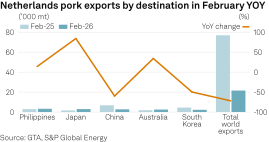
Consumer demand may soften
The bank also warned that heightened geopolitical uncertainty and inflationary pressures could dampen consumer demand. Households may shift spending patterns, with food service and premium protein segments likely to see the most immediate impact.
"Consumers are expected to take a more cautious approach to spending," Rabobank said, adding that overall protein consumption could come under pressure even if pork benefits modestly from trading down as a lower-cost option.
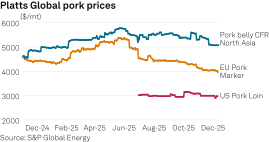
Trade flows shifting amid disease disruptions
Separately, animal disease dynamics continue to reshape global trade. An outbreak of African swine fever in Spain's wild boar population has disrupted exports, particularly to Japan.
US pork shipments to Japan rose 21% year on year, while Brazil also expanded exports, with first-quarter volumes reaching a record 381,000 mt. Brazilian shipments to Japan climbed 60% on the year to 43,000 mt, according to the report.
Rabobank noted that Spanish exports to Japan are expected to decline further in the near term as previously exempt inventories are depleted, potentially creating additional opportunities for alternative suppliers.
Global pork markets entered the second quarter with broadly stable supply-demand fundamentals, but Rabobank said rising geopolitical risks, disease pressures and shifting production trends in major markets such as China and the EU are increasing uncertainty.
While pork may retain its position as a relatively affordable protein, the bank expects cost inflation and trade disruptions to remain key themes shaping the sector through the rest of 2026.
