Agriculture, Maritime & Shipping, Rice
April 09, 2026
Indian, Pakistani basmati rice markets bullish despite Middle East ceasefire
By Ayushi Baloni and Namarita Kathait
Editor:
HIGHLIGHTS
Basmati prices get support from Middle East demand
Indian rice rebounds $55/mt after war dip
High local costs limit Pakistan's exports
Basmati rice prices in India and Pakistan have firmed in recent weeks on strong Middle East demand and tighter prompt availability, as high raw material costs and ongoing logistical challenges offset the temporary relief from the ceasefire, exporters and trade sources told Platts, part of S&P Global Energy, April 9.
Following the outbreak of the war in late February, basmati prices initially declined but soon began to rise across both origins. This uptrend was driven by freight volatility, mounting uncertainty and increasing demand from the Middle East as buyers depleted their inventories.
Rising fuel, transportation and packaging material costs amid low container availability also sustained the bullishness, which has persisted even after the announcement of the temporary ceasefire.
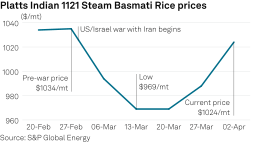
Indian 1121 Steam Basmati prices fell following the outbreak of the war Feb. 28, dropping from $1,035/metric ton FOB Feb. 27 to a low of $969/mt FOB in March, but rebounded as demand and freight volatility increased, reaching $1,024/mt FOB by April 2, a $55/mt rise week over week, eventually followed by the ceasefire announcement April 8, according to Platts data.
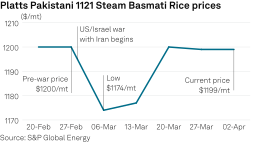
Similarly, Pakistani 1121 Steam Basmati prices declined at the onset of the conflict, falling from $1,200/mt FOB before the war to a low of $1,174/mt FOB March 6, but subsequently recovered, reaching $1,199/mt FOB by April 2, remaining nearly stable week over week.
Indian sellers withhold stocks
There's significant demand for Indian basmati rice from the Middle East, particularly Saudi Arabia and the UAE, mainly because supply has been severely reduced due to earlier closures. Millers are withholding rice stocks because of high freight costs and a lack of ship availability, a Bhopal-based exporter said.
While some sellers might be holding out for better prices, rates are already strong, and the market has been stable over the last one to two months, even during this crisis, the same exporter added.
Other Indian sellers reiterated the trend, citing currency fluctuations as another key factor affecting basmati prices.
The situation is such that the miller will provide price quotes with a day's validity and will increase the quote by $20/mt in the evening, a Delhi-based trader said.
Middle Eastern buyers are ready to purchase immediately due to depleted inventories and are willing to accept any price offered. There is also strong interest from Iranian buyers, with bulk shipments involved in these transactions, the same trader added.
"The strengthening rupee is impacting forex rates," said another Delhi-based trader.
Costs, competition disrupt Pakistani sales
Pakistani exporters cited rising prices due to continued export and domestic demand. However, trade disruptions affecting many international buyers in the Middle East and Europe continue.
"Pakistani basmati prices have jumped sharply in recent weeks, driven by a mix of higher raw costs at origin and a 'risk premium' tied to geopolitical uncertainty. The war-linked disruption to trade routes and shipping has pushed up freight, insurance and sampling/compliance costs, which are feeding back into local pricing for exporters, resulting in hesitation to quote fresh business," said a basmati rice exporter based in Karachi.
"At the same time, steady overland flows into Iran and Afghanistan (often hard to track formally) are keeping domestic demand strong, tightening availability in the local market and reinforcing the upward pressure on prices."
Heightened competition from Indian basmati has resulted in significant setbacks for Pakistan's basmati trade, sellers said.
A basmati seller expressed disappointment with the market in Pakistan, saying high prices were making selling conditions unfavorable amid elevated input costs. Competition from India made it tough to sell to international buyers and the war has further worsened the situation, the seller added.
Market participants were watching whether freight rates, container availability and shipping access improve in the coming weeks following the ceasefire.
