Agriculture, Meat, Grains, Livestock, Oilseeds
March 23, 2026
US cattle feedlot placements rise for first time in nearly a year

Editor:
HIGHLIGHTS
Feedlot placements rise 3.7% on year in February
Marketing hits second-lowest February level
Cattle on feed total reaches 11.549 mil head
US cattle put in feedlots in February totaled 1.611 million head, up 3.7% from 1.554 million head in February 2025, the US Department of Agriculture said in its latest Cattle on Feed report.
Although February placements fell 7.5% from the 2021-2025 average, this is the first time that monthly placements have exceeded those of the previous year since March 2025, according to S&P Global Energy data.
The number of cattle placed in feedlots in February fell 7.5% from 1.741 million head in January, the USDA said in the report, released March 20 after market close.
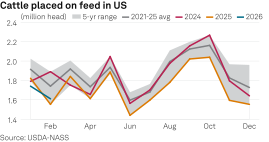
"We saw placements in February up about 3.5%, like 3.6%, compared to last February," Caleb Hurst, proteins and cattle analyst at S&P Global Energy CERA, said. "This was just due to the fact that February 2025 was a record low, so some just general easing higher there in terms of placements."
Bad winter weather back in February 2025 made it difficult for ranchers to move cattle into the feedlots, according to Hurst.
"We did see a drop in overall losses from the figure [other disappearance during February], which would be basically death loss there," Hurst said. "That's probably just due to the mild weather that we had in February."
Marketing, cattle on feed
Marketing of fed cattle, or outflows of cattle from feedlots, during February totaled 1.522 million head, down 6.8% from February 2025, the USDA said.
"Marketings were the second lowest for February since the series began in 1996," the USDA said.
The number of US cattle on feed totaled 11.549 million head March 1, up 0.3% from 11.510 million head Feb. 1 but down 0.2% from 11.095 million head on March 1, 2025, the USDA said.
"A little bit better on cattle on feed supplies than what was anticipated to start the year, again mostly due to those lower overall marketing rates," Hurst said. "But there's a possibility, just with where we're at with the [JBS beef packing plant at Greeley, Colorado] strike, that we could end March or start April -- however you want to look at that -- with cattle on feed that's above year-ago levels, which would be a drastic change from what the industry maybe thought going into last fall."
Lean beef trimmings, prices
Despite the higher cattle on feed numbers and placements, "no real impact is expected on US lean beef and lean beef trimmings imports as we continue to look at non-fed production levels," Hurst said.
"Most of the trim from fed cattle would go into fatter trim, not lean trimmings," Hurst added. "Non-fed harvest levels remain in line, just slightly below, year-ago levels, mostly driven by dairy cows, not beef cows."
Platts, part of S&P Global Energy, last assessed the price of 90CL beef CIF East Coast US at $8,378/metric ton, or $3.80/pound, for a 30-to-60 day shipment period, on March 20, unchanged from the previous day and week over week but up $243, or 3%, from Feb. 20.
Placements are steers and heifers put into a feedlot, fed a ration to produce a carcass that will grade select or better and are intended for the slaughter market, according to the USDA.
Cattle on feed are steers and heifers being fed a ration of grain, mostly corn, silage, hay and/or a protein supplement such as dried distillers grains with solubles or soybean meal, ahead of slaughter. It excludes cattle held back for later sale to feedlots, and only feedlots with a capacity of 1,000 animals or more are considered.
The cattle-on-feed and placements data are indicators of US beef supply and US demand for corn, soybean meal and DDGS.
