Agriculture, Grains
March 19, 2026
Freight, oil influence US DDGS market direction as Middle East conflict continues

Editor:
HIGHLIGHTS
Market increases values as oil strengthens
Thin trade continues amid rising uncertainties
Shutdown season adds supply uncertainty
The US dried distillers grains with solubles market has continued to show mixed signs as it shifts into a more volatile phase, with rising oil prices and escalating conflict in the Middle East beginning to impact freight markets and broader commodity flows, market participants said.
After a period of relatively stagnant trade and muted activity, values began to move as external pressures intensified. Participants said the market had been largely quiet, with limited participation, even as freight costs and geopolitical developments continued to trigger a change in direction.
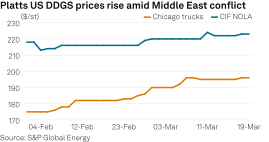
Platts, part of S&P Global Energy, assessed CIF New Orleans DDGS barges for the March shipment period at $223/short ton March 19 and the Chicago DDGS truck market for the same delivery period at $196/st. Both increased $1/st March 18 after remaining steady for a few days, but both markets have increased about $4-$6/st since the start of the conflict.
"Ocean freight is probably a little interesting right now," a trader said, pointing to growing uncertainty in global shipping markets tied to the conflict.
Higher energy prices have been a key driver. Traders said rising crude values have increased operating costs for ships and contributed to higher freight rates, complicating export pricing and reducing visibility for forward shipments. "It's changing constantly, so there's really no definition," a broker said, referring to the evolving fuel and freight situation.
The impact has been uneven across markets. CIF New Orleans values have strengthened alongside freight, while domestic markets have seen mixed activity depending on local supply conditions. Some participants said limited nearby availability has contributed to firmness, particularly as earlier reductions in drying rates continued to affect supply.
On the rail market, a trader in Mexico said, "Values for fuel are higher, making prices increase."
At the same time, demand has not fully kept pace with rising values. "Not a lot of trade, as end-users are reluctant to buy at these levels," a second trader said, adding that most purchases have been limited to short-term needs.
The trader said current spreads were not attracting supply into river channels, saying, "River exports aren't pulling any western tons," reflecting weak export pull relative to domestic markets.
"There's not much happening with international buyers," a third trader said.
Participants also pointed to growing caution across the market as uncertainty builds. "A lot of risk out there," the broker said, describing a broader risk-off mentality influencing trading behavior.
Looking ahead, the market is entering seasonal plant maintenance, which could further tighten supply in the near term and eventually support values. "That time of year," another broker said, referring to the onset of shutdown season.
However, not all participants expect supply reductions to translate directly into sustained price support. Some said the market is being influenced more by macroeconomic factors than by underlying demand, with freight, energy prices and geopolitical developments likely to remain key drivers.
