Agriculture, Maritime & Shipping, Biofuels, Vegetable Oils
March 17, 2026
INTERVIEW: Global conflict, crude rally push India’s edible oil costs higher

HIGHLIGHTS
Sunflower oil routes worst hit
Palm oil trade relatively stable
Freight costs jump 16-17%, prices rise 4-5%
India's sunflower oil imports are likely to face the sharpest disruption, followed by soybean oil imports, from the escalating war in the Middle East, with shipping delays and higher insurance costs compounding supply risks from the Black Sea region, a senior industry executive said March 17.
Sudhakar Desai, CEO of Emami Agrotech Ltd and president of the Indian Vegetable Oil Producers' Association, said that as India is the world's largest vegetable oil buyer and relies on imports for nearly 60% of its edible oil needs, it will have no choice but to keep buying despite high prices to meet minimum requirements.
The spike in crude oil prices and freight costs has already begun affecting freight routes and input costs, and domestic prices will be sensitive to global supply disruptions due to the ongoing conflict, Desai told Platts, part of S&P Global Energy, during a March 16 interview.
"Fuel costs have risen by about 16%-17% and freight delays have already pushed palm oil and soybean oil prices higher by 4%-5%," Desai said.
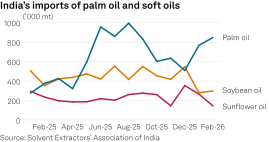
Indonesia and Malaysia are India's largest palm oil suppliers. Argentina is its largest soybean oil supplier, and much of its sunflower oil is sourced from Russia and Ukraine.
In marketing year 2024-25 (November-October), India imported 16.01 million mt of vegetable oils, up 0.3% year over year, data from the Solvent Extractors' Association of India showed.
Of this, palm oil accounted for 47% of total imports, while soybean oil imports and sunflower oil imports accounted for roughly 34% and 18% of total imports, respectively.
Palm oil flows have remained relatively stable as freight costs had not risen significantly. Domestic stocks were comfortable following strong February imports and a timely mustard crush, Desai said.
The conflict has also triggered a rally in crude oil prices, raising biodiesel demand and further tightening vegetable oil markets. "If the war situation normalizes, demand will return, but right now we cannot think long term," Desai said.
Vegetable oil prices are linked to crude oil prices, as they are also used as feedstocks to make biodiesel. For biofuel makers, the smaller the price spread between vegetable oils and gas oil, the better the margins.
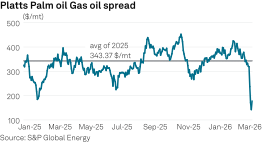
Bursa Malaysia palm oil versus ICE Singapore gasoil, popularly known as the PO-GO spread, has narrowed by 30% since the start of the Middle East war Feb. 28 to $221.98/mt as of March 17, Platts data showed.
Platts assessed CPO CFR West Coast India April shipment at $1,250/mt on March 17, down $5/mt from March 16.
The benchmark Bursa Malaysia Derivatives crude palm oil futures contract for June fell by 1.5% to MR 4,583/mt ($1,169.73), day over day.

Editor: