Fertilizers, Chemicals, Energy Transition, Renewables
March 16, 2026
INFOGRAPHIC: Middle East fertilizer shock tightens spring nutrient supply

HIGHLIGHTS
Urea prices surge 38.8% to $680/mt
Strait disrupts 24% of ammonia exports
Sulfur costs jump $200/mt amid conflict
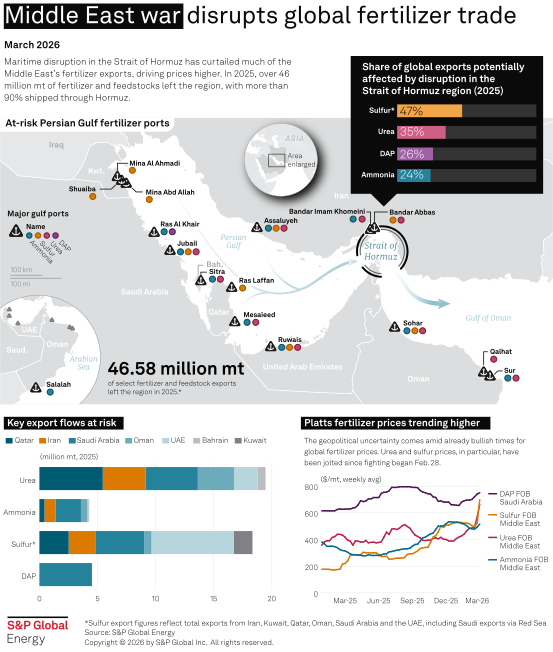
The outbreak of conflict in the Middle East on Feb. 28 has rapidly driven up global fertilizer prices, with the region's role as a major exporter amplifying market volatility.
Granular urea prices have surged 38.8% during the critical spring application season — from below $500/mt in late February to $680/mt by March 13. Ammonia logistics have also been strained, as vessel delays and halted traffic near the Strait of Hormuz impact roughly 24% of seaborne ammonia exports, pushing prices up by 11.6%.
Sulfur supply disruptions are intensifying the squeeze, as the Middle East accounts for nearly half of global seaborne sulfur production. Daily shipments of 45,000-50,000 mt through the Strait of Hormuz have been affected, and alternative ports like Yanbu cannot match these volumes. Spot sulfur prices (excluding Iran) rose to $695-$700/mt by March 12, up $200/mt since the conflict began.
The ripple effect is global: Baltic and North African granular urea prices have climbed 32%-37% in the same period, highlighting how quickly Middle East supply shocks translate into higher costs for agricultural producers worldwide.
Editor:

Editor: