Agriculture, Biofuels, Vegetable Oils
March 06, 2026
Palm oil prices rise 4% as higher energy costs lift biofuel spread margins
HIGHLIGHTS
Higher crude oil prices favor biofuel margins
PO-GO spread slashed by nearly half within week
Higher costs, uncertainty may weigh on biofuel makers
A rise in crude oil prices due to the war in the Middle East has pushed palm oil prices up 3.7% day over day, along with the highest daily traded volume of contracts, exchange data and market analysts said March 6.
The rise in crude palm oil prices was attributed to the sharp fall in the spread between palm oil and gasoil prices, an indicator of margins for biofuel makers.
The benchmark palm oil contract for May delivery on the Bursa Malaysia Derivatives Exchange rose 3.7% on March 6, to close at MR 4,365/metric ton ($1,105.90/mt).
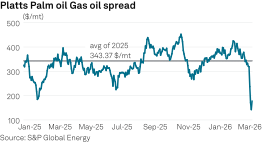
As crude oil prices rose in the first full week of trade after the war in Middle East began, the Bursa Malaysia palm oil versus ICE Singapore gasoil, popularly known as the PO-GO spread, was recorded at $177.96/mt on March 6, 44% narrower from Feb. 27, exchange data showed.
In 2025, the average PO-GO spread was $328.45, according to S&P Global Energy data.
"The narrowing of the PO-GO spread, added with the viability to the biofuel sector, is the biggest catalyst that underpins the market sentiment currently," Lingam Supramaniam, director and analyst with Pelindung Bestari, a Malaysia-based vegetable oil brokerage, said. "Biofuel makers will certainly raise production capacity to meet the rising demand."
The PO-GO spread is now at its narrowest point in almost two years.
This could drive biodiesel makers to ramp up production in Indonesia, the world's largest palm oil producer, Indonesia-based trader Hendra Sam told Platts, part of S&P Global Energy, on March 5.
The palm oil contract has risen by 8% during the week, according to Bursa Malaysia data. However, some in the biofuel industry also pointed out that a narrower PO-GO spread may not be enough to spur higher production as structural costs are also rising.
"The narrowing vegoil-gasoil spread may look supportive at first glance, but from what we're seeing in Indonesia, the situation is still quite tight," Richell Brigitte, a feedstock trader based in Jakarta, Indonesia, said March 5. "Export tax hikes have raised costs significantly, and domestic feedstock prices keep climbing."
Indonesia's finance ministry raised the country's crude palm oil export levy to 12.5% on March 1 from 10% earlier, Platts, part of S&P Global Energy, reported March 2. As a result, Indonesia's total export tax and levy on CPO rose to $241.36/mt from $165.85/mt.
On top of slow demand for feedstocks, geopolitical tensions and the uncertainty around the Strait of Hormuz have added another layer of risk, Brigitte said.
"With Brent, WTI, and even Dalian and CBOT futures strengthening, commodity prices remain supported," Brigitte said. "So feedstock isn't exactly cheap, and volatility risk is still there."
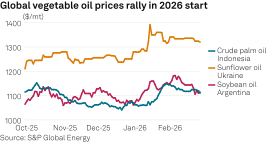
Palm oil's rally has mirrored increases in rival vegetable oils across global markets. On March 5, benchmark soybean oil futures on the Chicago Board of Trade climbed to 65.74 cents/lb, the highest price since July 2023, Platts reported March 5.
Platts assessed the price of crude palm oil FOB Indonesia at $1,127.5/mt on March 5, up 0.9% day over day.

Editor: