Agriculture, Meat
March 06, 2026
Germany, China move ahead with pork trade regionalization despite ASF

HIGHLIGHTS
Germany, China sign ASF regionalization deal
German pork exports to China drop 72% since 2020
Heat-treated poultry exports gain China approval
Germany and China have signed a declaration of intent to develop a regionalization agreement for African swine fever, a move that could pave the way for the resumption of German pork exports to China despite localized outbreaks of the disease.
The memorandum of understanding was signed during German Chancellor Friedrich Merz's visit to China on Feb. 28, with both sides agreeing on a road map to recognize Germany's regional disease-control measures and work toward a formal agreement.
Germany's Federal Ministry of Food and Agriculture welcomed the declaration as a key step toward restoring market access to one of the world's largest pork import markets, which has been closed to German pork since the country reported its first African swine fever case in 2020.
Under the proposed regionalization framework, trade restrictions would apply only to areas affected by ASF rather than to the entire country, allowing exports from disease-free regions to continue.
"The declaration of intent is an important step toward an ASF regionalization agreement and toward restoring export opportunities for our producers," Agriculture Minister Alois Rainer said in a statement.
Exports hit by ASF ban
Germany's pork exports to third countries have fallen sharply since the ASF outbreak triggered import bans from several markets.
Exports declined to about 335,000 mt in 2025 from around 1.18 million mt in 2019, a drop of roughly 72%, according to industry data.
China had previously been Germany's largest non-EU market for pork. In 2019, the year before the ban, Germany exported about 600,000 mt of pork to China, including roughly 275,000 mt of byproduct such as trotters, ears and tails that typically have limited demand in European markets.
Industry groups say restoring access to Asian markets is crucial for maintaining the full value chain of pig processing in Germany.
Poultry exports approved
Alongside the regionalization discussions, Germany and China also signed a separate protocol allowing the export of heat-treated German poultry products to China for the first time.
The protocol establishes inspection, quarantine and registration requirements for eligible processing facilities, providing a regulatory framework for poultry trade between the two countries.
While the regionalization agreement for pork still requires technical negotiations and formal approval, German industry groups say the declaration marks a significant political step toward reopening a key export market after more than five years of restrictions.
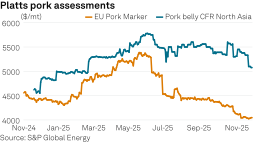
European pig prices continued to rise over the past week, as markets strengthened in many – but not all – parts of Europe.
In northern Europe, the market is dominated by developments in Germany, where the supply situation has tightened considerably over the past few weeks.
The German pig industry responded by agreeing a third consecutive weekly increase of Eur 5 in its internal reference price, up to Eur 160 per 100kg. Pig prices are rising despite a fairly flat market for pigmeat – a development which implies further squeezed costs for abattoirs.

Editor: