


16 July 2026
Price and Economic Impacts of an Accelerating Export Industry: LNG Impact Study – Phase 4
By Daniel Yergin, Ph.D., Eric Eyberg, Leandro Caputo, James Crompton, Avery Carmichael, Mohsen Bonakdarpour, Daniel Bermudez, Pedro Neves, Ed Kelly, Shankari Srinivasan, Aube Montero, Chris Wilfong, Bob Flanagan, and Matthew Palmer
Growing exports of U.S. liquefied natural gas (LNG) are now on track to support 550,000 jobs annually and contribute $1.4 trillion to U.S. gross domestic product through 2040—exceeding previous expectations—while having a negligible impact on domestic gas prices. US LNG feedgas demand is expected to double to 36 bcf/d in the next five years – 25% higher than our previous Base Case projections.
The United States, already the world’s leading LNG supplier, is expected to surpass a one-third share of the global market during this time. This shifting dynamic will almost certainly make LNG exports the second largest net export industry in the United States within the next five years, second only to U.S. civilian aircraft and parts.
S&P Global Energy now estimates that total investment in the LNG supply chain through 2040 will exceed $1 trillion. In addition to the increased jobs and GDP gains, the new study expects future LNG export activity to generate more than $2.9 trillion in total revenues for U.S. businesses, $206 billion in federal and state tax revenues and nearly $630 billion in labor income. The economic impact extends far beyond core gas-producing states, with 42% of jobs and 33% of GDP contributions occurring in non-gas- producing areas.
Notably, these economic benefits occur while the impact on U.S. domestic natural gas prices is negligible. S&P Global Energy projects an average increase in end-user gas costs of just 1.6% per household from 2026 to 2031. The United States domestic natural gas prices will continue to rank among the lowest in the world for both the residential and industrial sectors.
Facilitating these benefits is the world’s most interconnected gas infrastructure network, with more than 300,000 miles of natural gas transmission pipelines. The annual volume of natural gas transported through the US pipeline system exceeds the combined consumption of 130 countries. Nevertheless, key regional bottlenecks still remain. The shale gas revolution and abundance of the U.S. natural gas resource base have shifted the domestic market dynamic to a new paradigm where infrastructure constraints are often the key driver of higher-priced regional markets and price volatility. This study contemplates the potential impacts of easing and stressing pipeline bottlenecks to the US Northeast to highlight the market implications of such bottlenecks.
Importantly, US LNG exports are increasingly playing a role in geopolitics and have increased US flexibility in international relations. For example, the EU aims to ban Russian LNG and pipeline gas by Q4 2027. Without US LNG exports, it would be challenging to implement such restrictions due to the lack of near-term alternatives and existing underutilized connectivity between Russia and the EU. In an “Extended Pause” scenario, international prices would face significant increases, value would be transferred to non-US suppliers of LNG and other fossil fuels, including coal, and the US would face a loss in confidence in its reliability as a trade partner.
The resiliency of the US domestic gas market in light of external market shocks, e.g. Henry Hub prices have remained flat during the Iran conflict as LNG spot prices doubled, benefits not only US households via affordable natural gas costs, but also benefits trading partners by providing reliable volumes insulated from shocks. However, the wide reaching economic benefits and growth potential from US LNG are at risk from policy derailment, and if an “Extended Pause” scenario were to emerge, trading partners would also face higher natural gas costs.
Explore US LNG Impact Studies 1-3
Contributors

S&P Global Energy
Daniel Yergin, Ph.D.
Vice Chairman
Daniel Yergin is Vice Chairman of S&P Global. He is a highly respected authority on energy, international politics, and economics, and a Pulitzer Prize winner. He chairs S&P’s CERAWeek conference, which CNBC has called “the Super Bowl of world energy”.
Time Magazine said, “If there is one man whose opinion matters more than any other on global energy markets, it’s Daniel Yergin.” The New York Times called him “America’s most influential energy pundit” And The Wall Street Journal described him as “the energy sage”.
He plays a leadership role in the Commodity Insight research at S&P Global and recently led studies on LNG as a major new U.S. export industry and on “Copper in the Age of AI”.
Dr. Yergin’s most recent book The New Map: Energy, Climate and the Clash of Nations is described by NPR as “a master class on how the world works,” and in The Washington Post as “a tour de force of geopolitical understanding.,” It has been translated into 14 languages.
A Pulitzer Prize winner, Dr. Yergin is the author of the bestseller The Quest: Energy, Security, and the Remaking of the Modern World. The Quest, which The New York Times said it is “necessary reading for C.E.O.’s, conservationists, lawmakers, generals, spies, tech geeks (and) thriller writers.” Bill Gates summed up his review of The Quest by saying, “This is a fantastic book.”
Dr. Yergin is known around the world for his book The Prize: The Epic Quest for Oil Money and Power, which was awarded the Pulitzer Prize. It became a number one New York Times best seller and has been translated into 20 languages.
Of Dr. Yergin’s book Commanding Heights: The Battle for the World Economy, which has been translated into 13 languages, The Wall Street Journal said, “No one could ask for a better account of the world’s political and economic destiny since World War II.” Both The Prize and Commanding Heights were made into award- winning television documentaries for PBS and BBC, which Dr. Yergin co-produced, co-wrote, and narrated.
Dr. Yergin is a senior trustee of the Brookings Institution and a member of the Energy Advisory Council of the Dallas Federal Reserve. Dr. Yergin served on the U.S. Secretary of Energy Advisory Board under four U.S. presidents.
Among his honors, both the Prime Minister of India and the United States Association have presented Dr. Yergin with a “Lifetime Achievement” awards and the U.S. Department of Energy awarded him the first “James Schlesinger Medal for Energy Security.” The University of Pennsylvania presented him with the first Carnot Prize for “distinguished contributions to energy policy.” Dr. Yergin was awarded the Gold Medal of the President of the Republic of Italy for combining “an understanding of the dynamics of the market with a broad view of the forces of geopolitics as he seeks to point the way to the positive outcomes for the world community.
Dr. Yergin is a member of the advisory boards for the Columbia University Center on Global Energy policy and the MIT Energy Initiative.
Dr. Yergin holds a BA from Yale University and an M.A. and Ph.D. from Cambridge University, where he was a Marshall Scholar

S&P Global Energy
Eric Eyberg
Vice President, Gas & LNG CERA Consulting
Eric leads an expert team of 50 consultants with his results-driven approach and big picture thinking and regularly delivers keynote speeches and moderates dialogues and roundtables with the industry’s foremost leaders.
Eric is a force for growth and has led more than 200 global engagements partnering with C-level executives in the gas and power industry and government officials, pioneering innovative solutions across commercial advisory, strategy and policy, transaction support, and low carbon offerings. He has directed >US$75 billion in successful gas and power deals.
Before joining S&P, Eric held consulting and commercial industry roles at Wood Mackenzie, McKinsey & Co., and Calpine Energy Services and has an INSEAD MBA.

S&P Global Energy
Leandro Caputo
Executive Director, Gas & LNG CERA Consulting
Executive Director, Gas & LNG CERA Consulting

S&P Global Energy
James Crompton
Director, Gas & LNG CERA Consulting
James Crompton

S&P Global Energy
Avery Carmichael
Director, Gas & LNG, CERA Consulting
Avery Carmichael

S&P Global Market Intelligence
Mohsen Bonakdarpour
Executive Director, Global Intelligence and Analytics, Market Intelligence
Mohsen is Executive Director of consulting in S&P Global Market Intelligence, working on macroeconomic and industry economics since 1986. He brings more than 30 years of experience in macroeconomic, regional, and industry consulting with a strong focus on scenario analysis, economic impact assessments, and applications of market planning. Mohsen has been responsible for development of a detailed regional application (Business Market Insights) and global information and communication technology capability. He has expertise in regional economic impact assessment and is fluent in relevant modeling tools to a wide array of issues and policies.
Mohsen worked as a partner with Cisco's Global Market Intelligence group to build a model to estimate total addressable market for network technologies and services. The model has become on the forefront of strategic marketing initiative for Cisco via their global market view model and database.
Mohsen was the project manager for series of large scale energy related projects including Crude Oil Export Decision - the Fact-based study and analysis played an important role in lifting the ban, Americas New Energy Future - studies had an extraordinary impact at a time of debate over future of shale and was cited in Presidential State of the Union Address, and Restarting the Engine in US Gulf of Mexico - client used the research to have BOEMER accelerate licensing process in the Gulf of Mexico.
Mohsen holds an M.A. in Economics and a B.S. in Economics and Computer Science from Temple University.

S&P Global Energy
Daniel Bermudez
Associate Director, Gas & LNG, CERA Consulting
Daniel Bermudez

S&P Global Energy
Pedro Neves
Consulting Manager, Gas & LNG, CERA Consulting
Pedro Neves

S&P Global Energy
Ed Kelly
Executive Director, Gas & LNG, CERA
Ed has more than 30 years of experience in the natural gas business, including 20 years in research and consulting. He leads major consulting engagements and advises energy firms regarding business strategy in the North American gas and power industries. Prior to joining the company in 2012, Ed was a senior executive in a North American gas and power consultancy, a founder and leading spokesperson for a North American gas research and consulting practice, and an expert in the gas midstream business and market and basis analysis. Prior to that he was director of research, North American Gas for CERA (now part of S&P Global). During a decade there, Ed edited the research product and directed numerous consulting engagements, applying scenarios to client investment and decision making. He has held a variety of strategic planning, market analysis, and storage development positions for two interstate pipeline companies.
Ed holds a Bachelor of Arts from the University of Chicago and an MBA from the University of Texas at Austin, Texas, United States.

S&P Global Energy
Shankari Srinivasan
Vice President, Global Gas and LNG
Shankari has specific expertise in global gas market fundamentals analysis, price forecasting, company strategy and scenario planning. She has authored numerous reports. Prior to joining S&P Global Energy, Shankari was Head of Energy Fundamentals at Centrica in the United Kingdom. She has covered the European gas market for many years and authored a number of reports as researcher and then leader of the European gas practice at CERA, which is now part of S&P Global Energy. She has also assessed the European and Russian gas markets with the International Energy Agency.
Shankari previously worked at a New York brokerage firm as a corporate equity analyst. She holds three degrees from US Universities, a Bachelor of Arts from Brown University, a Master of Science from New York University, and a Master of Science from University of Pennsylvania. She also holds an Executive MBA from Cranfield University, United Kingdom.

S&P Global Energy
Aube Montero
Executive Director, Upstream, CERA Consulting
Based in Houston, Aube manages, advises and participates in upstream consulting engagements where she leverages her analytics and petroleum economics expertise to enable clients to evaluate prospective investments and/or fiscal systems. She has been working with S&P Global (Now a part of S&P Global) upstream groups in the US and the Middle East for 14 years. Before this, Aube spent 5 years with Schlumberger where she held various analytics and audit roles. Aube typically leads due diligences, bid-round support, resources/fiscal benchmarking or market entry strategy engagements. Her practical expertise includes petroleum fiscal systems, exploration benchmarking, basins and plays evaluations, strategy formulation and modelling, advanced geospatial and statistical analytics and cost factors analysis. She has collaborated with research contributions to studies such as 'The Replacement Imperative', 'Fueling North America Future' or 'Shale Gas Reloaded'.
Aube holds a master's degree in finance from the University Rene Descartes (Paris V) and completed a certificate in petroleum projects evaluation and management at Texas A&M Harold Vance School of Engineering, US.

S&P Global Energy
Chris Wilfong
Director, Power, CERA Consulting
With over fifteen years in the energy sector, he has provided strategic market intelligence to utility and asset management companies. Previously, Chris worked in power plant finance at Competitive Power Ventures and as a Principal analyst at NextEra Energy.
Chris holds Master’s Degrees in Environmental Management and Forestry from Duke University and a Bachelor of Arts from the University of Georgia.
S&P Global Market Intelligence
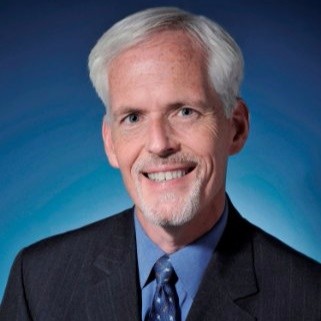
Bob Flanagan
Director, Economic Consulting
Bob Flanagan

S&P Global Energy
Matthew Palmer
Executive Director, Americas Gas Research
Matthew is an expert at developing fundamentals-based supply, demand, and price forecasts and an understanding of the associated risks. He has developed a wide range of analytical models and tools to assess markets, has prepared presentations, and has written reports on the natural gas, electric power, and oil markets. This includes broad industry outlooks, regional analyses, and granular market assessments. He has a deep understanding of oil and gas infrastructure, regional supply and demand, and locational price differentials across the United States and Canada.
Before joining S&P Global, he was director of fundamentals at Encana, where he was responsible for natural gas and power market fundamentals analysis and oversaw Encana's risk management activities for natural gas. Matthew began his career with S&P Global, where he led the development of natural gas demand forecasts, researched the relationship between oil and natural gas prices, and followed the western North American regional gas market. Matthew holds a Bachelor of Science and a Master of Science from the University of Massachusetts Amherst, United States.

S&P Global Energy
Madeline Jowdy
Global Head LNG, CERA Consulting
Specializing in market and policy advisory, strategy development, commercial due diligence, investment analyses and LNG market modeling across the LNG value chain - including midstream and liquefaction, shipping and regasification. Madeline uses her 25 years of global expertise and innate curiosity for how the world works to look at every challenge as part of the bigger picture.
Excited by a paradigm shift in energy consumption, Madeline is helping the oil and gas industry transition to a cleaner, greener and smarter way of working.
Madeline completed a master’s program in Middle Eastern Studies at Georgetown University specializing in energy economics.
S&P Global Study Acknowledgements
This report represents the independent analysis and views of S&P Global Energy. The study was supported by the US Chamber of Commerce, as a follow-up study to our December 2024 report “Major New US Industry at a Crossroads: A US LNG Impact Study”. S&P Global Energy is exclusively responsible for all the analyses, content and conclusions of the study. The study makes no policy recommendations.
This study offers an independent and objective assessment of the economic, market and global impact of the US LNG Industry built from a detailed bottoms-up approach, at the asset and market level, technology by technology. It represents the collaboration of S&P Global CERA Consulting and S&P Global Market Intelligence, supported by the world’s largest expert team of over 1,400 energy and economic research analysts and consultants continuously monitoring, modelling and evaluating markets and assets. Explanation of the detailed study methodology is included in the Appendix. The analysis and metrics developed during the course of this study represent the independent analysis and views of S&P Global Energy.
For more information on this report, please contact:
Eric Eyberg
Vice President, Gas & Power Commodity Insights Consulting
Eric.Eyberg@spglobal.com
Leandro Caputo
Executive Director, Gas & LNG Commodity Insights Consulting
Leandro.Caputo@spglobal.com
James Crompton, CFA
Director, Gas & LNG CERA Consulting
James.Crompton@spglobal.com
Avery Carmichael
Director, Gas & LNG CERA Consulting
Avery.Carmichael@spglobal.com
Aube Montero
Executive Director, Upstream CERA Consulting
Aube.Montero@spglobal.com
Mohsen Bonakdarpour
Executive Director, Global Intelligence and Analytics, Market Intelligence
Mohsen.Bonakdarpour@spglobal.com
For Media information on this report, please contact:
Jeff Marn
Executive Director, Public Relations, S&P Global Energy
Jeff.Marn@spglobal.com