
Volume 14 —26 October 2026
Look Forward: Charting Progress on Saudi Arabia's Vision
As Saudi Arabia advances Vision 2030, the focus is shifting from the scale of investment to the productivity, resilience, and market development needed to sustain long-term growth.
Saudi Arabia is on one of the most expansive and compelling journeys of economic reform globally. At the heart of this transformation is Vision 2030, the strategic road map that guides the country’s transition from a hydrocarbon-based economy to a diverse and future-ready one with increased workforce participation. As Saudi Arabia restructures its economy, it is also redefining the role of its financial markets in funding growth and attracting global capital. In the next phase of Vision 2030, the focus is increasingly shifting from the scale of investment toward productivity gains, efficient capital allocation, and a greater role for private and foreign capital.
At a time of heightened uncertainty, S&P Global’s Look Forward: Charting Progress on Saudi Arabia’s Vision examines the progress achieved to date and provides a framework to understand the economic, energy and market forces shaping the country’s future.
Saudi Arabia is pursuing its ambitions in a complex environment. The conflicts in the region have created uncertainty, introducing new demands on security and resilience. These geopolitical realities could increase funding and execution pressures for some projects and influence prioritization decisions. Yet, they have not altered the strategic direction. If anything, geopolitical shifts underscore the importance of building a more resilient economy.
The articles in this report explore the sectors emerging as pillars of Saudi Arabia’s next growth phase. Renewable energy is reshaping the country’s power system and laying the foundation for greater participation in global clean energy value chains. Critical minerals are positioning Saudi Arabia as a key player in the fast-growing new energy sectors and advanced manufacturing supply chains. Meanwhile, the development of data centers and digital infrastructure reflects the country’s aim to become a leading digital and innovation hub. These sectors illustrate Saudi Arabia's ambition to position itself at the intersection of three powerful global trends: energy expansion, supply chain reconfiguration and digitalization.
Financing this transformation requires significant investments, as well as sound institutional and market infrastructure. One of the most important dimensions of Saudi Arabia’s economic evolution is the modernization of its financial system and capital markets. The country is gradually becoming a net importer of capital as it mobilizes funding to support its development agenda. Saudi authorities have undertaken a broad range of reforms to deepen the domestic debt market while corporations increasingly access international debt markets.
The country’s equity landscape has also developed substantially over the past decade, with market liberalization and a growing breadth of listed companies enhancing market depth and attractiveness. These factors are helping create a more robust and diversified financial ecosystem capable of supporting long-term economic growth.
As a result, the long-term trajectory is clear. Saudi Arabia is strengthening resilience, improving economic flexibility and creating new opportunities by investing in innovation, deepening its capital markets and expanding the foundations of private sector-led growth.
The significance of Saudi Arabia's transformation extends beyond its borders. As one of the fastest-growing economies, its success in developing new industries, mobilizing capital and strengthening economic resilience amidst heightened uncertainty will have implications for regional investment flows, global supply chains and capital markets for years to come.

S&P Global Energy
Dave Ernsberger
President, S&P Global Energy
Dave Ernsberger is President of S&P Global Energy and a member of S&P Global’s Executive Leadership Team.
Most recently, Mr. Ernsberger was Head of Market Reporting and Trading Solutions at S&P Global Energy. In that role, he was responsible for managing Platts commodity price benchmarks worldwide, including market reporting, news coverage and exchange relationships, from well-established markets like oil and gas through to emerging market environments like new Energy Transition commodities and recycled materials.
Prior to that, Mr. Ernsberger served in a variety of roles at Platts, including Head of Oil Content; Editorial Director for Asia (based in Singapore), and Houston Bureau Chief. He joined Platts in 1996 as a metals reporter in London, and launched coverage of Europe’s then-deregulating gas and electricity markets in 1999.
A native of Boston, Massachusetts, Mr. Ernsberger holds a bachelor's degree in philosophy and politics from Warwick University, England, and a master's degree in international relations from Southampton University, England.
In this edition

About this edition
-
Sponsors and Leads
-
Contributors
-
Past Editions
S&P Global
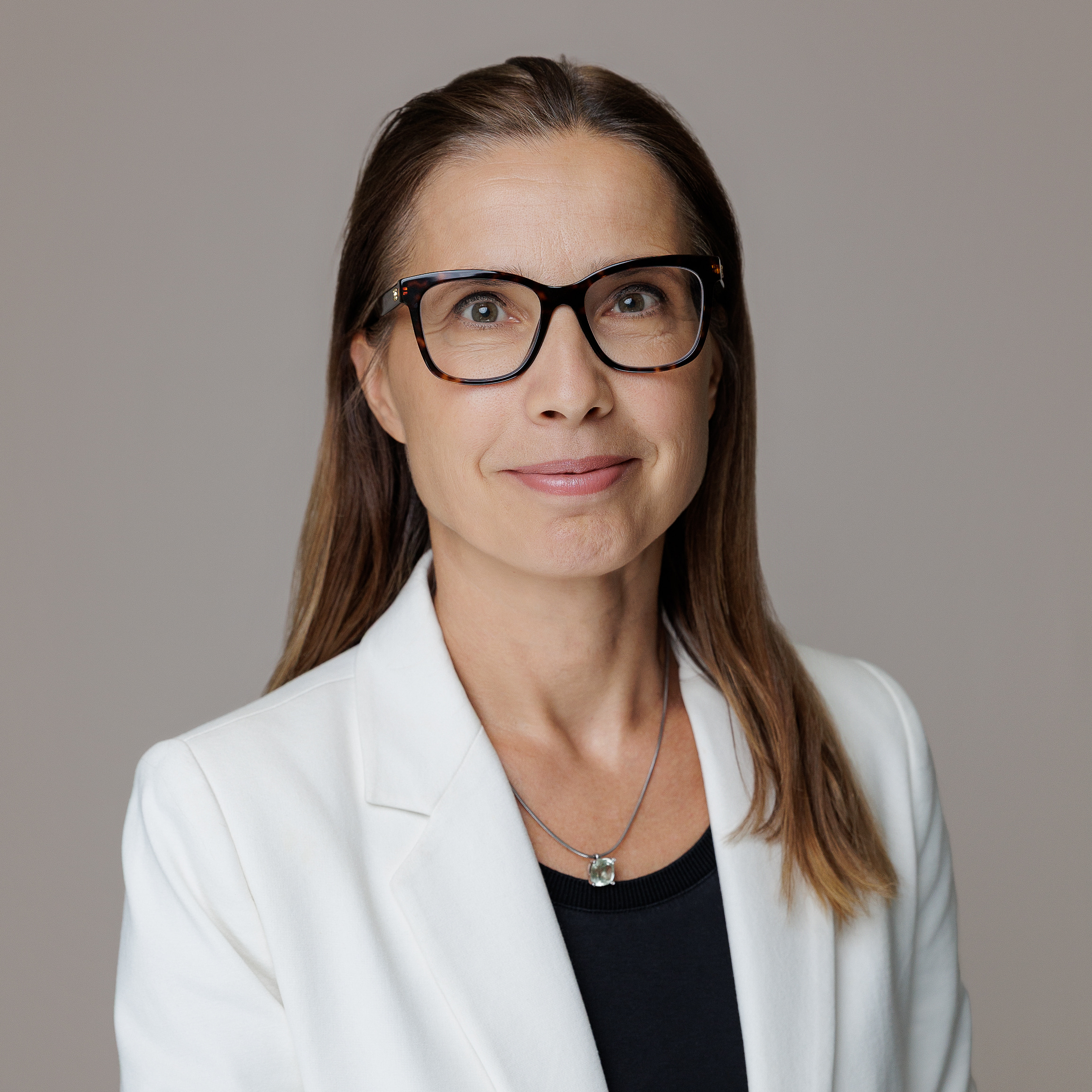
Alexandra Dimitrijevic
Head of the S&P Global Institute
The Institute delivers insight on the complex and inter-connected challenges facing today’s global leaders. Geopolitics, artificial intelligence, the energy transition, and capital flows can no longer be understood in silos. They are colliding to fundamentally reshape the markets and the global economy. To navigate this complexity, the Institute brings together data, research, and specialized expertise from across the entire S&P Global enterprise (Ratings, Energy, Market Intelligence, S&P Dow Jones Indices). Operating at the intersection of capital markets, technology, and global policy, it is dedicated to connecting the dots on these structural transformations, delivering the forward-looking perspectives that clients and decision-makers need to lead with confidence.
Alexandra brings more than 30 years of experience in finance and global credit markets. She previously served as Global Head of Research and Development at S&P Global Ratings, overseeing global research platforms, market analysis and product development initiatives across areas including sustainable finance, private markets, decentralised finance and emerging markets.
Over her career at S&P Global Ratings, Alexandra has held senior leadership roles across corporate and sovereign ratings and built broad expertise across asset classes and regions. Alexandra served a senior spokesperson with a wide range of stakeholders, including the media, investors, policymakers, and regulators.
Alexandra serves on the Board and Risk & Audit Committee of Bruegel, a leading Brussels-based economic policy think tank.
S&P Global Energy
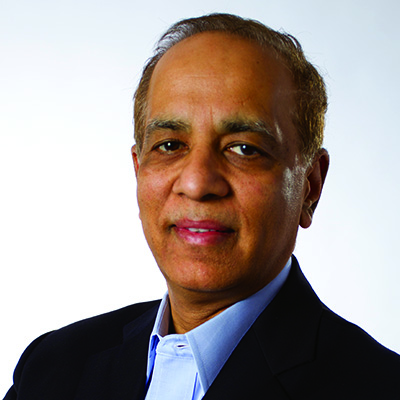
Atul Arya, Ph.D.
Senior Vice President and Chief Energy Strategist
Senior Research Fellow of the S&P Global Institute
His areas of expertise include business strategy, commercial analysis, oil markets, energy technologies, climate change and renewables. He has previously led Energy Insight, Research and Analysis and Energy Research teams at S&P Global (Now a part of S&P Global). Dr. Atul previously worked for BP for over 20 years in a number of operational, business, technical and strategic positions around the world. His career includes international leadership experience in a diverse array of energy fields spanning strategy development, business planning, field operations and technology commercialization. His experience includes leadership in solar energy development as well as oil and gas. Dr. Atul has previously served on boards of several companies and institutions and is member of the World Economic Forum's Global Future Council on Advanced Energy Technologies and is 25+ year member of the Society of Petroleum Engineers. He is a sought-after speaker and moderator at public conferences, company boards and industry events and a member of the CERAWeek leadership team.
He holds B.S., M.S. and Ph. D. degrees in engineering.
S&P Global Energy
Dave Ernsberger
President, S&P Global Energy
Dave Ernsberger is President of S&P Global Energy and a member of S&P Global’s Executive Leadership Team.
Most recently, Mr. Ernsberger was Head of Market Reporting and Trading Solutions at S&P Global Energy. In that role, he was responsible for managing Platts commodity price benchmarks worldwide, including market reporting, news coverage and exchange relationships, from well-established markets like oil and gas through to emerging market environments like new Energy Transition commodities and recycled materials.
Prior to that, Mr. Ernsberger served in a variety of roles at Platts, including Head of Oil Content; Editorial Director for Asia (based in Singapore), and Houston Bureau Chief. He joined Platts in 1996 as a metals reporter in London, and launched coverage of Europe’s then-deregulating gas and electricity markets in 1999.
A native of Boston, Massachusetts, Mr. Ernsberger holds a bachelor's degree in philosophy and politics from Warwick University, England, and a master's degree in international relations from Southampton University, England.

S&P Global Energy
Josefin Berg
Research & Analysis Manager, Solar & Energy Storage
Her focus areas include developer and EPC strategies, the demand for PV in emerging markets and the role of PV in the power generation mix. With more than 10 years of experience in the solar power industry, Josefin authors reports on PV markets and trends, and she regularly speaks at industry events. Prior to joining IHS Markit (now part of S&P Global), she was an R&D strategy consultant in the field of energy efficiency and renewable energies.
Josefin holds a Master of Science in environmental engineering from Uppsala University, Sweden. She speaks English, French, Spanish and Swedish and is based in Barcelona, Spain.

S&P Global Ratings
Timucin Engin
Managing Director & Head of National Scale Ratings Eastern Europe, Central Asia and the Middle East
Managing Director & Head of National Scale Ratings Eastern Europe, Central Asia and the Middle East

S&P Global Ratings
Zahabia Gupta
Managing Director, Head of Credit Research Emerging Markets

S&P Global Energy
Matthew Hodgkinson
Senior Principal Analyst, Hydrogen and Low Carbon Gas
Senior Principal Analyst, Hydrogen and Low Carbon Gas

S&P Global Energy
Manraj Lamba
Mine Economics Analyst, Metals & Mining Research
Manraj Lamba is a Mine Economics Analyst in the Metals and Mining Research Team at S&P Global Energy based in London. He is a part of the Mine Economics team which provides an industry leading multi-commodity cost curve product from which clients can assess and value mining assets across 15 major commodities.
His prior experience includes working in the energy space both in Oil & Gas and Renewable Energy as well as soft commodity markets including the sugar, vegetable oils, and wheat markets.
Manraj holds both a Meng in Chemical Engineering and MSc in Metals & Energy Finance from Imperial College London.

S&P Global Ratings
Samira Mensah
Managing Director, Africa Research & Analytics, and Country Head, South Africa

S&P Dow Jones Indices
Darius Nass
Associate Director, Global Equities & Thematics
Associate Director, Global Equities & Thematics

S&P Global Ratings
Zeina Nasreddine
Associate Director
Associate Director

S&P Global Ratings
Elijah Oliveros-Rosen
Chief Economist, Emerging Markets, Global Economics & Research
Elijah Oliveros-Rosen is the Chief Economist, Emerging Markets for Latin America at S&P Global Ratings. He forecasts the main macroeconomic variables for major countries in the region, which are used by S&P Global analysts during the ratings process. He also publishes work on the outlook for emerging economies, as well as on other topics pertaining to the region.
Before joining S&P Global, Elijah was a Latin America Country Risk Analyst at BMI Research, where he conducted macroeconomic forecasts and published commentary on breaking developments. He also held the role of lead Latin America financial markets strategist at BMI Research, in which he identified investment opportunities across FX, Fixed Income, and Equities.
Elijah received his bachelor’s degree in International Economics from the University of Richmond and his master’s degree in Global Finance, Trade, and economic integration from the Josef Korbel School of International Studies at the University of Denver.

S&P Global Energy
Francesca Price
Senior Principal Analyst, Critical Mineral Markets
Francesca Price is a Senior Analyst in the Metals and Mining Research team at S&P Global Energy, based in London. With a background in mining geology, Francesca has been covering the metals markets since 2019, initially focused on precious metals and PGMs, and more recently expanding her scope to look at all critical raw materials. Her primary focus now is the policy environment of critical minerals, assessing how political, technological, economic, environmental and legislative changes will affect these commodity markets, in the context of the energy transition. Francesca joined the Department for Business and Trade in 2023 as a Senior Policy Advisor for critical minerals, helping deliver high priority workstreams within the UK’s Critical Minerals Strategy for HM Government. Francesca holds a BSc in Geology from the University of Leeds.

S&P Global Ratings
Valerijs Rezvijs
Emerging Markets EMEA Economist
Valerijs Rezvijs joined S&P Global Ratings in 2021. He is covering emerging market economies in Central and Eastern Europe, the Middle East and Africa.
Working closely with S&P’s sovereign analysts and other ratings teams, he is responsible for forecasting economic developments and producing in-depth economic analysis on these countries, as well as for communicating S&P Global Ratings views and insights to the external markets. Valerijs Rezvijs previously covered emerging market economies in the European Bank for Reconstruction and Development, as well as worked in European Central Bank and the European Commission.
Valerijs is a graduate of the Barcelona Graduate School of Economics and Stockholm School of Economics in Riga.

S&P Global Ratings
Luca Rossi
Associate Director
Associate Director
S&P Global Ratings
Hina Shoeb
Managing Director, Head of Analytics, Cross Practice Ratings, Saudi Arabia
Managing Director, Head of Analytics, Cross Practice Ratings, Saudi Arabia

S&P Global Energy
Joe Steveni
Analyst, Renewables Markets
Analyst, Renewables Markets

S&P Dow Jones Indices
Jessica Tan
Fixed Income Indices Product Manager
Fixed Income Indices Product Manager
Key support and contributions by: Isabel Allenwood, Kurt Burger, Lauren Capolupo, Michael Lustig, Kyle May, Camille McManus, Charlotte Perry, Penny Taggart and Ben Yang