Research — Jul 8, 2026
From Discovery to Delay: Mine Permitting Stretches Project Timelines

By Paul Manalo
What is the average lead time for new mining projects?
The average lead time from discovery to production for mining projects is 16 years, combining both operating and nonoperating assets. However, for nonoperating mines that have undergone feasibility studies, this timeline has stretched significantly to nearly 30 years due largely to permitting delays, which is five times longer than the lead times observed in the 1990s. This analysis is based on a study of 232 assets discovered and brought into production between 1990 and 2025.
Why are governments now focusing on streamlining mine permit processes?
Governments are focusing on streamlining the mine permit process because long, complex permitting procedures are recognized as a major friction point in mine development. With timelines for some projects stretching to nearly 30 years and facing multiyear setbacks or cancellations, there is a growing recognition that these delays hinder the supply of critical minerals and impact economic and strategic priorities.
What are the key findings on mining project delays?
Key findings from the S&P Global Market Intelligence annual study on discovery-to-production lead times include:
- The average lead time from discovery to production is 16 years for the 232 assets studied. For nonoperating mines, this timeline has increased to nearly 30 years.
- Permitting issues or revocations are the primary cause of startup delays for mines scheduled to begin production in 2026 and beyond.
- Specific projects like the Resolution copper mine face potential startup postponements of up to five years, while others, such as the Loma Larga gold project, have had their environmental licenses revoked, leading to cancellation.
- While many major mining jurisdictions are introducing reforms to streamline the approval process, public sentiment, political accountability, and legal challenges from local communities and Indigenous groups remain decisive factors.
What does the data show about mining project timelines?
Average Lead Times Extend to 16 Years
In this update of our annual study of discovery-to-production lead times, the average lead time for the 203 operating mines in this study is 14 years, discovered and brought into production between 1990 and 2025. We also included 29 nonoperating mines that have undergone feasibility studies and estimated startup dates when the owners have not provided guidance. For these nonoperating assets, the lead time has increased significantly, reaching nearly 30 years — five times longer than the lead time observed in the 1990s. When operating and nonoperating mines are combined, the average lead time from discovery to production is 16 years for the 232 assets.
Key Highlights
- Permitting delays stretch mine lead times to nearly 30 years.
- Mining pipeline clogs as permits stall; projects face multiyear setbacks and even cancellations.
- Governments race to streamline mine permits to address this decades-long issue.
Permitting Delays Push Startups Beyond 2026
Mines scheduled to begin production in 2026 and beyond are now expected to experience startup delays, primarily due to delays in permitting issues or revocations. As these timelines are pushed back, some projects have had their expected start dates postponed by up to five years. In some cases, companies have withdrawn their guidance entirely, resulting in uncertainty about when, or if, these mines will open.

Case Study: Resolution and Loma Larga Projects
Resolution and Loma Larga
The Resolution copper project in Arizona was initially estimated to start production by 2030, which already equated to a 35-year timeline from discovery to production. Native American tribes consider the site sacred, while federal agencies have rescinded and paused permits — factors that have contributed to the delay. In a recent interview, Katie Jackson, Chief Executive of copper for Rio Tinto PLC, said the startup of the Resolution project could be pushed back to mid-2030s.
In March 2025, the 9th Circuit Court of Appeals issued a temporary restraining order, blocking the Oak Flat land transfer that would have moved 2,400 acres from the federal government to Resolution project in exchange for 5,000 acres of ecologically valuable land in Arizona. In March 2026, the court lifted the injunction and denied further requests, allowing the land transfer to proceed and the company to own the land required for the construction of the mine. In the same month, Resolution also received approval of its final environmental impact statement (EIS), clearing the biggest hurdle in federal permitting.
Despite this development, Arizona state permitting is pending, including for water and air usage and tailings management. Detailed mine plan approvals are also pending, and legal challenges may still slow the timeline. Construction will take longer than a typical mine, as the deposit is 1 kilometer deep.
The Loma Larga gold project in Ecuador, fully owned by Toronto-based DPM Metals Inc., was removed from the list. Its environmental license was revoked in October 2025 by Ecuador's Ministry of Environment and Energy, just four months after it was issued. Indigenous groups, farmers and local authorities had an immediate backlash and protest after the license was approved in June 2025, as the project sits near a critical water resource for the region. The protest forced the government to suspend activities, making it the most significant project cancellations in the region. There is currently no pathway to mine construction.

Global Policy Reforms Aim to Streamline Permitting
Policies and reforms
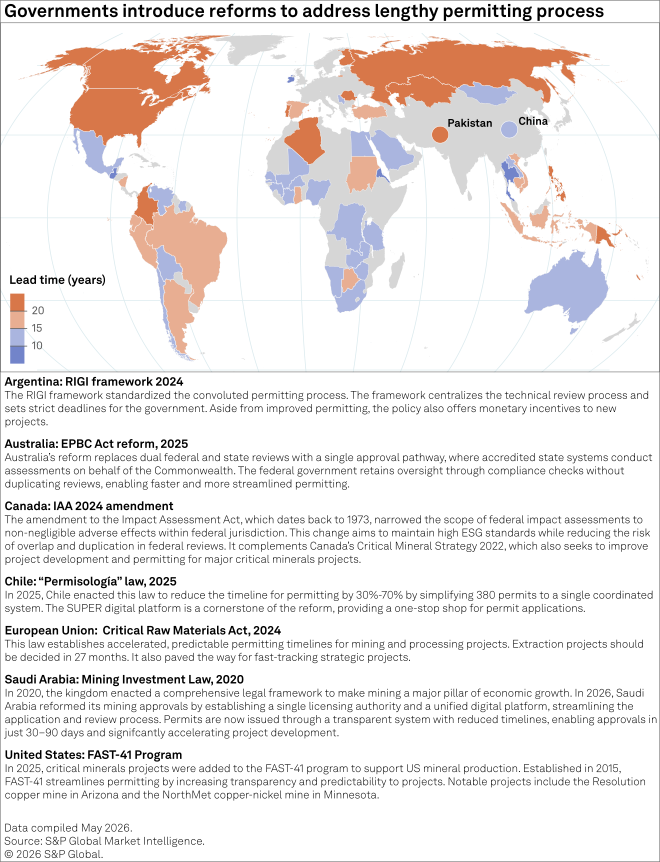
In the last three to four years, many major mining jurisdictions have introduced reforms and new regulations to address the long permitting process. The infographic below shows some of the most notable policies and reforms around the world.
Many governments, think tanks and private corporations acknowledge that the long and complex permitting process for mine construction is a major point of friction in mine development. To address this, governments are introducing ways to streamline the approval process, reduce duplication and improve transparency in the process.
However, expectations need to remain grounded. Policy outcomes are not driven solely by economic or strategic priorities; they are also shaped by public sentiment and political accountability. Local communities, Indigenous groups and civil society organizations play a decisive role in project approvals.
How does the S&P Capital IQ Pro Platform help analyze mining project timelines?
The S&P Capital IQ Pro platform provides the comprehensive data and analysis needed to navigate the challenges highlighted in this research, including extended project lead times and permitting delays. The platform's extensive database on global mining assets was used to conduct the analysis presented in this report, enabling users to gain deeper insights into project viability and risk.
- Access Asset-Level Detail: Users can access detailed data on thousands of operating and nonoperating mines, including discovery dates, feasibility study status, and estimated or actual production start dates.
- Track Permitting Milestones: The platform allows users to monitor permitting milestones, such as the status of an environmental impact statement (EIS) for projects like the Resolution copper mine, to assess potential delays and risks.
- Monitor Regulatory Changes: Stay informed on regulatory changes and policy reforms across major mining jurisdictions to understand the evolving landscape for mine development and investment.
- Benchmark Project Timelines: Utilize historical data to benchmark project timelines and identify trends, such as the significant increase in lead times for non-operating assets to nearly 30 years.
Key questions about mining project delays
This analysis raises several important questions about the increasing length of mining project timelines. Below are answers to key questions regarding the causes of delays, their impact, and the governmental responses discussed in the report.
What is the primary cause of delays for new mining projects?
The primary cause of startup delays for mines scheduled to begin production in 2026 and beyond is permitting issues or the revocation of previously issued permits.
How long can permitting delays postpone a mine's startup?
Permitting delays can push a project's expected start date back by up to 5 years, as seen with some mines scheduled to begin production from 2026 onward. For the Resolution copper project, the timeline has already been pushed back from 2030 to potentially the mid-2030s.
Can permitting issues lead to project cancellation?
Yes, permitting issues can lead to project cancellations. The Loma Larga gold project in Ecuador is a significant example: the environmental license was revoked just four months after issuance due to backlash from local groups, leading to the suspension of all activities.
What are governments doing to address these long lead times?
In the last three to four years, many major mining jurisdictions have introduced reforms and new regulations to address the long permitting process. These efforts aim to streamline the approval process, reduce duplication, and improve transparency to reduce friction in mine development.
S&P Global uses generative AI to create content in accordance with our Terms of Use. (Terms of Use with https://www.spglobal.com/en/terms-of-use)
This article was published by S&P Global Market Intelligence and not by S&P Global Ratings, which is a separately managed division of S&P Global.
Content Type
Products & Offerings
Segment
Language
