Research — Oct 29, 2026
Weathering the squeeze: How climate volatility is shifting the mining cost curve

The El Niño–Southern Oscillation (ENSO) is a recurring climate pattern driven by combined changes in tropical Pacific sea-surface temperatures, atmospheric pressure and wind circulation. Its warm phase, El Niño, and cool phase, La Niña, alter global precipitation patterns, exposing mining regions to divergent risks including drought, flooding, power shortages and logistics disruption. The National Oceanic and Atmospheric Administration (NOAA) assigns a probability of above 90% that the current El Niño will be exceptionally strong — with peak effects expected between November 2026 and February 2027 — and a 75% probability that it will be the strongest recorded since 1950.

➤ Weather-related disruption remains a risk to the 2027 global mine supply, particularly in Zambia, Peru, Indonesia and Australia.
➤ Disruptions drive costs higher, as drought constrains power and water, while flooding damages infrastructure, disrupts logistics and raises repair costs. Lower output also increases unit costs.
➤ Exposure varies depending on the country. Zambia faces drought-driven power shortages, Peru experiences rainfall and transport disruptions, and Indonesia deals with water-related smelter risks and tailings failures.
➤ Climate disruption could steepen the global cost curve by increasing the price required to sustain copper, nickel and manganese production.

The impact of ENSO will vary by event and location, but regions commonly exposed to significant effects include Zambia, Peru, Ecuador, northern Mexico, the southern US, Brazil, India, Indonesia, the Philippines and Australia. Actual exposure will depend on the location and resilience of individual operations, including their access to water, power and transport infrastructure, as well as their contingency capacity. Nevertheless, infrastructure damage, power constraints and operational delays could disrupt part of the supply from these areas.
The risk is particularly significant for copper, given the projected deficit between mined output and smelter demand in 2027. Labor disputes add a separate layer of uncertainty: More than 700 workers at the Centinela mine in Chile began their strike on Oct. 7, with unions warning that November production could fall by half, while supervisors at Escondida — also in Chile — sought to avert a separate strike through negotiations. Although the ultimate production impact remains uncertain, the potential overlap of weather-related disruptions and labor stoppages could further constrain supply. Weather is, therefore, not merely an operational variable; it is a potentially material and largely unhedged driver of unit costs and all-in sustaining costs. This article examines cases of different weather-related events that affected mine operations and costs.
Zambia: Drought and power costs
Zambia is a clear example of how an El Niño-related drought can translate into increased mining costs through the power system. Southern Africa is expected to experience hotter and drier conditions under ENSO. Zambia is particularly exposed because drought can constrain hydropower generation, which may force miners to rely on imported electricity, diesel generation or load shedding. S&P Global data show that Zambia produced 826,000 mt of paid copper in 2025, making it Africa's second-largest producer after the Democratic Republic of Congo and the largest in southern Africa. Production is projected to increase to 904,000 mt in 2026 and 979,000 mt in 2027.
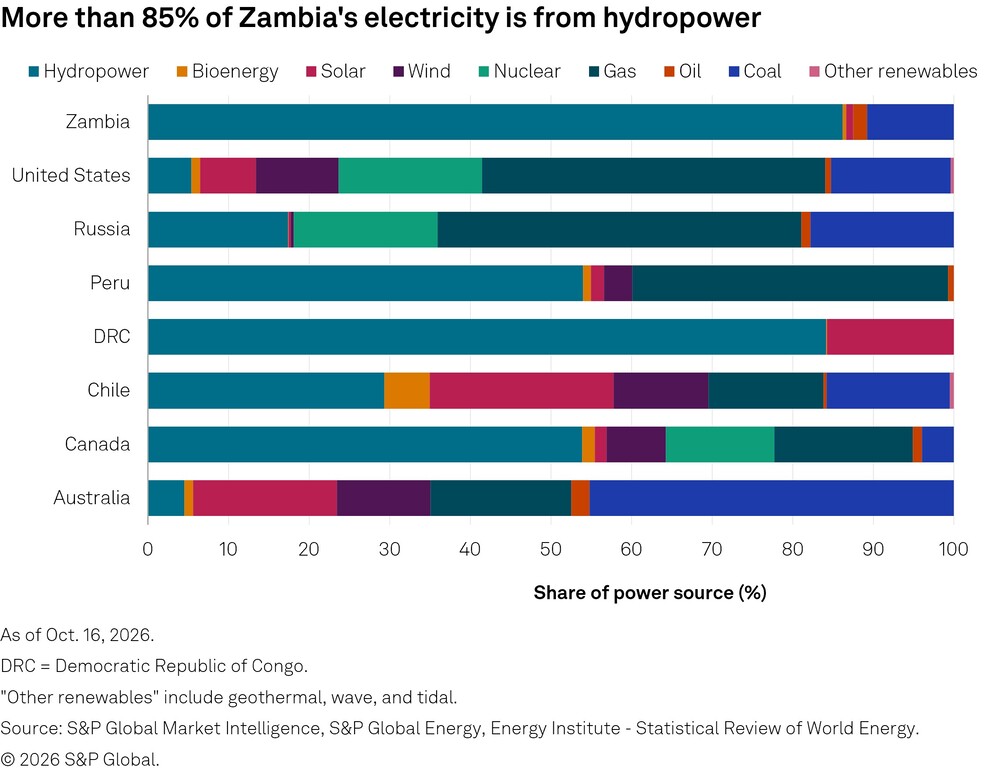
This exposure is amplified by the structure of Zambia's electricity system. More than 85% of the country's hydropower generation comes from the Kariba North Bank and Kafue Gorge facilities, leaving the electricity system highly vulnerable to low water levels. The 2024 El Niño-aggravated drought illustrates how power shortages can affect mine operations and unit costs. Following the national emergency, Zambia Electricity Supply Corp. Ltd. (ZESCO) reduced national generation by 700 megawatts, introduced a daily eight-hour load-shedding schedule for retail customers and planned a 150-MW reduction in electricity supplied to mining companies. First Quantum Minerals Ltd.'s operations in Zambia were expected to face an 80-MW curtailment from May through December 2024.
First Quantum's response to the mentioned curtailment illustrates the cost of replacing lost hydropower. The company arranged replacement power through the Southern African Power Pool, primarily sourced from Mozambique and Namibia, at an estimated cost of US$25 million, or approximately 3 cents per pound in additional cash costs in 2024. Group cash operating costs reached $2.21/lb in the December quarter of 2025, up $0.26/lb quarter over quarter, citing lower production volumes and higher power costs in Zambia. Our analysis shows that a 30% electricity cost increase in 2027 could add approximately 1.88 cents/lb to the total cash cost if a renewed drought materially constrains hydropower supply during the forecast ENSO period. Operations dependent on diesel generators to supplement electricity generation would also face additional exposure to elevated fuel prices.
Peru: Rainfall and logistics risks
While Zambia's principal exposure is drought, ENSO can bring intense rainfall to parts of coastal Peru and the Andes between November and March. Changes in precipitation can affect river flows, reservoirs and hydropower output, while flooding and landslides can damage mine infrastructure and disrupt roads and concentrate transport. The resulting risks are, therefore, operational and logistical.
For Peru's copper industry, climate-related risks are highly site-specific, reflecting differences in regional precipitation patterns, water availability and infrastructure. Cerro Verde in Arequipa is prioritizing water infrastructure projects to protect against rainfall and water flows associated with El Niño, while Antamina in Áncash has experienced rainfall-triggered landslides that disrupted road access along the Pativilca–Conococha corridor. At Las Bambas in Apurímac, reliance on local water sources and long-distance concentrate transportation highlights potential areas of operational exposure, while Toromocho in Junín provides a further example of an Andean mining operation requiring site-specific water and environmental monitoring. These cases illustrate how climate variability can create different cost pressures, including water-management expenditure, infrastructure maintenance and logistics disruption, although the magnitude of any resulting cost increase depends on the event's severity and the mine's response.
These site-level risks can also propagate through Peru's broader logistics network. Peru's elevated sensitivity to freight-cost increases reflects the importance of logistics in moving copper from inland mining operations to export markets. The World Bank has identified logistics costs as a share of product value as among the highest in Latin America and the Caribbean. In contrast, major southern operations, such as Las Bambas, rely on extensive overland and rail transport to reach the Port of Matarani. The concentration of copper shipments through key transport corridors also creates potential exposure to disruptions, as demonstrated by historical blockades that restricted mineral movements to the port.
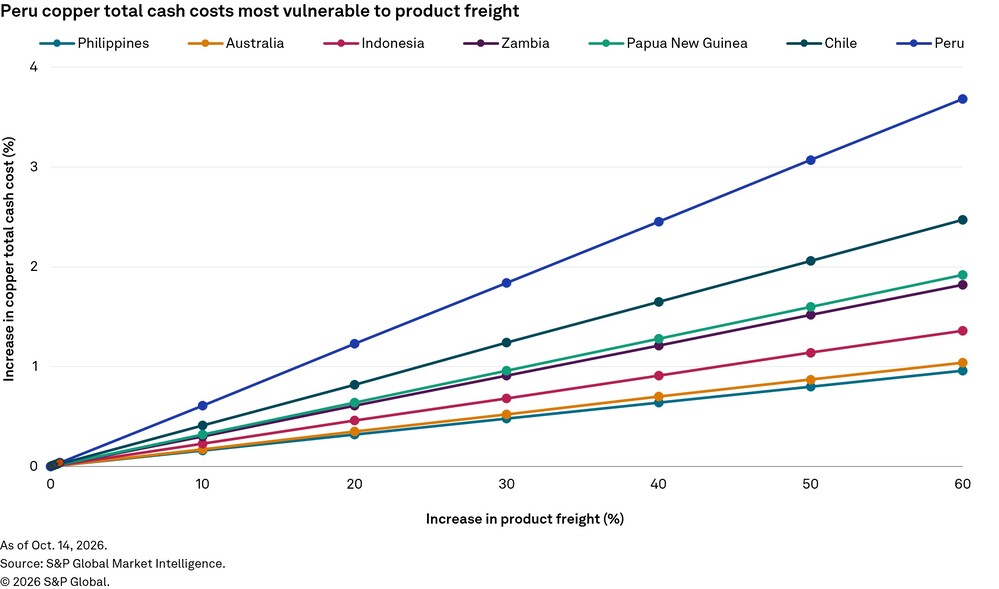
An S&P Global Mine Economics sensitivity analysis estimates that a 60% increase in product freight costs would raise Peru's copper total cash costs by 3.68%. While the model quantifies the potential cost impact, the country's logistics infrastructure and documented transport disruptions provide supporting context for its heightened sensitivity to freight-cost shocks.
Indonesia: Weather volatility and tailings risk
Indonesia's exposure is two-sided: Drought can constrain smelter output through power and water shortages, while intense rainfall can damage the infrastructure that supports rapidly expanding nickel-processing capacity. El Niño-related drought has reportedly prompted several smelters at PT Indonesia Morowali Industrial Park (IMIP) — the country's largest nickel-processing hub — to reduce nickel pig iron (NPI) production. Initial market reports mentioned that the volumes affected by the cut could be around 100,000 mt of NPI production or more if restrictions persist. Given Indonesia's dominant position in global nickel supply and Morowali's importance as an NPI-producing center, the reported cuts briefly increased the market's near-term supply risk premium, contributing to a rise in nickel prices on Sept. 22, the day the disruption was reported.
The same industrial complex also illustrates the financial risks associated with extreme rainfall. Although the incidents were not directly attributed to ENSO, heavy rainfall and flooding were reported as contributing factors in the failure of two tailings storage facilities at IMIP, resulting in fatalities and environmental damage. According to the Tanah Merdeka Foundation, IMIP was generating approximately 11.5 million mt of tailings annually, with volumes projected to increase to 47 million mt/year by 2026 as nickel-processing capacity expanded. This growing waste volume could intensify pressure on tailings storage and water-management infrastructure, particularly in a region exposed to heavy rainfall. The operational consequences of the tailings storage facilities (TSF) failures were immediate. Oracle Nickel, a neighboring and separately operated rotary kiln electric furnace (RKEF) refinery, suspended production for two days after contaminated water from one of the failed facilities overflowed into the surrounding area. PT Oracle Nickel Industry estimated that the incident resulted in approximately US$5.8 million in lost production, damage and repairs. This amount does not reflect broader owner and operator liabilities, including remediation, environmental monitoring and regulatory penalties. Although the financial losses associated with the incident in Indonesia have not been publicly quantified in the cited reports, potential cost implications include facility rehabilitation, environmental remediation, improved drainage and storage infrastructure, and liabilities arising from impacts on nearby communities.
International incidents illustrate the potential scale of these liabilities. The 2014 Mount Polley mine tailings dam failure in Canada reportedly generated approximately US$67 million in cleanup and ongoing monitoring expenses, while the 2019 Brumadinho dam disaster in Brazil resulted in reported fines of approximately US$7 billion, in addition to substantial long-term remediation costs.
Logistics and infrastructure
The cost implications of extreme weather also extend beyond copper and nickel operations. Although not presented as a direct ENSO impact, the disruption at South32 Ltd.'s subsidiary Groote Eylandt Mining Co. Pty Ltd. (GEMCO) manganese operation illustrates how flooding can affect production, logistics and capital expenditure. Tropical Cyclone Megan struck the Groote Eylandt mine in March 2024, flooding mining pits and damaging a critical bridge, wharf and port infrastructure. Production and sales were minimal from the June quarter of 2024 through the March quarter of 2025, delaying shipments for a year and contributing to a sharp increase in high-grade manganese prices.
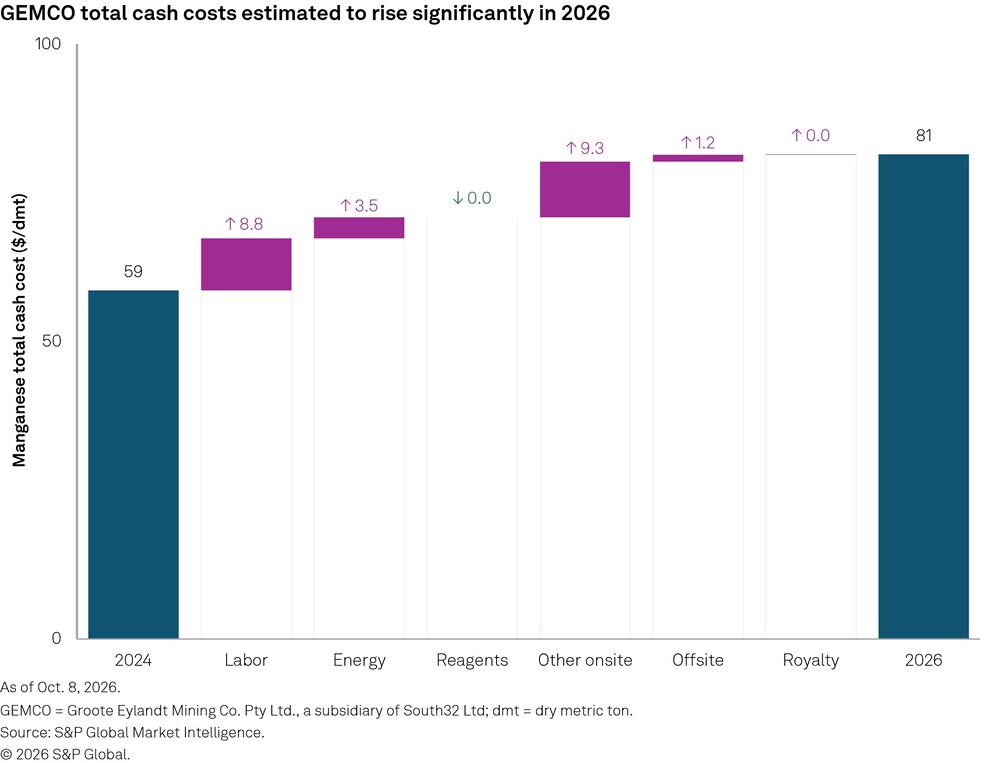
South32's 2026 annual report indicates that elevated water volumes, resulting from persistent groundwater seepage and the substantial effects of the wet season, continue to constrain pit access at GEMCO. The fiscal year 2027 operating unit costs are expected to rise because of lower planned production, a stronger Australian dollar and broader inflationary pressures. The operation also illustrates that weather-related impacts can increase capital requirements; related expenditure reached US$78 million in the fiscal year 2026 and is projected at US$85 million in the fiscal year 2027, largely reflecting additional investment in water-management infrastructure.
Repricing the cost curve
ENSO-related disruption can simultaneously reduce production while inflating expenditure across power, water management, logistics, tailings management and infrastructure. Lower output spreads fixed costs across fewer payable units, magnifying the impact on unit costs and shifting supply toward the higher-cost end of the global cost curve. Some producers, including Philippine nickel miners, already incorporate seasonal weather constraints into mine plans, but increasing variability in the timing and severity of events may weaken the reliability of these assumptions.
Ultimately, the approaching 2026-2027 ENSO event is a "gray rhino" — a highly probable, high-impact threat staring the mining sector right in the face. The warning signs are already clear; relying on reactive crisis management, such as emergency power purchases or post-flood repairs, will only lock in higher operating and capital costs. Although the forecasts do not explicitly attribute the modeled cost increases to ENSO, the transmission mechanism is evident: Climate volatility increases the capital and energy required to maintain operations, compresses margins, and raises the incentive price needed to sustain production. As demand for copper, nickel and manganese accelerates to support electrification, weathering the squeeze will require proactive investment in infrastructure resilience before the rhino charges — or risk constraining short-term supply and inflating the long-term cost and viability of the energy transition.
This article was published by S&P Global Market Intelligence and not by S&P Global Ratings, which is a separately managed division of S&P Global.