Research — Sep 03, 2026
Cutting the traditional TV cord – half go virtual

By Brian Bacon
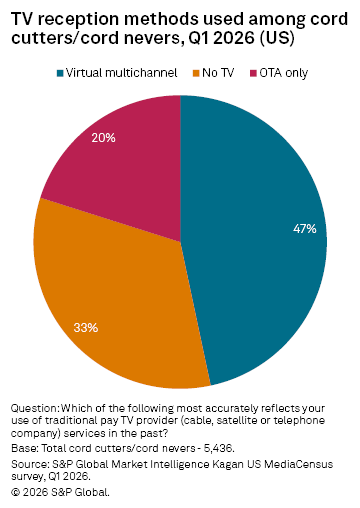
Nearly half of respondents (47%) who do not subscribe to a traditional multichannel service instead subscribe to a virtual service. According to results from S&P Global Market Intelligence Kagan's US MediaCensus survey, conducted in February, only 20% of those who don't subscribe to a cable, telco or satellite TV service used only an antenna for over-the-air TV. The remaining 33% indicated that they don't use any of these options to watch live TV, although they could view TV programming via free ad-supported TV (FAST) services, YouTube and/or subscription online video services.

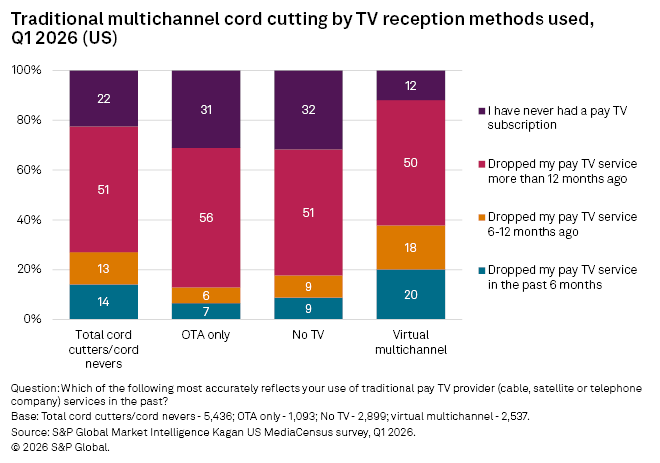
➤ Twenty percent of virtual multichannel subscribers indicated they dropped a traditional pay TV service in the past 6 months.
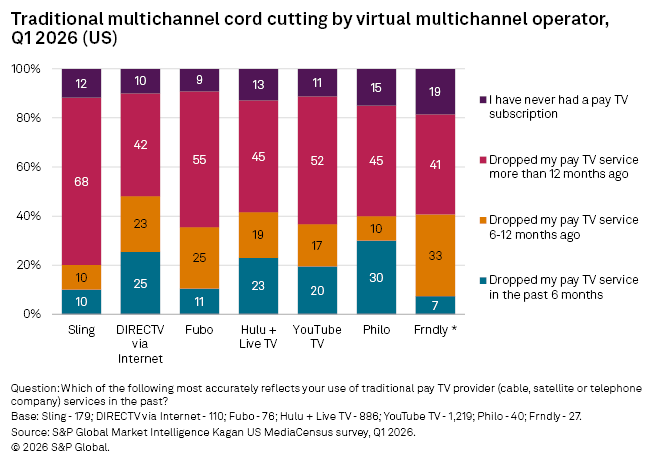
➤ Sling subscribers were the most likely to have dropped their traditional service more than 12 months ago (68%) compared to other virtual subscribers.
➤ Those who only use OTA for TV tended to be older compared to other cord cutter/never respondents.

Access full tables in Excel format here.
Respondents who did not subscribe to a traditional multichannel service were asked about their previous use of those services. Just over half of these respondents (51%) indicated they had dropped their TV subscription more than 12 months ago, while another 22% indicated that they never had a pay TV subscription.
Among the respondents who have a virtual multichannel service rather than a traditional service, only 12% indicated that they never subscribed to a traditional service, compared to 32% of those who don't subscribe to any TV service. Among virtual subscribers, the share of those who dropped in the past 6 months or dropped 6 to 12 months ago was about double that of those respondents with no TV service.
Examining virtual subs by operator shows that DIRECTV via Internet, Walt Disney Co.'s Hulu + Live TV, Alphabet Inc.'s YouTube TV and Philo subs were more likely to indicate that they had dropped their traditional services within the past 6 months compared to Sling, Fubo and Frndly. Sling subscribers had the largest share who dropped their traditional services more than 12 months ago at 68%.
Among virtual multichannel subscribers, length of subscription was similar among those who dropped a traditional service and those who never had one, with the majority indicating they had been subscribed for a year or more at 62% and 64%, respectively.
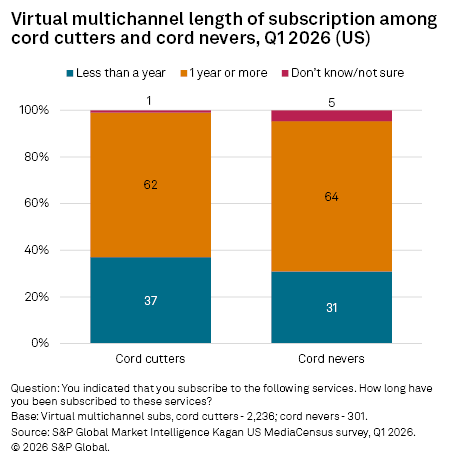
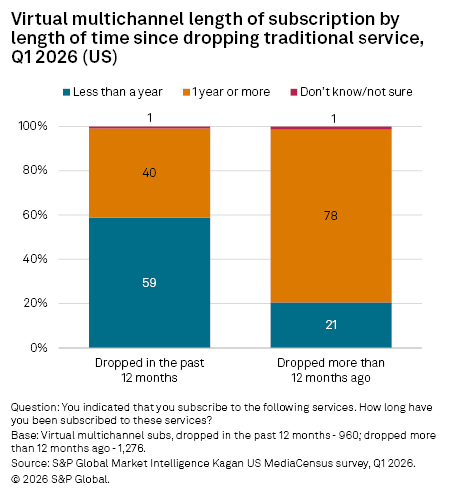
Taking a closer look at those who dropped their traditional TV service shows a correlation to how long they have been subscribed to their virtual service, indicating that virtual subscribers are going from one to the other without much downtime in between. Among those who dropped their traditional service in the past year, 59% reported having subscribed to their virtual service for less than a year. As for those who dropped their traditional service more than a year ago, only 21% had been subscribed to their virtual service for less than a year.
Among respondents not subscribed to a traditional multichannel service, those who only use over-the-air broadcast TV were the oldest group, with 65% aged 55 or older. By comparison, those who indicated they subscribe to a virtual service or don't watch any live TV broadcasts tended to be younger. Those who dropped their traditional TV service more than 12 months ago were more likely to be in households of multiple adults without children at 37%, compared to those who dropped more recently or never had a traditional service. Those who never subscribed were more likely to be high school-educated, living in single-adult households without children and earning less than $50,000 per year.
Data presented in this article is from the MediaCensus survey conducted in the first quarter of 2026. This sample included 19,214 US internet adults matched by age and gender to the US Census. The survey results have a margin of error of +/-0.98 ppts at the 95% confidence level. Survey data should only be used to identify general market characteristics and directional trends.
Consumer Insights is a regular feature from S&P Market Intelligence Kagan.
This article was published by S&P Global Market Intelligence and not by S&P Global Ratings, which is a separately managed division of S&P Global.
Content Type
Theme
Segment
Language