
Guide to Airport Services Industry KPIs
This guide highlights the key performance indicators for the airport services industry and where investors should look to find an investment edge.
Industry Overview
The airport services industry plays a crucial role in the functioning of airports around the world. These services encompass a wide range of activities and operations essential for the smooth operation of airports and the comfort and safety of passengers. From ground handling and security to retail and catering, the airport services industry is diverse and multifaceted.

Key Airport Services Industry Metrics
Key performance indicators (KPIs) are the most important business metrics for a particular industry. When understanding market expectations for the airport services industry, whether at a company or industry level, some KPIs to consider include:
- Aircraft Movement
- Passenger Per Aircraft
- Passengers
- Revenue Per Passenger
- Operating Margin
- EBITDA Margin
- Net Profit Margin


Airport Services Business Model
-
Expenses
-
Revenue
-
Profitability
Airport service providers incur various expenses to operate and maintain airport facilities, provide essential services, ensure safety and security, and deliver a positive experience for passengers. The major expense lines for airport service providers include:
- Maintenance and repair expenses: This includes expenses incurred for the maintenance and repair of runways and taxiways, terminals and gates, parking facilities, and ground handling equipment.
- Employee cost: This includes expenses related to the salaries, wages, and benefits of a varied workforce. This includes security personnel, maintenance crews, administrative staff, and customer service representatives. It also covers payments for highly skilled professionals responsible for managing air traffic movements safely and efficiently.
- Depreciation and amortization expenses
- Selling & distribution expenses
Companies in the airport services industry primarily generate revenue from two service segments:
- Aeronautical services
- Non-aeronautical services
Aeronautical Revenue
Aeronautical revenues are a significant source of income for airport services companies. These revenues are directly related to the use of airport facilities and services by passengers, airlines, and aircraft. The four main sources of aeronautical revenue are passenger charges, landing charges, security charges, and parking charges.
Passenger charges, often referred to as airport fees or airport taxes, are fees that passengers pay for the use of airport facilities and services. These charges are levied by airports and are typically collected by airlines as part of the ticket price. They apply to passengers every time they fly in and out of an airport, as well as during any layovers or transit stops at that airport.
Non-Aeronautical Revenue
Apart from aeronautical revenue, airport service providers also generate income from non-aeronautical services. The four main sources of non-aeronautical revenue are real estate, retail concession, advertising, and car parking charges.
Real estate revenue for airport service providers encompasses rental income generated from leasing various spaces such as cargo buildings, hangars, office buildings, and standalone investment properties around the airport terminal. Additionally, this segment involves revenue from activities like managing properties around the terminal and operating infrastructure. Real estate income is usually recognized over the duration of the lease.
Investors assess the profitability of companies in this industry by considering various financial metrics, including:
- Operating Margin (%)
- EBITDA Margin (%)
- Net Profit Margin (%)
- Return on Equity (ROE)
Available Comp Tables - Consensus Estimates
Visible Alpha offers 12 airport services-related comp tables, comparing forecasts for key financial and operating metrics, to make it easy to quickly conduct relative analysis, whether you are interested in looking at key values for global companies, Americas, or Europe. Every pre-built, customizable comp table is based on region, sub-industry, or key operating metrics.
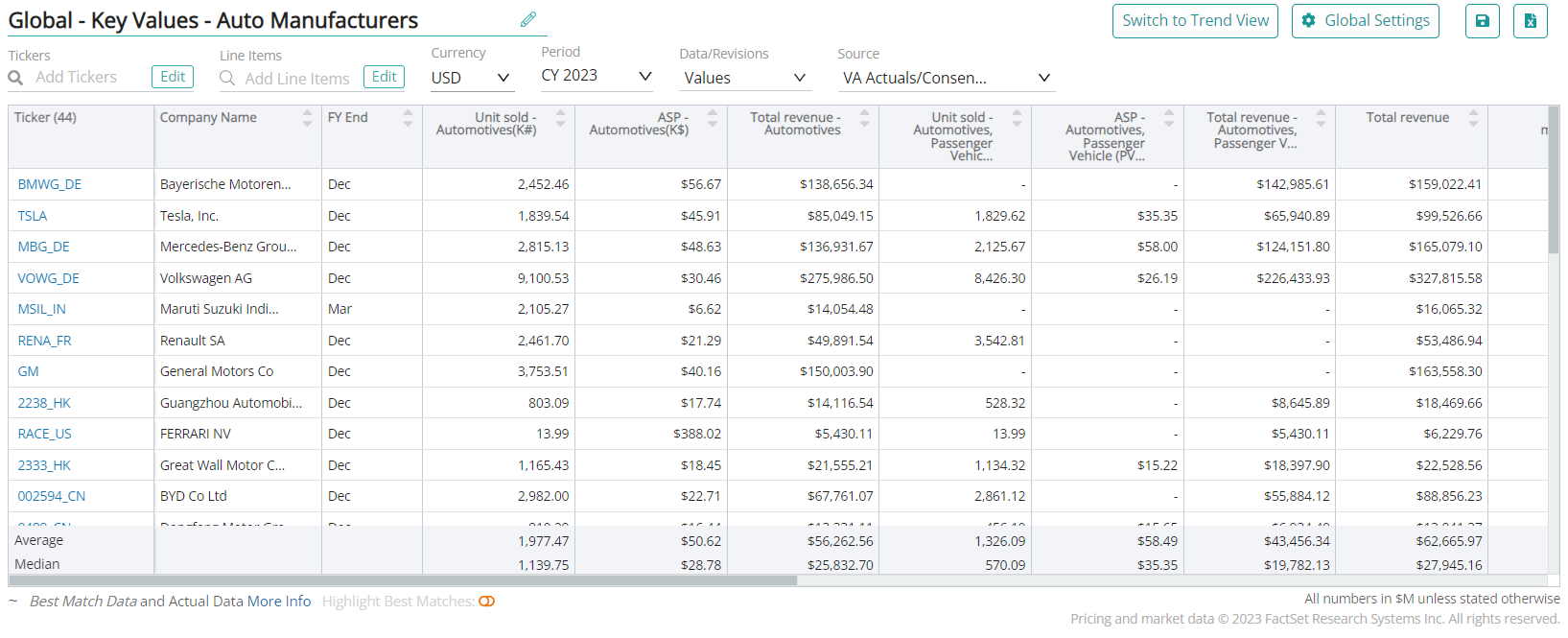
Global Financial and Operating KPIs Company Examples:
North America
- Corp America Airports SA
EMEA
- Aéroports de Paris
- Aena SA
- Fraport
- TAV Havalimanlari Holding AS
- Flughafen Zürich AG
APAC
- Airports of Thailand
- Shanghai International Airport Co., Ltd.
- JAPAN AIRPORT TERMINAL CO
- Malaysia Airports Holdings Bhd
LATAM
- Grupo Aeroportuario del Sureste S.A.B. de CV
- Grupo Aeroportuario del Pacifico SAB de CV
Download Report
This guide highlights the key performance indicators for the airport services industry and where investors should look to find an investment edge, including:
- Airport Services Industry Business Model & Diagram
- Key Airport Services Industry Metrics PLUS Visible Alpha’s Standardized Industry Metrics
- Available Comp Tables
- Industry KPI Terms & Definitions