ECONOMICS COMMENTARY — 07 Oct, 2026
Global PMI shows inflation set to heat up further as energy fuels higher prices

Global inflation remained elevated around mid-year, and looks set to rise further in the coming months, according to the leading indicators from the PMI data, potentially staying elevated into the new year.
US businesses reported the steepest price rise in output prices among the major economies in September, contrasting with falling charges in mainland China, where inflationary pressures were the weakest among the economies surveyed by the PMIs. However, stubbornly elevated inflation rates are also signalled for the eurozone, UK and Japan, with the PMI leading indicators all signalling inflation at levels well above central bank targets.
By sector, the steepest global charges growth was reported for transportation, reflecting higher fuel costs.
Cooling, but stubbornly high, inflation
Worldwide inflation remained elevated around mid-year, and looks set to rise further in the coming months, ac-cording to S&P Global’s PMI survey data, produced at the global level on behalf of J.P. Morgan.
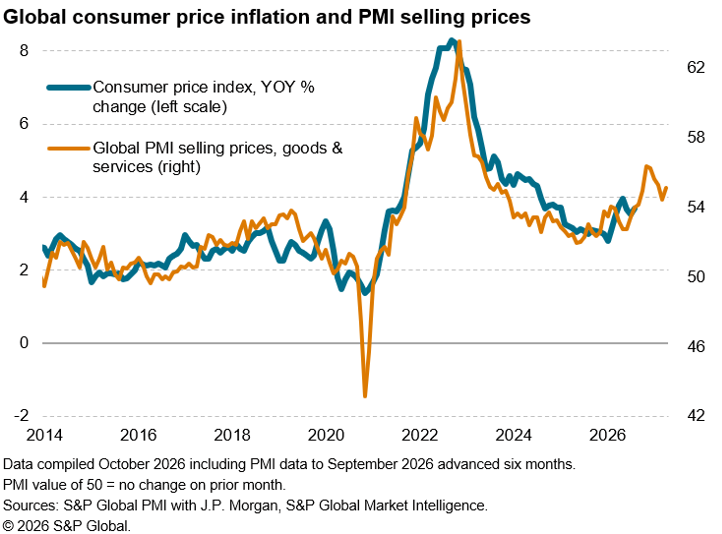
The latest official data point to global consumer prices rising at an annual 3.7% rate in August, which compares with a pre-pandemic decade average of 2.7%, and the leading indicators of inflation from the PMI data hint that it could breach 4% in the near term and stay elevated into the new year. Measured across both goods and services, the PMIs showed average prices charged rising at an increased rate in September. Although below that seen in the four months to July, the latest rise was the fifth largest since February 2023.
PMI as a leading indicator of inflation
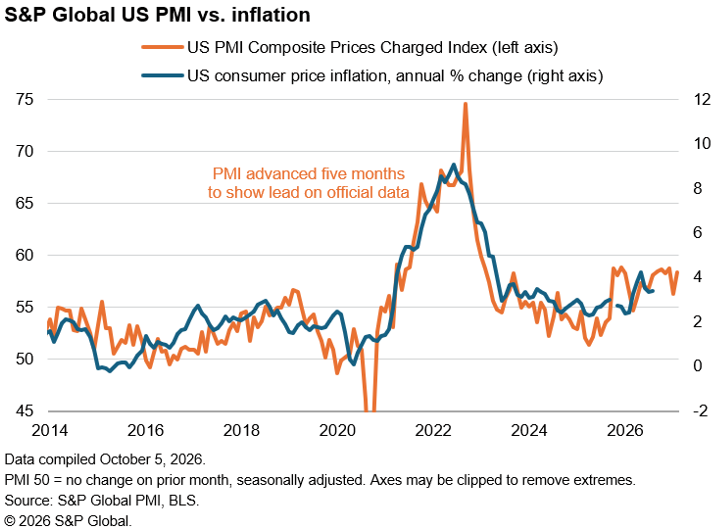
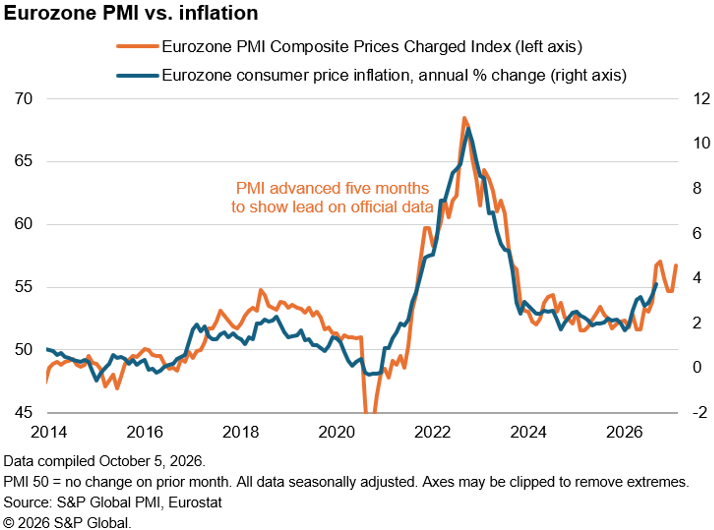
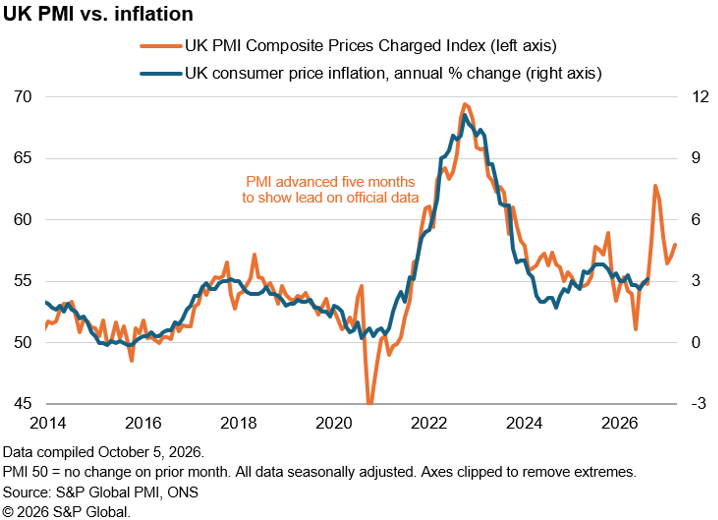
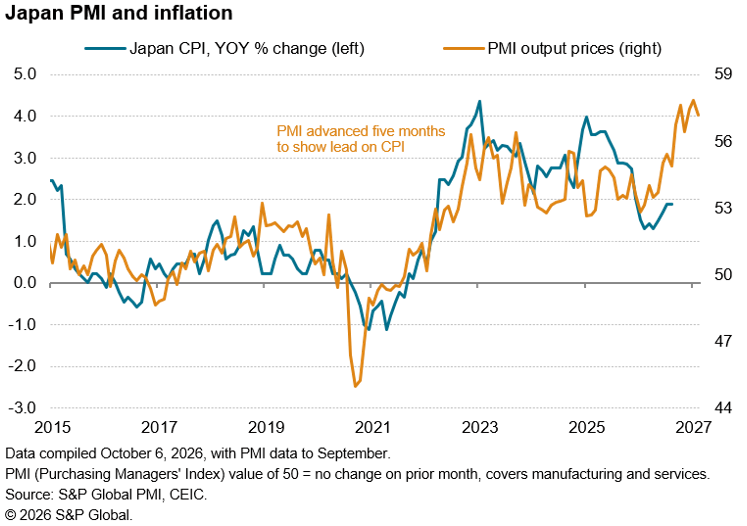
The PMI data exhibit a close correlation with inflation both at the global level and within the world’s major economies, with businesses’ reporting of cost and selling price changes tending to act as a reliable forward indicator of changes in consumer prices. At the global level, for example, the PMI input cost and selling price indices both exhibit a 90% correlation with the official annual consumer price inflation data over the past decade, importantly with the PMI gauges leading the official data by six months. Hence, the PMI indicators provide advance warning not only of changes in the trajectory of inflation but also of the near-term inflation rate.
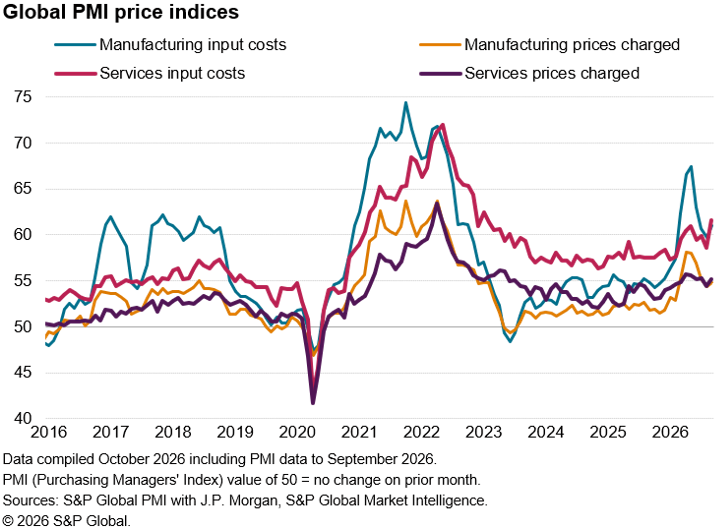
Services cost inflation spikes to highest since early 2023 as energy price surge feeds price hikes
Rates of selling price inflation for both goods and services accelerated in September, thanks principally to higher energy, fuel and transport costs resulting from the war in the Middle East, as well as higher interest rates. The rate of services cost inflation notably hit the highest since January 2023.
Transport prices lead charge inflation higher
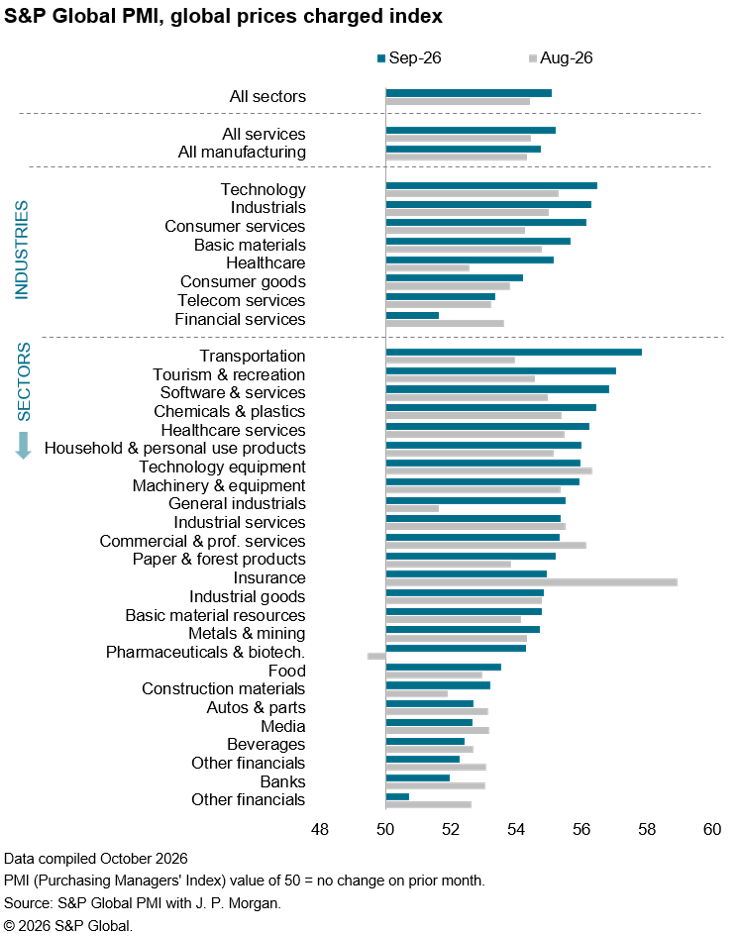
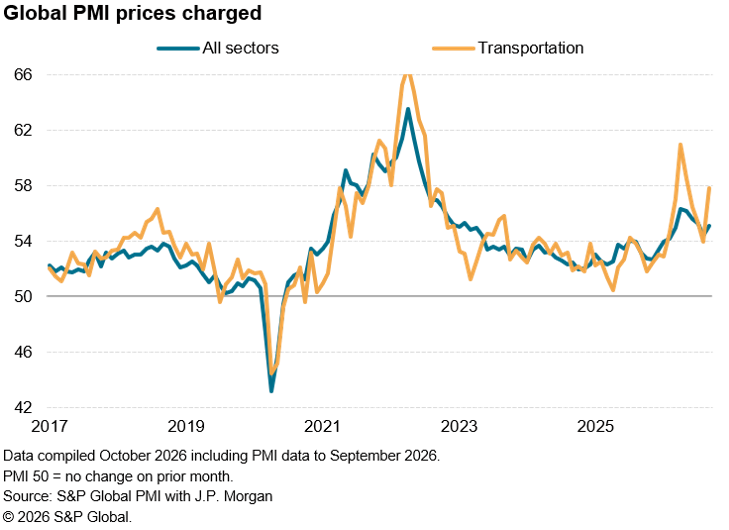
Not surprisingly, given the surge in oil prices seen in September, the steepest price rises globally were seen for transportation, followed by tourism & recreation. With the AI investment boom continuing to dominate the economic picture in September (see our analysis of the latest PMI sector output trends here), an above-average hike was also seen for prices levied by software & related services firms.
Supply chain stress adds to price pressures
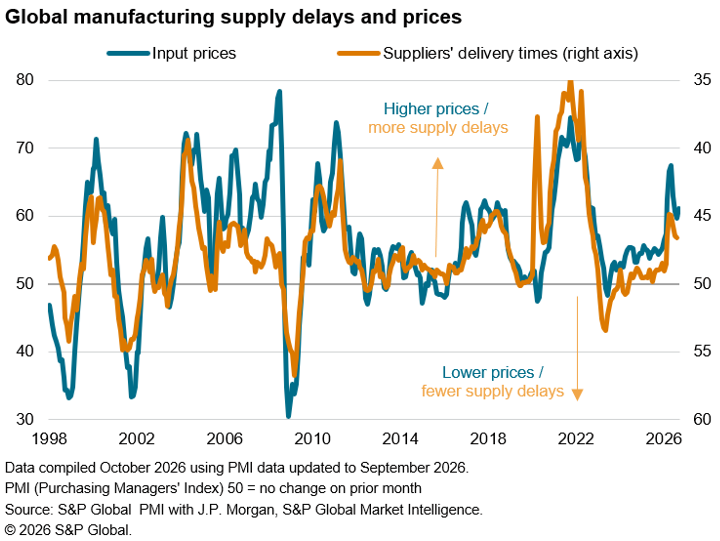
Although energy prices, and specifically the renewed upward pressure on oil prices, reportedly played a key role in driving prices higher globally in September, the PMI survey contributors also continue to highlight the broader upward pressure on prices from supply constraints.
Suppliers’ delivery times lengthened in September to one of the greatest extents recorded over the past four years amid supply chain bottlenecks linked to both reduced raw material availability and shipping delays, in turn often associated with the conflict in the Middle East and restricted shipping. Low water levels on other transit routes were also reported. Longer supply chains typically mean suppliers have greater pricing power and are therefore highly correlated with producer input price inflation. September’s rise in factory input costs was the largest since June and the fifth largest in nearly four years.
US reports steepest price rise of advanced economies
Among the major economies, the US reported the steepest rate of selling price inflation in September, with the rate of increase accelerating. Germany came second, recording the joint second-steepest rise in three-and-a-half years, followed by the UK, where a three-month high was reported. Meanwhile inflation cooled slightly in Japan (which had led the rankings in August with a new survey high). Rates also remained elevated and increased in Spain, France and Italy, pushing eurozone inflation to within a whisker of its recent high back in May.
While inflation also gathered pace in Australia, it slipped to a seven-month low in Canada.
Of the four major emerging markets, Brazil continued to report the steepest rate of inflation, while prices fell in mainland China for the first time since December.
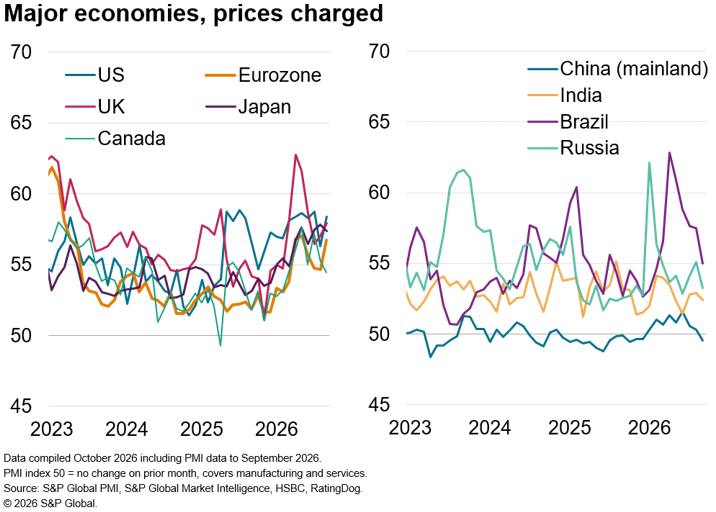
Comparisons of the PMI selling price indicators for all major developed economies point to consumer price inflation remaining stubbornly elevated in the coming months. In all cases, the indicators are running at levels significantly above central bank inflation targets, sending hawkish policy signals.
© 2026, S&P Global. All rights reserved. Reproduction in whole or in part without permission is prohibited.
Purchasing Managers' Index™ (PMI®) data are compiled by S&P Global for more than 40 economies worldwide. The monthly data are derived from surveys of senior executives at private sector companies, and are available only via subscription. The PMI dataset features a headline number, which indicates the overall health of an economy, and sub-indices, which provide insights into other key economic drivers such as GDP, inflation, exports, capacity utilization, employment and inventories. The PMI data are used by financial and corporate professionals to better understand where economies and markets are headed, and to uncover opportunities.
Read our latest PMI commentary here.
This article was published by S&P Global Market Intelligence and not by S&P Global Ratings, which is a separately managed division of S&P Global.
Theme
Location
Products & Offerings