Research — July 23, 2026
Microsoft and Meta earnings previews

By Melissa Otto, CFA
Earnings previews: Microsoft and Meta
A look at CapEx spending
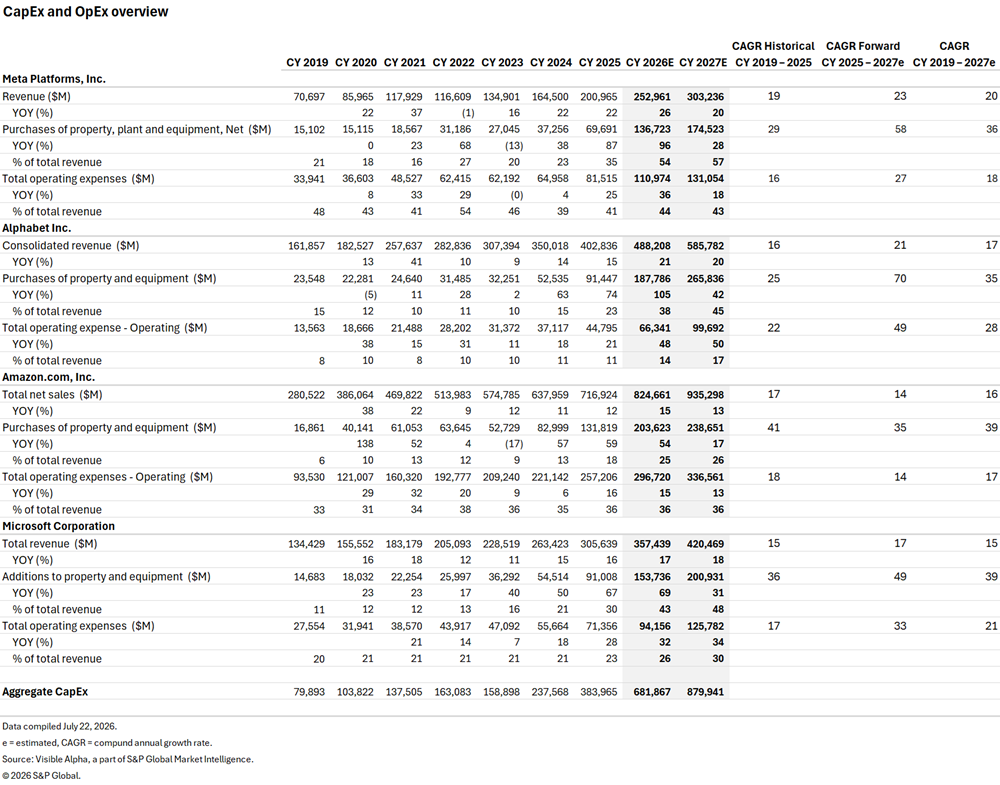
The strong growth in investing in technology infrastructure to support AI has been a focus the past year and is projected to expand this year and next. The expectations for CapEx spending by the hyperscalers continues to move higher.
For 2026, consensus year-over-year CapEx is expected to increase by almost $300 billion from $384 billion to $682 billion. For 2027, this spending is projected to further increase to $878 billion, totaling over $1.5 trillion in only two years. The much stronger pace of the expected CapEx to support the technology infrastructure for AI has caused some concern as the significant ramp in spending is projected to grow faster than revenues.
Will Microsoft Corp. (NASDAQ: MSFT) and Meta Platforms Inc. (NASDAQ: META) maintain their capex guidance this year?
Microsoft Corporation
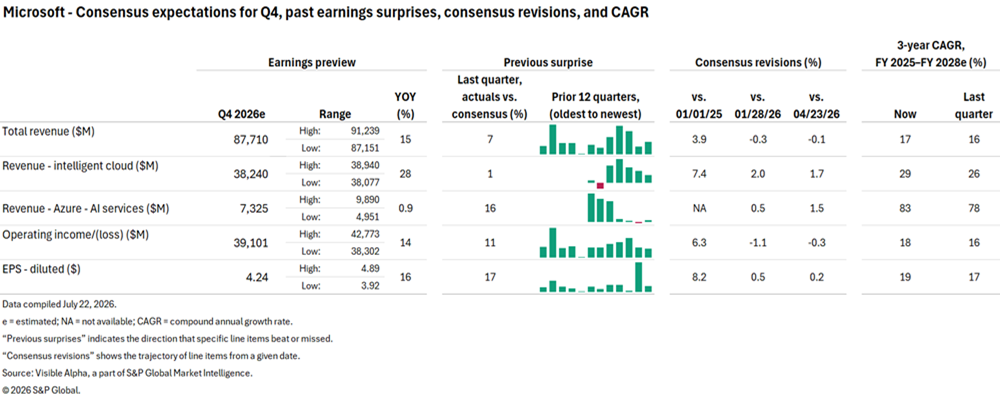
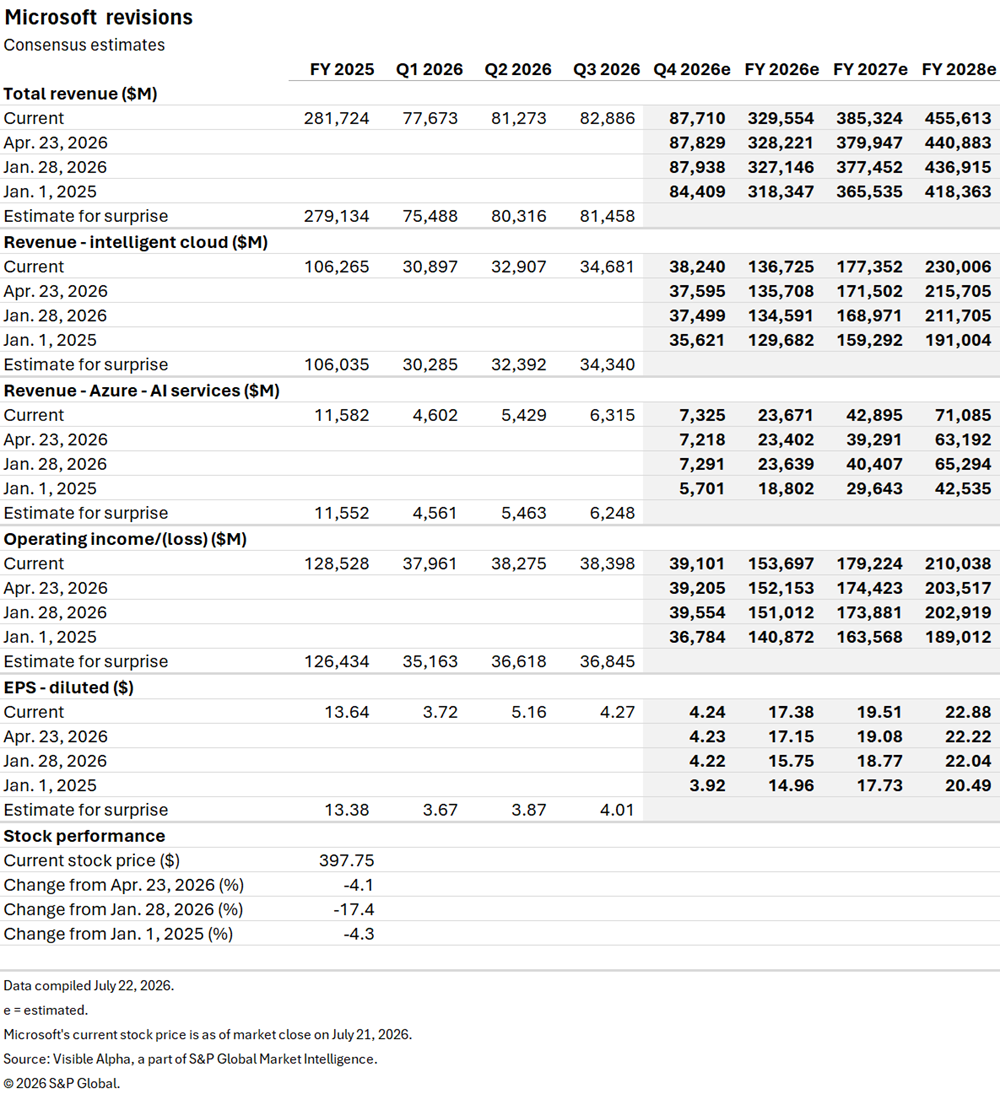
Total revenues expected for Q4 have remained stable since January 2026, driven by a resilient view of its core business segments. However, concerns about the impact of AI on Microsoft’s SaaS business remain an overhang on the stock. The new Azure AI Services segment is projected to increase for FY 2026, with consensus estimates now expecting $23.7 billion, up slightly from $23.4 billion last quarter. Expectations for this segment in Q4 2026 have remained flattish since January 2026, suggesting the market is waiting for visibility into a catalyst. Expected Q4 26 revenue for the Intelligent Cloud segment has been moving higher since last quarter. The market will likely focus on AI growth and adoption and how these metrics provide a runway for the outlook.
Profitability has been trending down slightly since January 2026 but overall is expected to remain relatively resilient for the Company, while EPS expectations for the quarter and outlook years have moved higher. The market will likely want clarity about the stability of profitability in the Azure AI business.
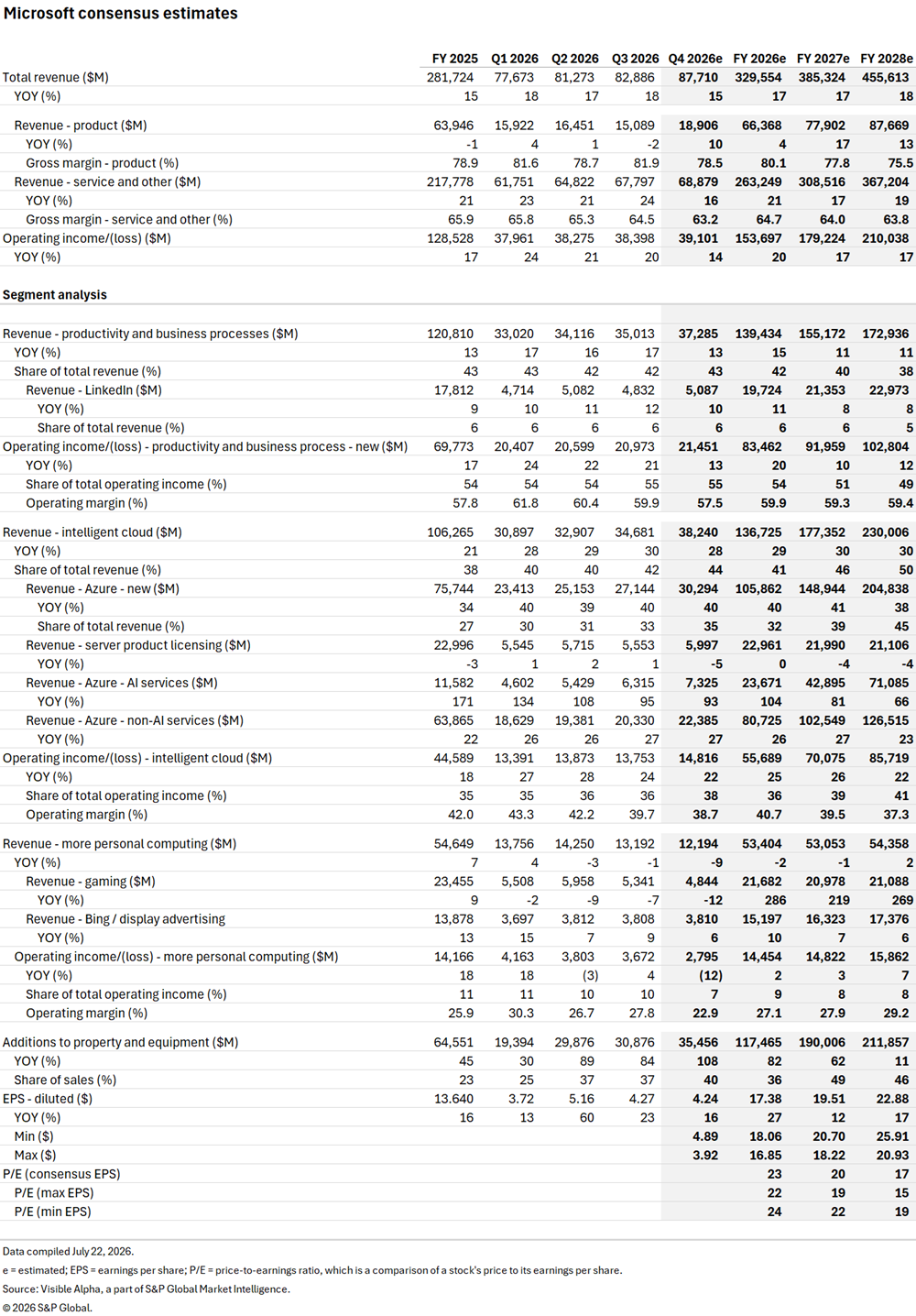
We are closely watching what the company will say about the outlook for Azure and OpenAI, as Microsoft’s FY 2026 CapEx numbers have continued to increase steadily. According to consensus projections, CapEx estimates are expected to nearly triple from $65 billion in FY 2025 to currently $190 billion in FY 2027, up $60 billion from January estimates.
Microsoft stock has traded down 4% since the last earnings release. The consensus P/E for 2027 has come down from 31x last July and is now 20x. Could the Q4 release and outlook begin to drive outperformance in the stock?
Meta Platforms, Inc.
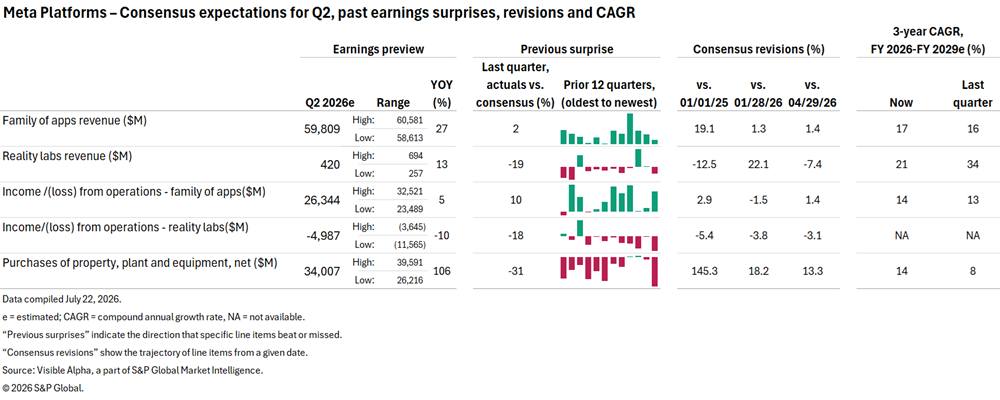
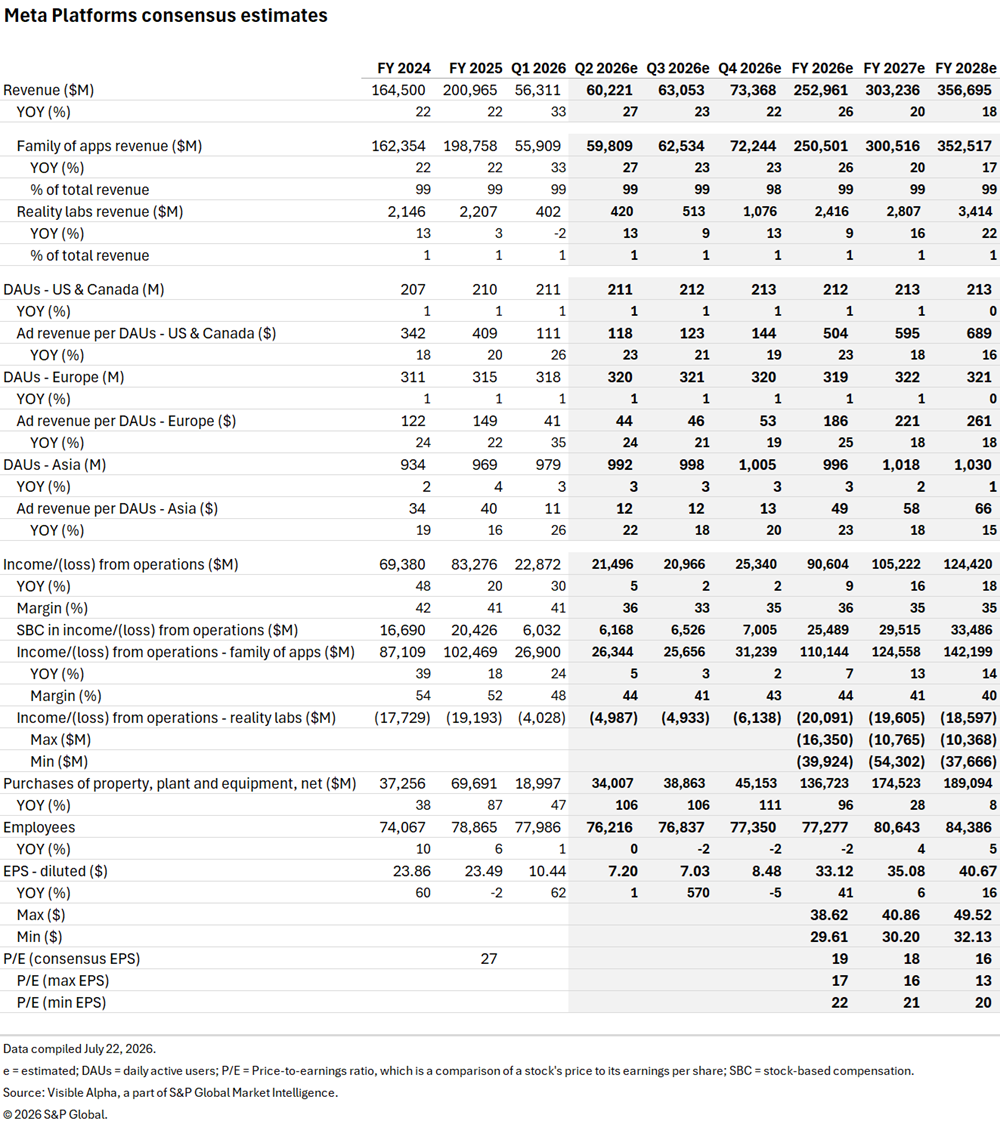
According to Visible Alpha consensus, total revenues for Q2 are expected to be $60.2 billion, driven by solid performance in the Family of Apps segment, especially in the U.S. and Europe. Operating profit is expected to be $21.5 billion, driven by steady profitability in the Family of Apps of around $26 billion and consensus losses remaining around -$5.0 billion for Reality Labs.
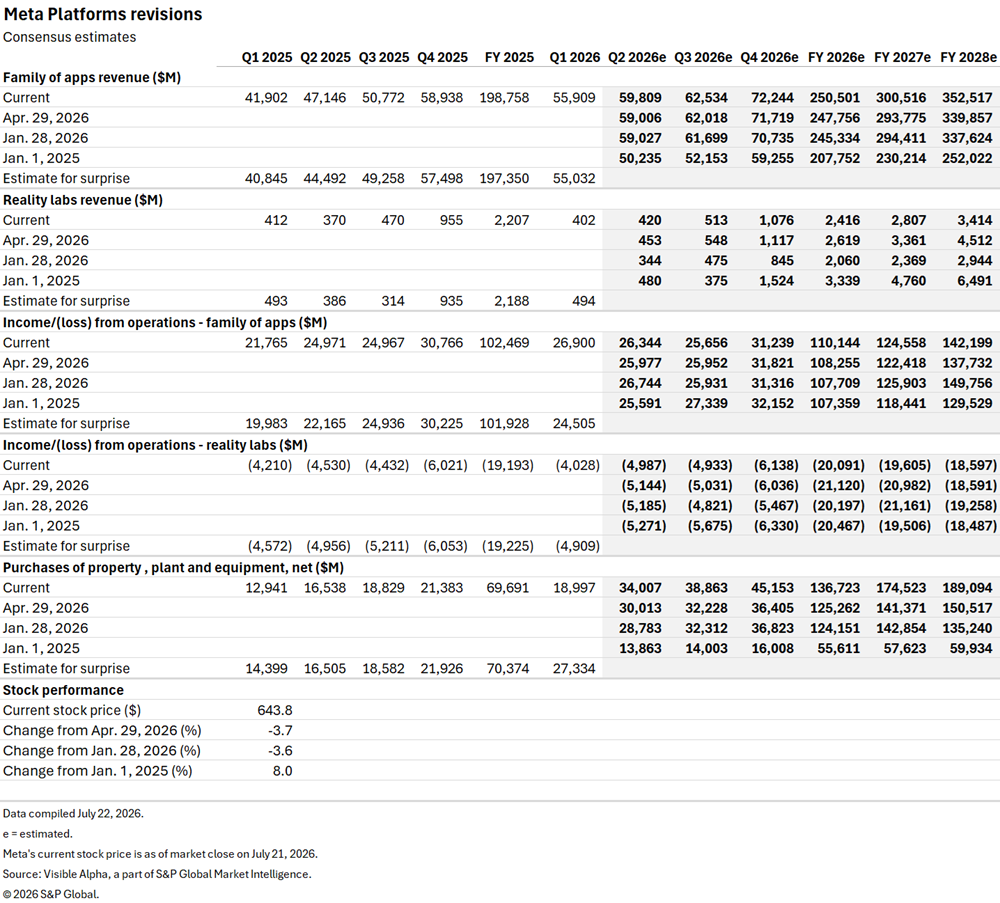
For 2026, earnings expectations for operating income from the Family of Apps have increased almost $2.5 billion to $110.1 billion since January 2026, driven by slightly shifting views about ad revenue per DAU in the US and internationally. The management commentary on the outlook in the earnings call will be key to assessing the potential direction of revisions for 2026. In addition, the projected losses from Reality Labs for 2025 have declined $1 billion for 2026 to -$20 billion, driven by anticipated losses in the division coming down.
Last year, CEO Mark Zuckerberg highlighted that the company planned to invest in servers and data centers to support AI. Since last quarter, CapEx consensus increased over $10 billion to $136.7 billion for FY 2026 is a year over year increase of $67 billion from FY 2025. There are questions about whether Meta will maintain their CapEx this year. However, estimates for CapEx have moved notabily higher for FY 2027 and FY 2028 since last quarter. The market will likely want to some clarity around how these investments around translating into a return for shareholders.
META stock has been underperforming since January and is down 3.7%. The consensus P/E for FY 2027 dropped to 18x from 21x last year. Will Meta be able to deliver a profit surprise in Q2 2026 and begin to outperform?
This article was published by Visible Alpha, part of S&P Global Market Intelligence and not by S&P Global Ratings, which is a separately managed division of S&P Global.
Content Type
Products & Offerings
