Research — March 30, 2026
CERAWeek 2026: Energy and AI converge

By Melissa Otto, CFA
AI and energy: The dynamic duo?
This year’s CERAWeek featured leaders from the technology and energy sectors and government with all sides presenting both the opportunities and complexity associated with the massive build out and conversion of data centers to support AI’s growth and adoption. Secretary of Energy, Christopher Wright, highlighted the increase in demand for energy and the desire of the current administration to lead in AI. He also shared details about the significant estates of unused land to develop data centers. CEO of Chevron Corp., Mike Wirth, emphasized that the competition between the US and China for AI leadership is increasing energy demand. There is a need to produce more power in the US to support both the existing needs and the new demand from AI. These two keynote speakers set the tone for the conference and captured the potential trajectory of energy going forward.
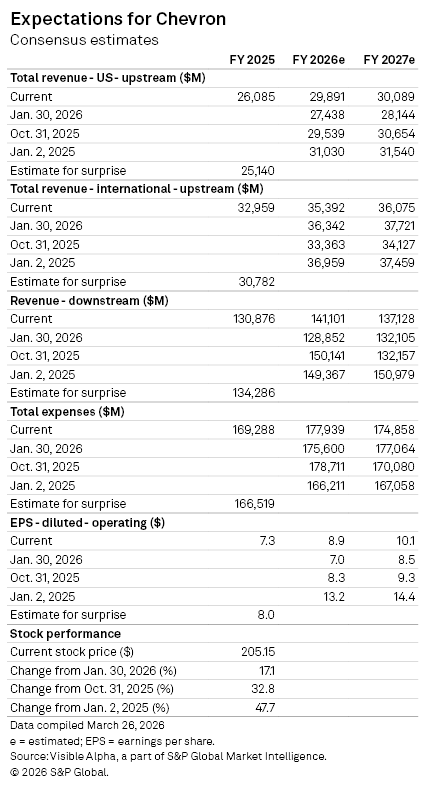
While AI’s opportunities and potential for the energy sector are a potential bright spot, Wirth surprised the audience by stating that current expectations do not fully incorporate the oil supply shock from the conflict in the Middle East and its impact on prices. He emphasized that the current oil market is very uncertain with limited visibility and that it will take time for global inventories to be rebuilt once the conflict ends.
In addition to Wirth, many leaders echoed the bearish sentiment around the Middle East situation, implying that the conflict may drag on and lead to supply shocks, inflation and slowing growth that global markets have not fully baked into expectations. Currently, S&P Global Market Intelligence expects no rate hikes in the first half and two in the second half of 2026. However, given the fluid and unpredictable nature of the conflict and its impact on trade and prices, this view may shift. While markets have shifted into a volatile ‘risk off’ mode with significant sector and asset rotations, many investors are trying to understand if markets will take another leg down and start to price in a recession.
The Honorable Christopher Wright, Secretary of Energy for the current US Administration
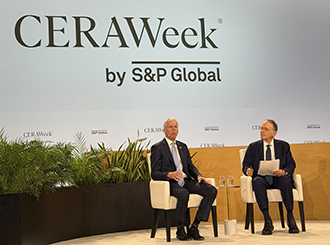
Source: CERAWeek (March 22, 2026)
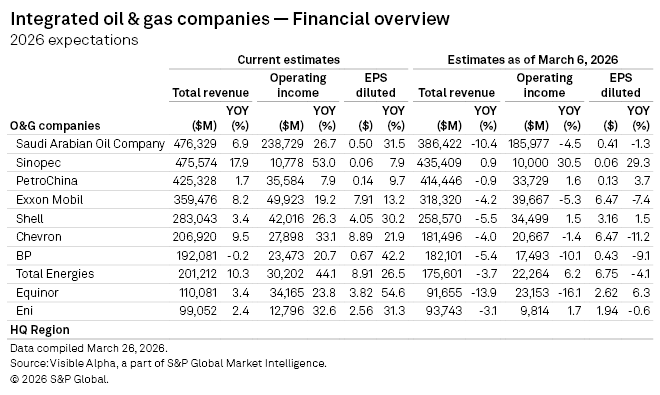
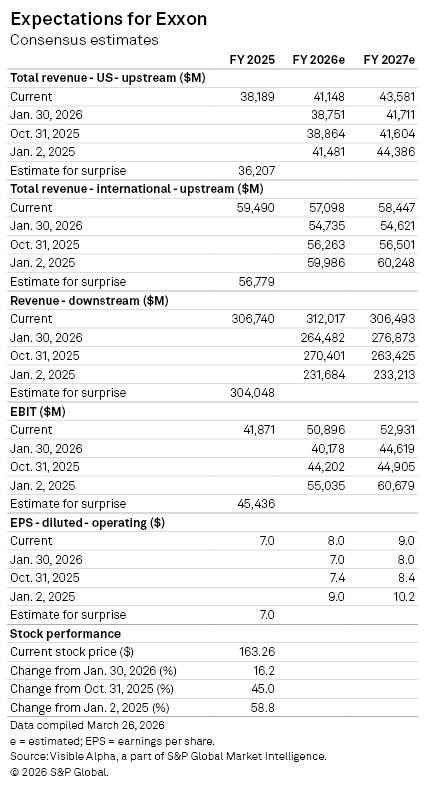
Since the blockage of energy cargo ships in the Strait of Hormuz in early March, revenue and profit estimates at the large oil and gas companies have been revised upward.
AI investment and energy supply: What’s next?
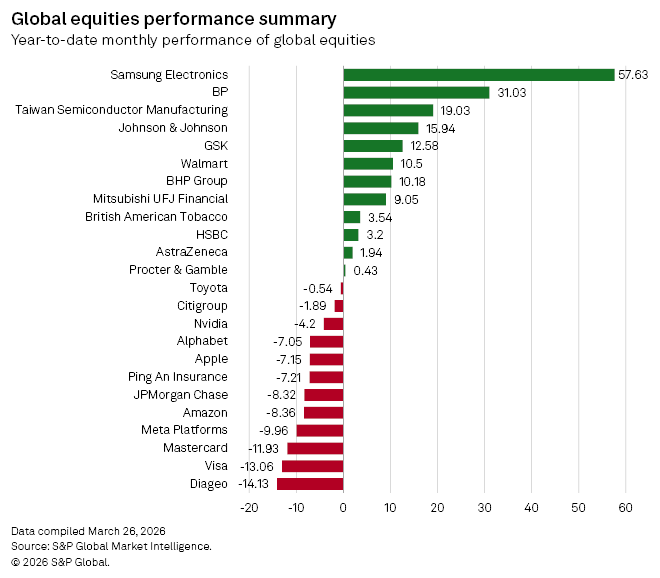
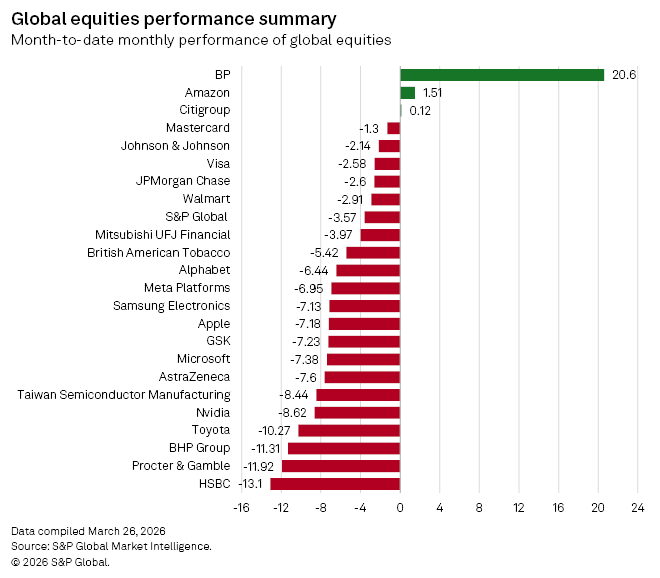
The technology sector has been a drag on the index so far this year, due to concerns about the outlook for capex spending for AI and the relevance of software business models. The increasing levels of CapEx for AI investment by many Technology companies have not yet seen equal increases in revenues or returns, especially at the hyperscalers.
Even though CapEx for AI infrastructure continues to increase substantially this year, CapEx beneficiary, NVIDIA Corp.’s performance year-to-date has been lackluster around concerns that CapEx levels may have to come down, and profit expectations are becoming too high for the company to exceed this year and next. Also, given the current global challenges around energy, these companies may opt to reduce their CapEx spending this year and push it out to 2027 and 2028, which may explain some of the softness in Nvidia.
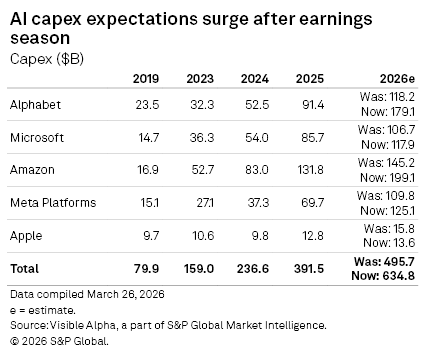
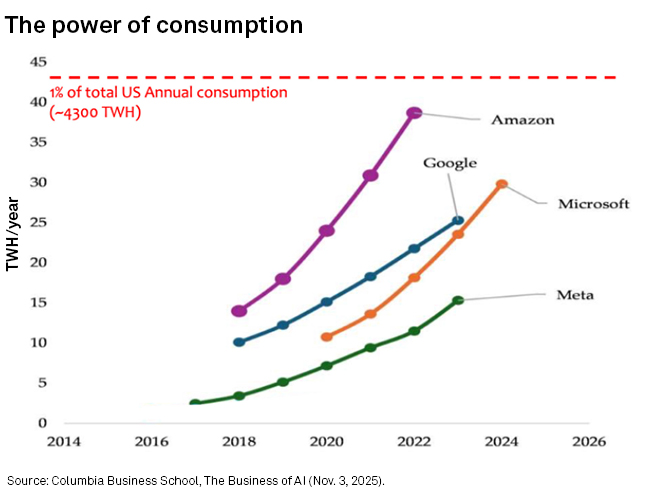
With a fragile, complex macro backdrop in 2026, companies at the conference seemed focused on navigating the immediate challenges around energy capacity and supply and the related issues around global growth and inflation that seem to be emerging on the horizon for the second half of 2026 and into 2027. While the full impact of the Middle East tensions on trade and the global macro environment remains an open question, the convergence of AI and Energy in 2026 is likely to be an important force on markets. This is particularly true in Japan/Asia, as these markets are signficantly exposed to energy resources from the Middle East and manufacture significant amounts of the critical components and chips needed for data centers to support AI applications. In particular, Japan/Asia are heavily reliant on energy that must come through the Strait of Hormuz. Helium, too, for semis manufacturing in Asia has been impacted by the blockages.
Saudi Aramco oil production massively outpaces the RoW
Compiled by: Daniel Sandberg, S&P Global QRS Team, March 19, 2026
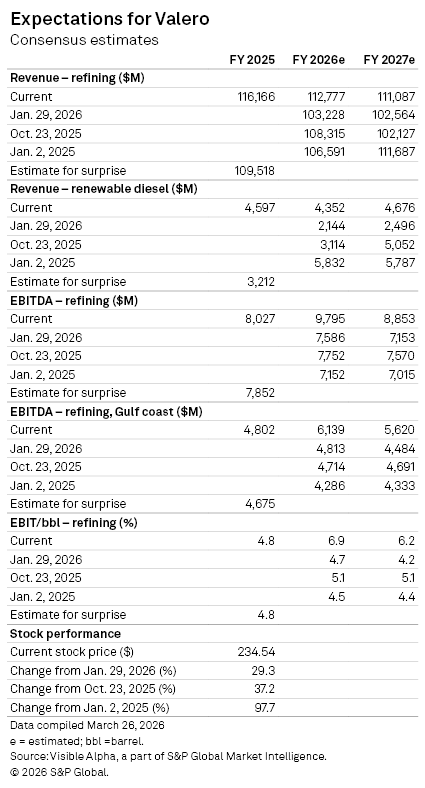
Venezuela was at the center of discussions and the country’s new leader, Maria Corina Machado led a session about investment. Following eased sanctions, Valero Energy Corp. began importing Venezuelan crude to the US to it refineries. As a result of this new supply, estimates for Valero have been revised upward. While Venezuela undergoes signficant changes, it is worth watching the number of crude exports that flow to Valero going forward.
AI expansion and energy capacity
An issue that was repeated at the conference is that the US has been underinvested in energy infrastructure. Ruth Porat, President and CIO of Alphabet Inc., reiterated this point by highlighting that the US has been leading globally in models and chips, but not in energy, due to the lack of investment. Both Amazon.com Inc. and Alphabet plan to support grid infrastructure to support the increasing needs of data centers for AI.
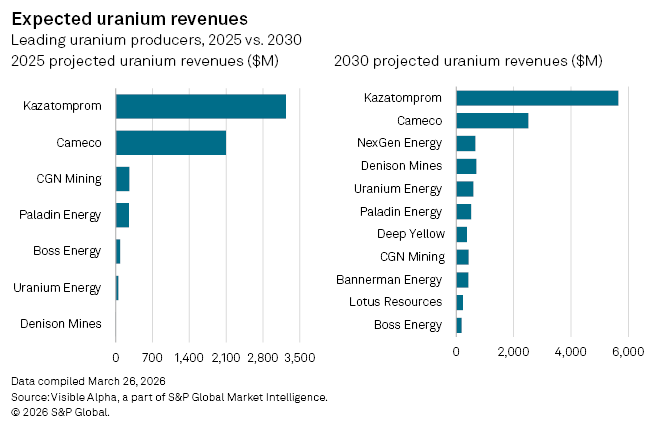
The tech giants noted nuclear and natural gas are ways to add energy capacity to fuel the new AI factories and the increasing compute happening within the data center infrastructure. In tandem with the potential for an expansion of nuclear energy, revenue and price expectations for uranium producers are already starting to show increases, which may be an early signal about how some data centers will ultimately be powered going forward.
Ruth Porat, President and CIO of Alphabet, and John Ketchum, CEO of NextEra Energy, discuss their collaboration

Source: CERAWeek (March 22, 2026).
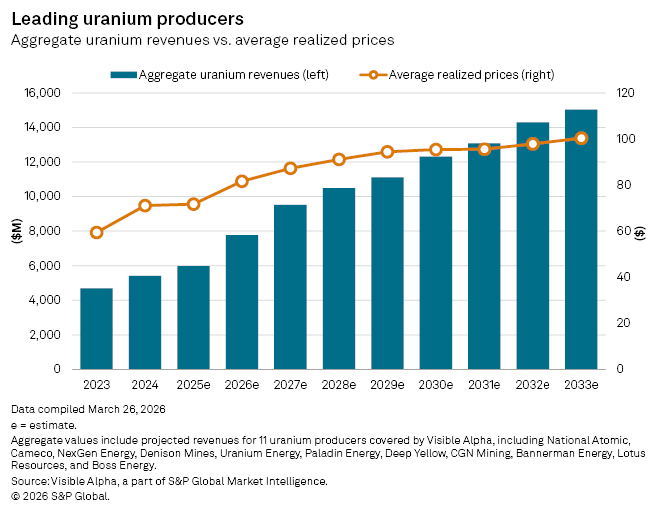
However, the expected growth of Nuclear energy has mixed reviews. Microsoft Corp. President, Brad Smith, explained how data centers are very local projects with local citizens concerned about electricity, water, jobs and taxes, which may make adding energy capacity to support data centers nuanced and idiosyncratic, based on location. It also may take longer than the market is currently expecting. The combination of supply constraints, regulation, and infrastructure all contribute to the potentially complex situation countries and companies face when thinking though the expansion of data centers.
Brad Smith, Vice Chair & President of Microsoft

Source: CERAWeek (March 22, 2026)
Final thoughts
Given the massive amount of capex spend for AI infrastructure this year by the US hyperscalers, the technology sector may be the main driver of energy innovation and infrastructure growth, particularly in the US. To be successful in their AI ambitions, the hyperscalers will likely have to navigate the local and national regulatory backdrops to secure new supply and capacity. Could the deep pockets of tech firms be a catalyst for US energy infrastructure expansion?
As the market moves further into 2026, the CEO of Shell PLC, Wael Sawan, highlighted concerns around demand spikes that normally occur in summer, especially for gas. A prolonged shortage of supply may not only cause an increase in energy prices, due to the conflict in the Middle East, but may also lead to a more uncertain growth outlook. With government leaders seemingly on edge about energy prices and the need to diversify their energy supply in a resilient manner, could investments from the hyperscalers support advancements in nuclear energy?
Investors will start to orient toward earnings season in spring. Commentary and guidance from the bellwether tech and energy companies will provide critical signals about the impact to fundamentals, CapEx plans and valuations for the rest of 2026. How these companies guide the market is likely to set the bar for whether the markets are oversold.
This article was published by S&P Global Market Intelligence and not by S&P Global Ratings, which is a separately managed division of S&P Global.
Content Type
Theme
Products & Offerings
Segment

