Research — Jan. 23, 2026
Scenes from CES 2026: Driverless cars level up

By Neil Barbour
Physical AI played a major role at CES 2026, pushing robotics and autonomous vehicles into the forefront of emerging tech. There is still a long way to go before humanoid robots enter the home, or fully driverless vehicles go mainstream, but the sense was that advancements in AI are breaking through a lot of obstacles.
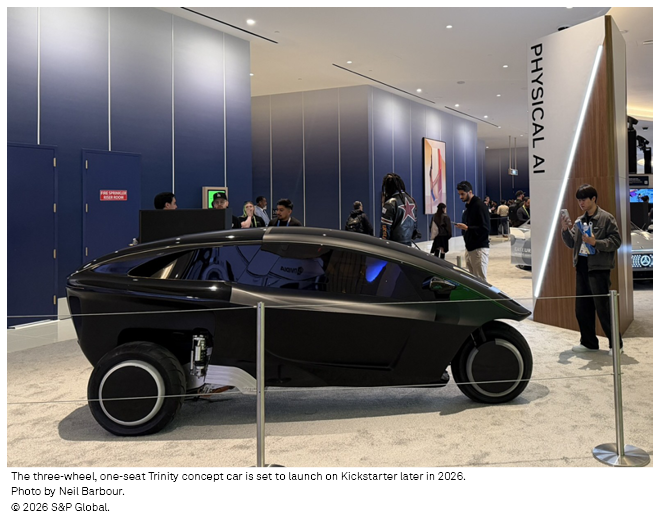
Waymo LLC, Lucid Group Inc. and Tensor Auto Inc. were among the automotive companies pushing deeper into Level 4 driverless vehicles, which can be fully automated in specified zones. The next step would be Level 5, when a vehicle can drive anywhere at any time without human assistance. There were other AI-driven automotive plays at the show. Pictured above is Trinity, a concept car designed in partnership with musician will.i.am and West Coast Customs Inc. The one-seat, three-wheel electric vehicle leverages NVIDIA Corp.'s DGX Spark for AI-powered voice interaction. The car is more a showcase for how agentic AI can aid a driver with real-time data than it is a fully autonomous vehicle.
Of course, we took plenty of time to check out all new advancements in TVs, smart glasses and networking tech as well.
Other featured companies in the presentation include LG Electronics Inc., Lumus, Ltd., XREAL Inc., Hisense Company Ltd., HP Inc., ASUSTeK Computer Inc., pureLiFi Ltd., Bluetooth SIG Inc. and Innox Corp.
See our other coverage from the show:
Hands are hard, but robots give physical AI high five at CES 2026
AMD, NVIDIA push for 'physical' AI, policy evolution
Policy, innovation collide at AI-driven CES 2026
This article was published by S&P Global Market Intelligence and not by S&P Global Ratings, which is a separately managed division of S&P Global.
Content Type
Segment
Language