RESEARCH — Dec 03, 2025
Social media in the US is still driven by a generational divide

By Keith Nissen
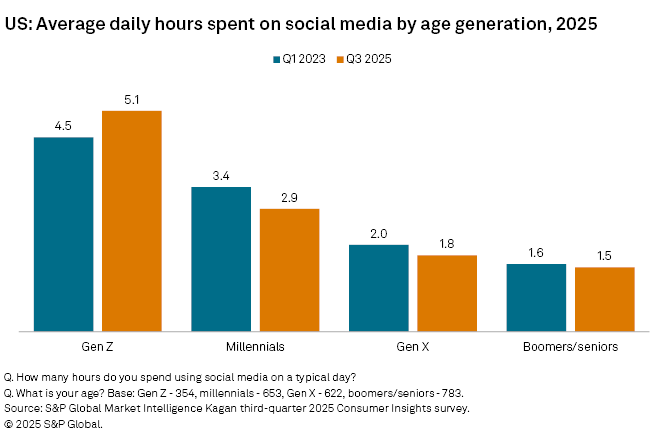
Kagan survey results show that among US adults, Gen Zers spend nearly double the amount of time on social media as millennials, and three times that of Gen Xers and baby boomers/seniors.

➤ On average, American internet adults spend approximately two and a half hours per day on social media across two to three social media platforms.
➤ Gen Z adults spend over five hours per day on social media, substantially higher than older generations.
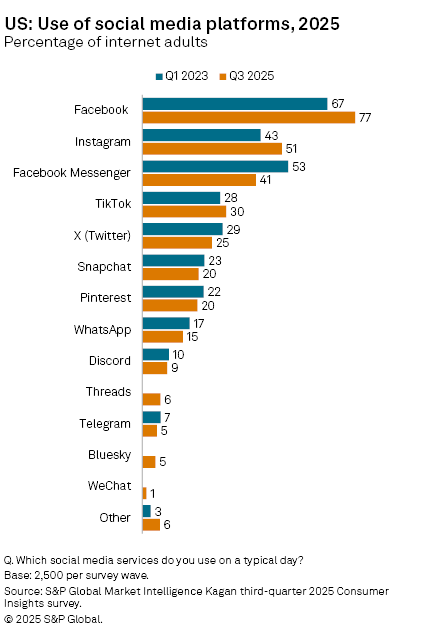
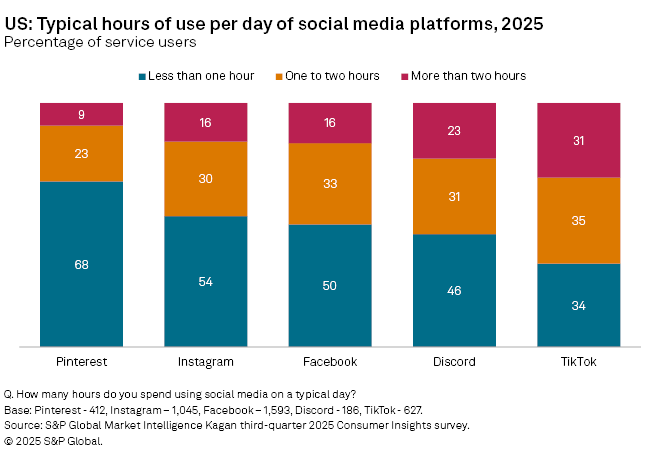
➤ Facebook and Instagram were the top two social media platforms in the US. With the exception of TikTok, most Americans surveyed tend to spend less than one hour per day on a specific social media platform.
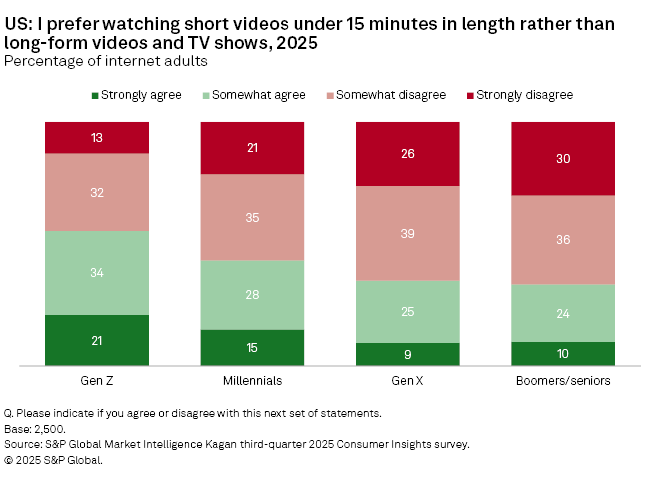
➤ Approximately half of Gen Zers and millennials said they prefer watching short-form video over full-length content. They were also more likely to use social media platforms for TV/video recommendations and online purchases.

The S&P Global Market Intelligence Kagan third-quarter 2025 US Consumer Insights survey found that, on average, American adults spend 2.4 hours per day on social media, a modest decline from 2.7 hours in 2023. Gen Z and millennials tend to spend substantially more time on social media platforms than older Gen Xers and baby boomers/seniors. Historic survey data shows that social media use among millennials, as well as older generations, declined slightly over the past three years. However, the 2025 survey data reveals that social media use among Gen Z adults increased to 5.1 hours per day on average, up from 4.5 hours in 2023.
A comparison with survey results from the first quarter of 2023 illustrates that Facebook is still the most popular social media platform in the US, with its user base growing 10 percentage points over the past three years to 77% in 2025. Instagram also grew its user base by eight percentage points to 51% over the same time period. The data also reflects that Facebook Messenger usage has declined substantially, while the use of TikTok grew two percentage points to 30%. Nearly all other social media platforms showed a modest decline since 2023, ranging from X falling four percentage points to 25%, to Discord dropping by one percentage point. Americans, on average, currently use 2.6 social media platforms, a decline from 3.2 in early 2023.
With most American internet adults spreading their daily hours across two or three social media platforms, it seems reasonable that specific platforms would typically get used for less than one hour per day. Half of Facebook and Instagram users said they use these platforms for less than an hour a day and 60% of Pinterest users reported the same. TikTok stands out from the crowd with two-thirds of its users spending more than one hour per day on the platform.
A primary reason that hours spent on TikTok are higher than on other social media platforms may be linked to consumer preference for short-form video content over full-length programming. For instance, the survey found that over half (55%) of Gen Z adults and 43% of millennials said they preferred videos under 15 minutes in length to long-form videos and TV shows. Even one-third of Gen Xers and baby boomers/seniors also favored short-form video content.
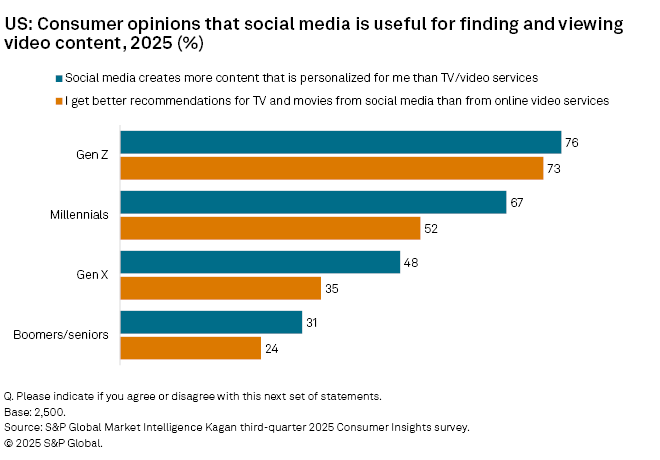
One area where we see a generational divide is the use of social media for video recommendations and viewing personalized content. Approximately three-quarters (73%) of Gen Z adults and over half (52%) of millennials said they strongly or somewhat agree that they receive better TV and movie recommendations from social media than from online video services compared to much smaller percentages for older respondents. Likewise, 76% of Gen Z adults and two-thirds (67%) of millennials indicated that social media offers more personalized content than TV/video services compared to just 31% for baby boomers/seniors.
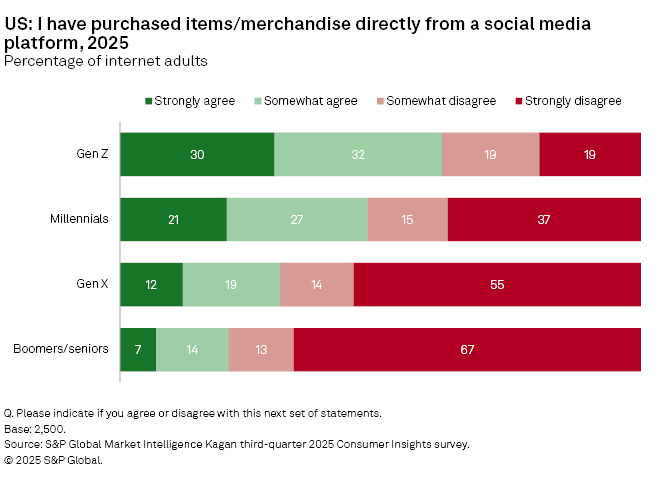
Finally, using social media platforms for e-commerce is another example of a generational divide. Nearly two-thirds (62%) of Gen Z adults reported that they strongly agree/somewhat agree with the statement “I have purchased items/merchandise directly from a social media platform (e.g. Facebook, Instagram, TikTok),” while approximately half (47%) of millennials had the same response, compared to 31% of Gen Xers and only 21% of baby boomers/seniors.
The Kagan third-quarter 2025 US Consumer Insights survey was conducted during September 2025, consisting of 2,500 internet adults. The margin of error is +/-1.9 ppts at the 95% confidence level. Survey data should only be used to identify general market characteristics and directional trends.
Consumer Insights is a regular feature from S&P Market Intelligence Kagan.
This article was published by S&P Global Market Intelligence and not by S&P Global Ratings, which is a separately managed division of S&P Global.
Content Type
Location
Segment
Language