02 Sep, 2026
PE deals for food producers reach $5.92B as GLP-1, regulation reshape demand
Private equity investment in packaged food and meat producers is attracting larger checks as GLP-1 drugs, functional nutrition and regulatory shifts reshape the sector.
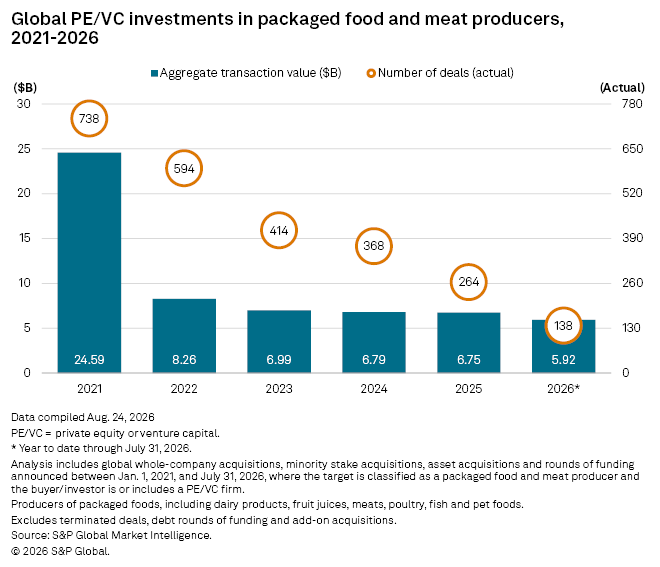
Deals in packaged food and meat producers accounted for $5.92 billion during the year to July 31, on track to exceed the $6.75 billion recorded in full year 2025, according to S&P Global Market Intelligence data.
The trend for the number of deals during the measured period shows a slowdown at 138 compared to 264 during full year 2025.
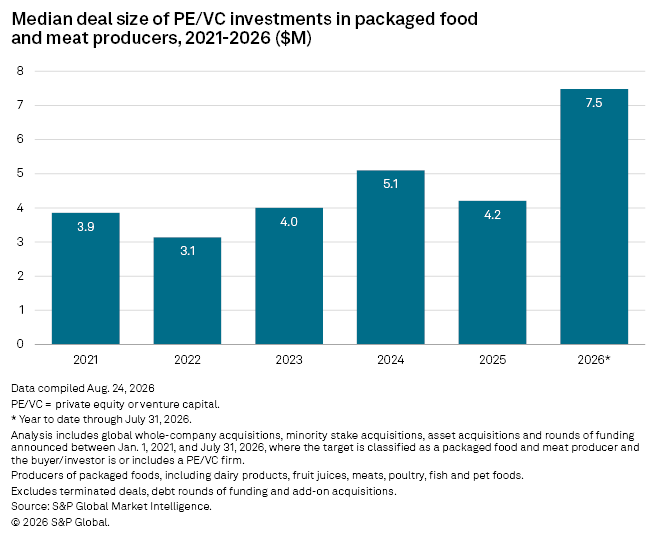
The median deal size in the sector hit $7.5 million through July 31, up almost 79% from $4.2 million in full-year 2025, suggesting that investors are making larger capital investments even as deal counts shrink.
Food strategy changes
Various factors are reorienting the business strategies of food companies, creating conditions for private equity to carry out operational value creation in the sector.
GLP-1 drugs, used to treat type-2 diabetes and obesity, are pulling spending away from chips and sweet snacks toward protein, fiber and fresh produce, according to Manna Tree Partners LLC co-founder and managing partner Ross Iverson. Some 44% of GLP-1 users now buy more fresh produce, 35% buy more packaged protein, and 61% buy fewer sweet treats, Iverson said.
The growing GLP-1 trend is projected to cut industry revenue by more than $30 billion by 2030, added Andy Unanue, managing partner of AUA Private Equity Partners LLC, citing his firm’s data.
 |
- Download a spreadsheet with data featured in this story. - Explore the key trends driving private equity penetration in the US. - Stay up to date on the latest private equity headlines. |
Even as overall calorie intake falls, demand is growing for functional foods, which are designed to provide additional health benefits, such as food products with added omega-3, Unanue said.
Private equity investors are attracted to functional foods with clear health benefits, and brands in this space command premiums, he added. Fiber is emerging as the top focus after protein.
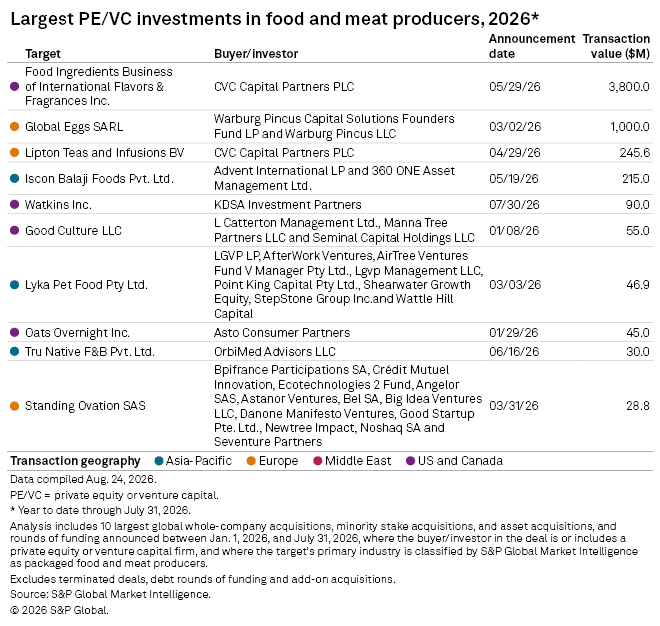
One of the largest deals this year is Asto Consumer Partners' investment in breakfast oatmeal brand Oats Overnight Inc.
In the coming months, several food companies are expected to launch auctions, retest the market or complete their active sale process, The Deal reported.
"Health and wellness products such as functional and better-for-you foods, protein-rich formats, specialty ingredients, fresh foods, and zero or low-alcohol beverages continue to dominate investor interest," added Michelle Chan, private equity partner at Akin Gump.
The healthy foods trend has been evident in the pet food industry for the last few years.
Regulatory uncertainty
Regulation is another investment factor upending the sector.
The 2025-2030 Dietary Guidelines for Americans, released by the US Department of Agriculture and the Department of Health and Human Services, back the emphasis on functional foods, pushing protein and whole foods over ultra-processed products.
"PE and VC investors are following consumer demand, but they’re also following the direction regulators are pointing," Chan said.
Regulatory uncertainty will be a major challenge in planning new food and beverage deals. The US Food and Drug Administration is set to overhaul its Generally Recognized as Safe framework, meaning more scrutiny of ingredient safety. States like New York push their own rules, such as the Food Safety and Chemical Disclosure Act.
"It's a compliance environment that is genuinely difficult to plan around," said Amaru Sanchez, healthcare and life sciences counsel at Akin Gump, who advised sponsors to start planning now for possible changes after US elections in November.
Buyers are now checking sourcing, tariff exposure, ingredient compliance, and how easily a company can change its recipes if rules shift — factors that larger companies tend to handle better than smaller ones, Sanchez said.
Valuations are also impacted by regulatory uncertainty and cost of capital, Chan added. The risk shows up less in headline prices and more in deal terms, as buyers push for earnouts, rollover structures, and protections tied to ingredient status, labeling compliance and tariffs, according to Chan.
"The regulatory environment may make it harder to close the gap between buyer and seller on price," Chan said.