07 Jul, 2026
Cyber insurance pricing remains adequate despite steep falls in Q1 2026

By Ben Dyson
|
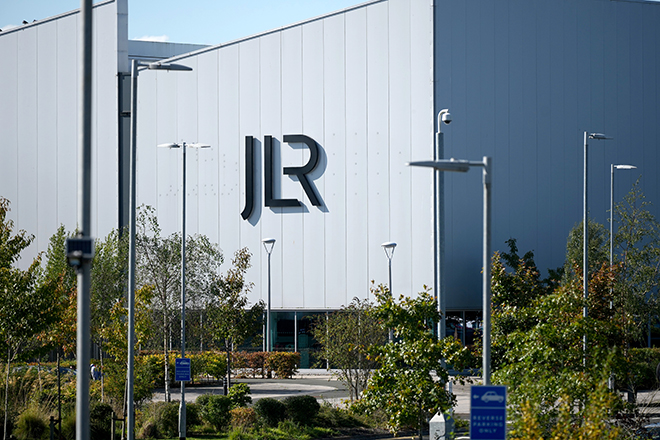
The production-stopping cyberattack Jaguar Land Rover experienced in 2025 has triggered changes in the cyber insurance market. Source: Christopher Furlong/Getty Images. |
Prices charged for cyber insurance cover remain sufficient to cover the risks even though there have been further declines in many markets, according to insurers and brokers.
For US cyber business, cyber prices were close to flat in the first quarter of 2026, but in Europe, despite a slight slowdown in the rate of decline, "they are still seeing some fairly heavy reductions," said Serena France-Hayhurst, UK cyber placement leader at insurance broker Marsh LLC.
In the UK, rate reductions were 7% on average, France-Hayhurst said, but certain client segments in the UK have seen larger falls, such as midmarket customers, where rates were down 12%, and those with revenues of £1 billion to £5 billion had the largest reduction of 19%, France-Hayhurst said.
"Speaking to our UK retail team, it really is a bit of a bloodbath," she said.
Wider coverage
Cyber prices globally have been falling since the third quarter of 2023, according to Marsh's global commercial insurance market index, after hardening sharply in 2020 and 2021 in response to increased ransomware claims.
High-profile cyber incidents in 2025, such as the production-stopping cyberattack on vehicle manufacturer Jaguar Land Rover, failed to harden the market, in part because some were uninsured or under-insured.
Competition for business between insurers for business is continuing to push prices down. "The insurers are really trying to push on competition, especially on first-time buyers. New business coming into the market is particularly attractive," France-Hayhurst said.
As prices fall, insurers are broadening coverage and adding more features to their cyber products to attract new customers and keep existing ones. Cyber coverage is "broader than ever," Christopher Burgess, director of cyber at Markel Group Inc.'s UK-based international operation, said in an interview at UK risk manager association Airmic's annual conference in June.
The attack on Jaguar Land Rover shut down production for more than a month, leaving many of its smaller suppliers unable to sell to the company. Since then, Burgess says, cyber insurers have been creating new products to cover loss of profits for small suppliers that might find themselves in a similar situation. "That's the cyber market adapting to the threat landscape and … making sure that clients still have a good product and a solution that works for them."
While lower prices and broad, responsive coverage are good news for customers, it can put pressure on underwriting profit when claims start to come in. Both the number of claims and their cost are rising.
"We are definitely seeing an increase in claims frequency," said David Warr, cyber portfolio manager at QBE Insurance Group Ltd. in the UK, in an interview at Airmic's conference. "We're seeing claims notified every single day across our portfolio."
Adequacy prevails
However, insurers are saying that overall, prices remain adequate. Prices are still above pre-2019 levels, France-Hayhurst said, and insurers she has spoken to still feel prices are sufficient because claims levels are still manageable. "At the moment, the claims landscape is relatively benign, certainly from a UK perspective," she said. "So actually, insurers are still seeing the opportunity as opposed to concerns around the portfolios."
Cyber insurers agree. "I think cyber portfolios in the market generally are probably performing relatively well for cyber insurers," Burgess said.
The global cyber insurance market overall continues to grow its premium income, improving its ability to cope with claims. The market wrote nearly $15 billion of premiums in 2025 and is expected to grow to about $28 billion by 2030, according to a Munich Re report.
"The market has grown to such a degree now … that [it] is a sufficient size to sustain some major losses," France-Hayhurst said.
And although they are offering more cover at a lower price than before overall, insurers say they are still being choosy. "The focus is on underwriting discipline, and we do decline risk when we feel like it's not an adequate price," Vanessa Leemans, head of cyber, UK and Lloyd's at Axa XL, said in an interview at the Airmic conference.
There are indications, though, that the reductions are getting close to the threshold of some insurers' tolerance. "We're comfortable with where things are at the moment, but if we see continued claims frequency, then we would expect the market to respond to that," Warr said.
Insurers will not, however, take a broad brush to price increases if they impose them, and will base them on the policyholder's specific risk, according to Warr. "If there are real significant increases in attacks in certain industries … we would expect insurers to need to probably adjust pricing accordingly for each of those industries as the exposures necessitate," he said.
There are also signs that the influx of underwriting capacity into the cyber insurance market is slowing. While new managing general agents are likely to continue to enter the market, the pace has "certainly slowed down" compared with 18 months ago, France-Hayhurst said. "The market does feel more stable," she added.
The AI effect
The potential for large cyber losses remains, with one potential source being generative and agentic AI. These technologies' influence on cyber insurance claims so far has largely been more sophisticated phishing emails, social engineering emails and deepfakes, Burgess said. While the talking point in the cyber insurance market is the potential for cybercriminals to AI agents to spot and exploit vulnerabilities more rapidly, triggering mass claims, Burgess said, "We haven't necessarily seen it so much yet."
Even so, the launch of AI company Anthropic's Claude Mythos large language model, designed to spot software vulnerabilities, has put the industry on guard.
"There's a recognition from [insurers] that if the threat actors are using … advanced vulnerability scanning to exploit companies, you as an insurer need to make sure you're doing the same as part of your risk selection," Tom Draper, UK managing director of specialist cyber underwriting agency Coalition Inc., said in an interview at the Airmic conference. He added: "If you're not, your clients are going to have problems, which will then hit you on your loss ratio."