15 Oct, 2026
Electrification advocates, AGA at odds over heat pumps' role in affordability

Heat pumps are being adopted in greater numbers to meet consumer concerns about energy affordability and take advantage of policy decisions, according to a group that advocates for electrifying heating systems, though natural gas utility advocates argue that their fuel is the most cost-effective and reliable way to address rising energy costs.
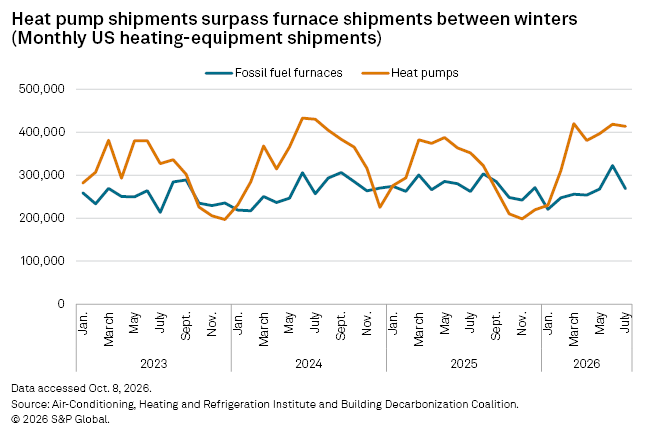
An Oct. 6 report from the Building Decarbonization Coalition (BDC), a nonprofit that advocates for electrifying heating systems, said heat pumps made up 58% of space-heating equipment shipped in the US in the first half of 2026, matching the record from the first half of 2024, despite last year's expiration of the US Internal Revenue Service Section 25C heat pump tax credit. An electric heat pump can keep a building warm or cold by moving heat in or out.
The 25C tax credit, also called the energy efficient home improvement credit, allowed homeowners to qualify for up to $2,000 per year for qualified heat pumps, water heaters, biomass stoves or biomass boilers, if the equipment was placed in service before Dec. 31, 2025. The credit was eliminated following the enactment of Republican-backed budget reconciliation legislation in July 2025.
BDC researchers used data from the US Bureau of Labor Statistics, the Air-Conditioning, Heating, and Refrigeration Institute, and an analysis of bills introduced into state legislatures to conduct their report.
The report found that heat pumps remain on track to match or exceed their best year of shipments in 2026. It highlighted jurisdictions, such as Washington, DC, New York City and the state of New York, that received court decisions upholding all-electric new construction policies. The BDC said the developments "provided another sign that state and local electrification efforts continue to advance."
However, gas ban opponents saw a win with a lawsuit challenging policies in Colorado and the city of Denver that discourage natural gas use in existing buildings.
Heat pump adoption vs. gas usage
Kevin Carbonnier, associate director of analytics at the BDC, told Platts that many factors drove the rise in heat pump adoption, "including government policies, the development of the heat pump market, lower operating costs, and their comfort and other performance advantages over fossil-fuel furnaces." Platts is part of S&P Global Energy.
While some policy efforts are increasing heat pump adoption, Mike Henchen, a building electrification analyst at clean energy-focused research firm RMI, said the real drivers behind heat pumps' gains are technological improvements and shifts in customer preferences.
"The trend toward electrification has been playing out for decades, and more American households than ever are heating with electricity," Henchen said. "New construction shows where the market is headed: 63% of homes built in 2025 were electrically heated, up from less than half in 2019. We expect a continued trend of clean heating technologies being adopted by millions of households across the US."
The American Gas Association (AGA) rejected the notion that more consumers prefer heat pumps. In a March 2026 building-for-efficiency analysis, the trade group for natural gas utilities found that about 75% of new single-family homes opt for higher-efficiency natural gas heating equipment models. Additionally, the AGA said that in moderate-to-cold climates, customers prefer gas to electric heat pumps by a 4-to-1 margin. The AGA used data from the US Department of Energy, the US Energy Information Administration and the National Renewable Energy Laboratory to conduct its analysis.
Richard Meyer, AGA vice president of energy markets, analysis and standards, said gas bills are expected to decline this winter compared with last winter.
"I think there is a clear agreement that lower natural gas prices and possibly the effect of a slightly milder winter in certain areas can lead to a reduction in consumer heating bills and gas utility bills this winter," Meyer said. "That is not true for all other fuels, including electric and fuel oil, where we see possibly other trends emerging depending on where you are in the country."
The AGA's winter heating outlook, published Sept. 17, projects a strong US gas supply and mild conditions due to the El Niño weather pattern, both of which should reduce US wholesale gas prices. The EIA lowered its outlook for 2027 Henry Hub gas prices in its monthly "Short-Term Energy Outlook" released Oct. 6. The outlook trimmed its full-year 2027 Henry Hub gas spot price forecast by 12 cents from the previous month's estimate to $3.16/million British thermal units.
Policy impacts on heat pump adoption
The BDC's analysis of state legislative activity found that 41 decarbonization bills have been passed so far this year. Kristin Bagdanov, associate director of research at the BDC, said the "center of gravity" in building decarbonization bills is shifting from a focus solely on climate policy to affordability, utility economics and mainstream market adoption.
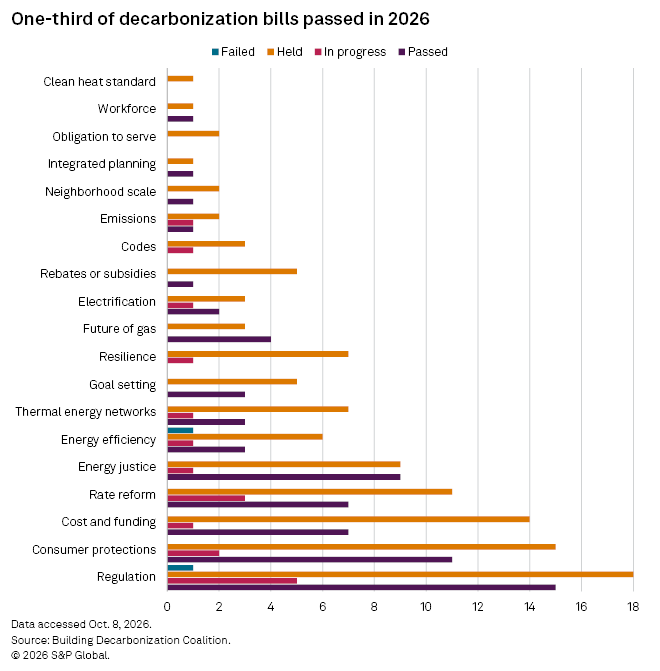
"And so we're seeing that both in the types of bills being passed that are affecting not just the technology per se or not just about greenhouse gas emissions, but about the systems in which those things exist that are causing energy to become more and more expensive," Bagdanov said.
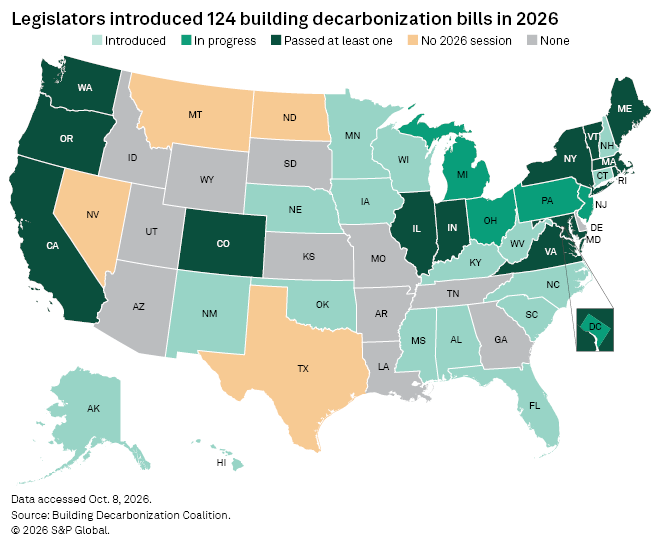
The AGA's Meyer said the organization takes issue with decarbonization policies that restrict natural gas use or otherwise create barriers for energy consumers. "If you're removing the option of the direct use of natural gas from homes and businesses, then you're removing the most affordable home heating option — and often business heating option — from many homes and businesses," Meyer said. "And so ... keeping these choices on the table is an affordability strategy."
Bagdanov said heating and other home systems need to be addressed holistically to realize all the benefits.
"And that means at the legislative level and the regulatory level that they need to be addressing ways to break down those silos and do that integrated planning to think of the long-term energy future to ensure that energy bills are affordable," Bagdanov said.