23 Oct, 2026
DOE jump-starts energy grants for Native tribes hit by $1.5B solar funding cut

By Karin Rives
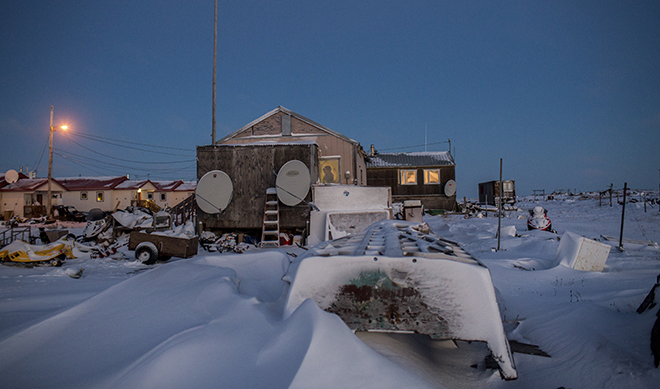
| Many remote Native villages in Alaska, above, have limited grid access and pay some of the highest power rates in the US. Source: Hossein Fatemi/AFP via Getty Images. |
After more than a year of a near-freeze on federal energy projects for Native tribes, Eddie Dellamary with the Tanana Chiefs Conference in Fairbanks, Alaska, got welcome news on Oct. 22.
The US Department of Energy had just approved three power-related projects for which Dellamary, the Alaska Native nonprofit's rural energy manager, had sought funding.
"I got the message really early morning Alaska time," Dellamary said in an interview later in the day. "It's really amazing news for us because federal funding opportunities have slowed down a lot. I'm ecstatic about it."
The DOE on Oct. 22 announced $125 million in new funding for tribes across the US. The grants, ranging from less than $200,000 to $7.5 million, were mainly earmarked for smaller power projects or to conduct studies for longer-term investments. There were also two grants for "data center feasibility" studies for tribes in North Dakota and Oklahoma.
The new DOE funding is less than one-tenth of the $1.5 billion slated for tribal solar energy installations that the Trump administration canceled in early 2025, along with billions more from other programs. Some of those cuts, which also extended to states and investment funds, are still being litigated.
The Tanana Chiefs Conference itself saw $80 million for solar energy and water-sewage projects terminated, according to Dellamary. Still, the new grants announced by the DOE could signal a shift, he and other tribal officials said.
In all, 63 projects led by 61 tribes in 16 states were told their grants had been approved for final negotiations with the DOE. It was the agency's Office of Indian Energy Policy and Program's largest award so far and represents "a new and expanded role" for the office, the agency said.
"For the first time, we're supporting projects at any phase of development and with a broad set of technologies and approaches," the office's director, Eric Mahroum, said in a statement. "Our goal is to support tribes to advance high-value energy projects, including large-scale projects like generation, transmission, distribution and critical mineral projects."
Broad range of projects
The Tanana Chiefs Conference was selected for a $1.1 million grant to conduct a transmission feasibility study for a future project in the interior section of Alaska and a $2.5 million grant for hydrothermal exploration in the Fairbanks area. The nonprofit also helped to secure a $6.5 million grant to build a new diesel oil-fueled power plant in the remote Chalkyitsik Village, which relies on a self-contained local grid.
Under the Trump administration, the DOE has signaled that fossil-fuel-based grant proposals may be favored over clean energy projects, but that it also supports certain renewable projects that enjoy bipartisan support, grant recipients noted.
The Alutiiq Tribe of Old Harbor, also in Alaska, was selected for nearly $4.4 million toward construction of a 2.9-megawatt hydroelectric plant expected to be built in 2028. The plant will replace 95% of the diesel generation the village uses today for electricity, according to Lianna Peterson, the village administrator.
"We are so pleased that it was selected for funding!" Peterson said in an email.
The Navajo Nation, the largest Native American tribe, was selected for a $7.5 million grant that will connect about 200 families to the electric grid for the first time, according to Srinivasa Venigalla, deputy general manager of the Navajo Tribal Utility Authority.
The broad range of energy projects on the DOE's list is critical for tribes that are looking to develop energy from locally available resources, said Anna Maria Ortiz, natural resources and environment director for the US Government Accountability Office. The grants focused on planning and feasibility serve a similar purpose, she said.
"Planning is a critical gap that we identified," Ortiz said in an interview. "It's the first of many steps needed to be taken before a project can be done."
Ortiz's office released a report in mid-2025 calling on the DOE to reduce funding barriers for Native tribes.
The new grants are supported by federal funding through fiscal year 2026 and from earlier congressional appropriations, the DOE said.