13 Jun, 2023
Pro-nuclear group pushes for changes in regulation to enable new technologies

By Siri Hedreen
An environmental think tank is pushing for reforms at the US Nuclear Regulatory Commission to prioritize the timely licensing and deployment of new reactors, which the group considers imperative to combatting climate change.
The Breakthrough Institute launched a "six-figure" advertising campaign June 13 to convince lawmakers in key states to back changes within the Nuclear Regulatory Commission (NRC) intended to speed the regulatory approval process for advanced nuclear technologies.
"I think there's been a recognition for awhile that the Nuclear Regulatory Commission needed to take a very different approach to licensing these reactors," the Berkeley, Calif.-based institute's executive director, Ted Nordhaus, said in an interview. "But between statutory issues, how the NRC has chosen to interpret the statutes and the internal culture at the NRC, that message has not been fully internalized at the agency."
The push comes as the nuclear power industry invests in new reactor designs that are smaller, making them suitable for mass production. While some of the designs are simply scaled-down versions of the conventional light water reactor, others come with built-in safety modifications and rely on sodium or gas as coolants instead of water.
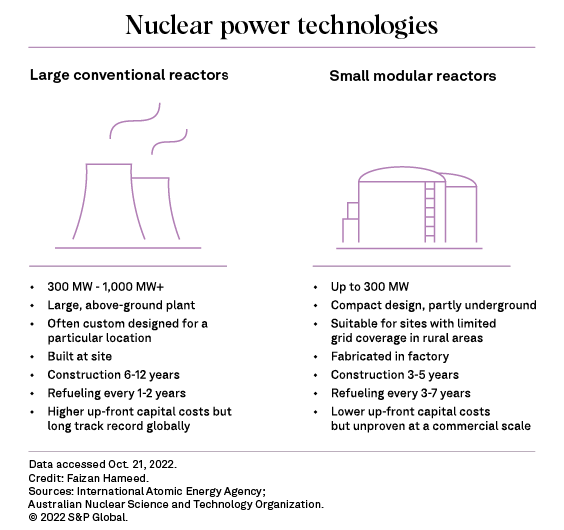
But the NRC to date has certified only one small modular reactor design, NuScale Power Corp.'s "VOYGR" power plant.
The Breakthrough Institute's "Build Nuclear Now" campaign plans to target voters in eight states — Arizona, Delaware, Hawaii, Maryland, New Jersey, New Mexico, Rhode Island and West Virginia — to pressure their legislators to act. The initiative has partnered with about a half-dozen other pro-nuclear groups and is funded independently of the nuclear industry, Nordhaus said.
The institute is not the only group seeking regulatory reform. Both the National Academies of Sciences, Engineering and Medicine, through an April 27 consensus study, and the Clean Air Task Force recently called on Congress to direct the NRC to tailor its framework to advanced nuclear technologies.
The push has already gained some momentum in the Senate. US Sens. Tom Carper (D-Del.), Shelley Moore Capito (R-W.Va.) and Sheldon Whitehouse (D-RI) in April introduced the "ADVANCE Act," a bill that would lower the regulatory costs for vendors seeking to license their reactor designs.
"This will reduce the upfront costs for applicants, especially since applications take years," said Adam Stein, the institute's director of nuclear innovation. "NuScale has previously said that their application was $70 million of direct cost to the NRC, which is a significant chunk of change over about six years and would be prohibitive to most startups to even consider, which limits innovation."
The legislation also aims to improve the efficiency of the NRC by providing resources to hire and train new employees and to periodically assess the agency's ability to hit licensing milestones.
The bill passed through the US Senate Environment and Public Works Committee on May 31 by a bipartisan 16-3 vote, with Democratic Sens. Ed Markey of Massachusetts and Jeff Merkley of Oregon and Independent Sen. Bernie Sanders of Vermont voting against it. As a result, Nordhaus said the campaign will narrow in on a few key Democratic constituencies in hopes of getting the group's desired amendments to the bill.
One item on the Breakthrough Institute's agenda is for Congress to amend the mission of the NRC to include reducing greenhouse gas emissions through the deployment of nuclear energy, in addition to ensuring nuclear safety.
"We have quite observable public health risks associated with the existing electrical and energy systems — hundreds of thousands of people dying a year from exposure to conventional air pollutants," Nordhaus said. "So every time a nuclear plant doesn't get built because the expectation is, basically, zero risk to the public from any radiological exposure at all, you are creating very significant public health risk associated with most of the alternatives."
Other barriers to nuclear power deployment stem from NRC statutes that were written with large-scale light water reactors in mind, Stein said. This includes licensing requirements that may not apply to newer reactor designs and are only avoided by exemptions awarded on a case-by-case basis, Stein added.
NRC Commissioner David Wright has also acknowledged a need for change within his own agency. In February, Wright said at a Washington, DC, energy conference that the NRC is "going to have to be ready with the personnel and the expertise" to process licensing applications quickly.
"We don't want to be the reason that they delay or that they don't get to market," Wright added.
S&P Global Commodity Insights produces content for distribution on S&P Capital IQ Pro.