


2 Aug, 2023
US asset managers engaging less with clients on climate, transition – report

By Karin Rives
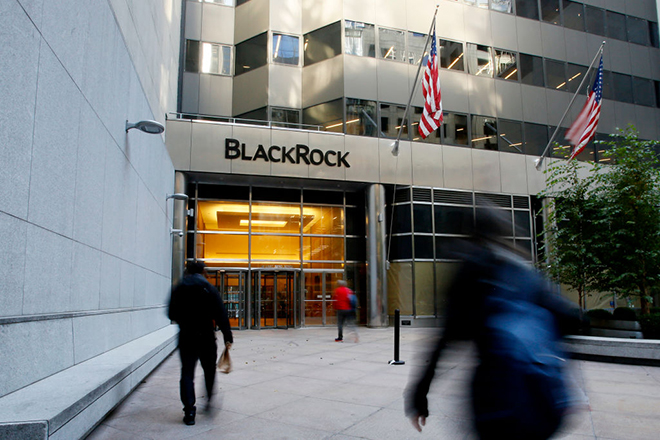
| BlackRock's headquarters in New York. US asset managers appear to have scaled back their engagement with clients over climate and energy transition risks, according to a new industry report. Source: Corbis News/Getty Images News via Getty Images |
Leading US asset managers appear to have scaled back efforts to decarbonize their portfolios since early 2022, coinciding with a campaign by specific state legislators who want to limit environmental, social and governance policies in investing, research firm InfluenceMap said in an assessment published Aug. 1.
Three of the largest firms — BlackRock Inc., JPMorgan Chase & Co. and State Street Corp. — are signatories to the global Net Zero Asset Managers Initiative. As such, they committed to implementing engagement strategies "with a clear escalation and voting policy" to help portfolio companies halve greenhouse gas emissions by 2030 and reach net-zero by 2050.
But US asset managers as a group have tamped down their policy engagement and have become less likely to support climate-related shareholder resolutions seeking to reduce corporate emissions, according to FinanceMap's 2023 assessment of asset managers and climate change. FinanceMap is an InfluenceMap platform.
For the assessment, FinanceMap tracked 45 of the world's largest firms, which have $72 trillion in cumulative assets under management. FinanceMap scored the firms on their equity portfolios, engagement with companies in which they invest, and their finance policy engagement.
The average US asset manager supported 50% of such shareholder proposals in 2021, but their support dropped to 36% in 2022. The researchers did not detect the same trend in Europe.
In email responses to requests for comment, several large asset management firms pointed to their public communication about climate goals.
Asset managers "have top-line and net-zero targets, and yet we see them backtracking on even some of the progress they have made over the past few years," Daan Van Acker, the lead author of the report, said in an interview. "To have their own commitments be realistic, we would want to see more ambitious stewardship — at least voting in favor of ambitious climate resolutions and potentially divestment."
Stewardship slipping
A BlackRock spokesperson emailed statements posted on the company's website, detailing that the firm works as a fiduciary to discuss with portfolio companies how they "navigate material climate-related risks and adapt through the energy transition" as this can affect financial performance.
"It is not our role to engineer a specific decarbonization outcome in the real economy," BlackRock said in one commentary published this year.
State Street also would not comment directly on the FinanceMap report.
"As one of the largest asset managers in the world, State Street Global Advisors is committed to our fiduciary duty to clients," the company said in an emailed statement. "As part of this responsibility, we will continue to engage with portfolio companies on material risks and opportunities that could impact our clients' assets."
State Street and JPMorgan earned C+ grades for stewardship in FinanceMap's ranking, better than the other top US firms. JP Morgan in 2021 set 2030 portfolio-level emission reduction targets for clients in the oil and gas, power and manufacturing sectors.
"Over time, we aim to expand this work to address additional carbon-intensive sectors, in alignment with global climate goals and evolving best practices for the financial sector, and to further engage with our clients on their decarbonization journeys," JPMorgan says on its website.
Vanguard departs
One of the largest asset managers, Vanguard Group Inc., surprised the investment world in December 2022 when it left the Net Zero Asset Managers Initiative. The company's departure came amid legal threats from Republican attorneys general critical of asset managers over their policies for ESG investment risk. Since then, allegations of possible antitrust violations levied at insurance companies over their participation in the Net Zero Insurance Alliance prompted an exodus from that group.
In a request for comment on the InfluenceMap report, Vanguard pointed to position papers posted on its website, including one focused on climate risks.
"We aim to provide investors with the insights they need to make well-informed investment decisions and to understand material climate risks and opportunities," the company said. It added that it also engages company boards and management teams to better understand how they manage such risks.
The report also found leading US firms lacking in their policy advocacy. As an example, the report said some asset firms, including State Street, "were unsupportive" of Scope 3 emission disclosure mandates under the SEC's proposed climate-risk rule.
Van Acker also said that while signatories to the Net Zero Asset Managers Initiative might fall short of their net-zero goals, they still perform better in engagement than do asset managers that are not part of the alliance.
S&P Global Commodity Insights produces content for distribution on S&P Capital IQ Pro.