17 Jun, 2021
Entasis CEO urges reimbursement reform for new weapons against superbugs
|
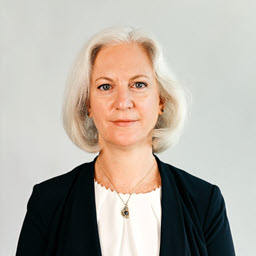
Entasis Therapeutics President and CEO Manos Perros Source: Entasis Therapeutics Holdings Inc. |

➤ Entasis Therapeutics Holdings Inc., which was spun out from AstraZeneca PLC six years ago, has a pipeline of treatments for drug-resistant infections.
➤ The publicly traded U.S. company and its Chinese partner, Zai Lab Ltd., expect to have late-stage study results for antibiotic medicine sulbactam/durlobactam, or SUL-DUR, this year.
➤ Any efforts to drive the development of new weapons against drug-resistant infections must include reimbursement reform so investors can be adequately rewarded.
Entasis President and CEO Manos Perros spoke to S&P Global Market Intelligence about the Waltham, Mass.-based company's pipeline of experimental antimicrobials and the challenges of financing R&D efforts in the field.
Small and medium-sized enterprises like Entasis account for 75% of all late-stage research and development projects in the antimicrobial field, according to a June 10 report by the Access to Medicine Foundation.
The following is an edited transcript of the interview.
S&P Global Market Intelligence: Tell me about the early days of Entasis.
Manos Perros
In 2015, AstraZeneca was going through rough times, patent expirations. They made the decision to streamline their focus on certain R&D areas, and antibiotics was one where they felt there was not as much revenue potential as others.
They had the courage and foresight to partner the commercial portfolio with Pfizer Inc. and spun out the rest into Entasis. We've done a series of funding rounds and an IPO.
What's it like being a publicly traded company focused on an area that many investors don't find attractive?
We've been both a private and a public company. Things have gone from pretty challenging to worse.
AstraZeneca put in series A funding, and we quickly found venture capital investors to do a series B and then quickly had a follow-on from series B. This was when we had publicly traded companies developing antibacterials with a market value of upward of $1 billion market cap.
Then some companies had phase 3 [clinical trial] failures, and even some with [drug] approvals went bankrupt. [Editor's note: The price of Entasis shares has declined about 75% since the company's 2018 IPO, giving it a market value of $124.1 million as of June 16.]
Investors, it's not their job to save lives. That's our job, but we also need to build a sustainable company for them to invest in. It's hard to ask for private investment when there's no return. So that's the space in which we operate.
Whether you're a private company or public company, finding for-profit investors in the antibacterial space is really tough.
Why are you still in this field?
We have hundreds of thousands of patients that can't be cured by antibiotics. We have an opportunity to begin treating those patients like we treat patients with other resistant infections like HIV. I am in this field because I believe we can save lives.
When you put it like that, why is this not a more attractive market?
I believe the issue in the market, in part, is of our own doing. We don't need another broad-spectrum antibiotic. We need one that works where the old ones no longer work.
For our lead [drug] program, SUL-DUR, we are looking at [a market of] 40,000 to 60,000 patients alone in the U.S. It's in tens of thousands, rather than hundreds of millions. It's similar to a rare disease.
Why did you choose Zai Lab to help develop SUL-DUR?
If you look at the number of patients suffering from [multidrug-resistant A. baumannii bacteria], China has more patients than the U.S. and EU together. At the end of phase 1 [human testing], we partnered with Zai Lab to get in front of China's regulators and design a global phase 3 study.
Our partnership with Zai Lab has contributed to that global trial being enrolled. A company our size and our age cannot get to most other markets and the patients are everywhere. We have close to 50 employees and running a global phase 3 trial [on our own] would require raising money. Our cash runway takes us to the middle of next year but certainly not commercialization.
What interventions could bring in more investment to the antibiotic space?
The challenge is that antibiotics in hospitals, in particular, where the greatest need is right now, are reimbursed under [diagnosis related groups or DRGs], which is defined by the U.S. Centers for Medicare and Medicaid Services. That does create a disincentive to use newer drugs. Why would you use the [new] drug and lose money on this patient [because the drug's cost was not factored into the reimbursement code]?
One of the reforms we've been arguing for is carving out the drugs from the DRG. Anything that creates an [R&D] incentive is helpful, but any sustainable reform will require reimbursement reform.
Where do you see the company in five years?
We have been very fortunate. Most companies are in a tough space. Thanks to the partnerships we have and the investors we have, we have a pipeline of products. We have scientists inventing new products as we speak, probably inventing the next SUL-DUR, and I would like to see that continue.
I would really like us to get to a place where there is enough return from commercialization to reward investors, to create enough revenue to continue doing what we're doing.