ECONOMICS COMMENTARY — 23 Oct, 2026
US flash PMI signals sustained strong growth, but also further inflation uplift in October

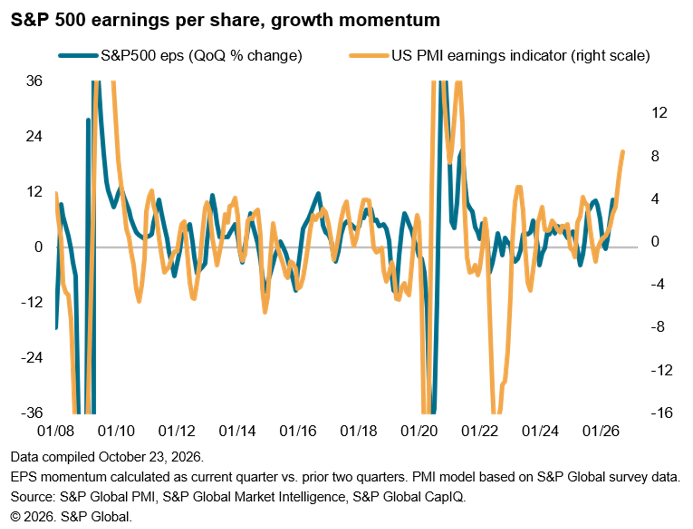
October’s flash PMI data indicate that the US economy continues to boom at the start of the fourth quarter. The output readings from the survey are consistent with GDP growing at a 5% annualized rate. Especially healthy corporate earnings and profits are also indicated, and hiring has surged as companies seek to boost capacity to fulfil stronger customer demand.
However, cost pressures remain a key concern, notably as the renewed surge in oil prices reverberates through to impact a wide variety of goods and services. Supply chain bottlenecks have meanwhile intensified, and order book backlogs are growing, making it easier for companies to pass higher costs on to customers. The result is the sharpest increase in selling prices for over four years to a pace that indicates consumer price inflation is likely to rise further above the Fed’s target in the coming months.
Growth holds close to five-year high
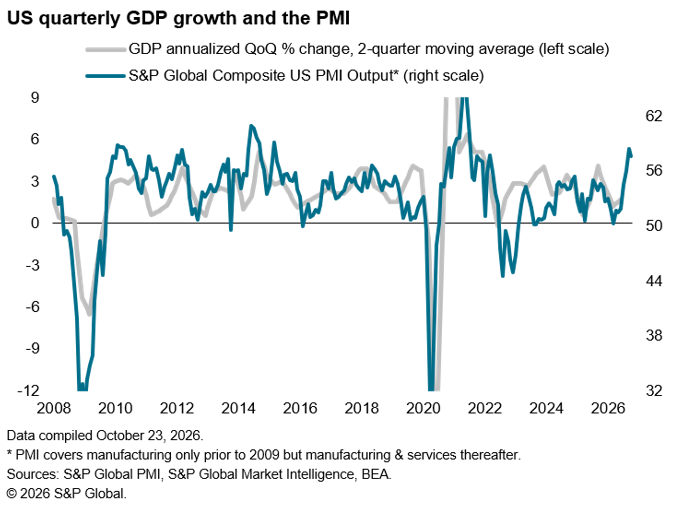
The headline flash S&P Global US PMI Composite Output Index slipped from 58.4 in September to 57.6 in October but remained firmly in strong growth territory. Despite the fall, the index still signaled the second-sharpest increase in activity since March 2022.
The survey data point to annualized growth of 5.0%, with a 4.0% pace having been indicated for the third quarter as whole September.
If the reopening of the economy after COVID is excluded, recent months have seen the best growth spell for US businesses since early 2015.
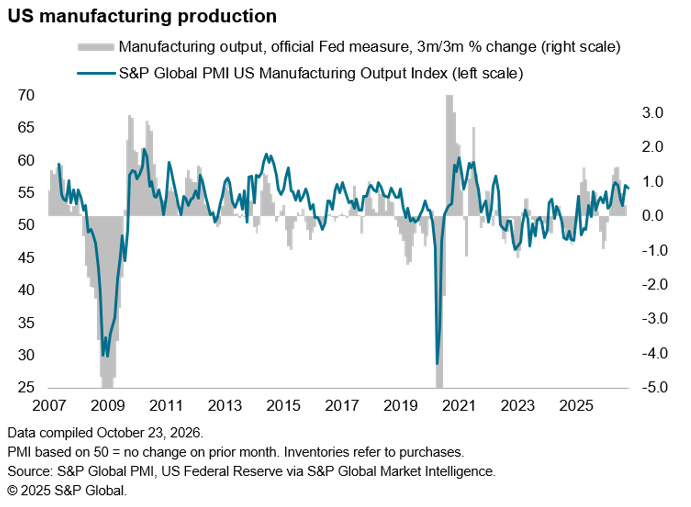
Growth dipped in both manufacturing and services, but in both cases the rates of expansion were among the highest seen over the past five years.
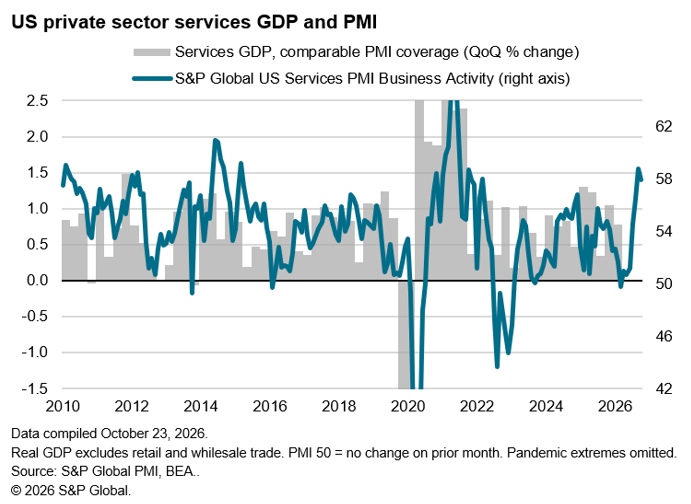
New orders growth meanwhile ticked higher from September’s elevated reading to register a fresh five-and-a-half-year high. However, a weakened rate of increase in manufacturing contrasted with an improved rate of growth of new business in the services economy, where the rise in sales was the strongest since March 2022.
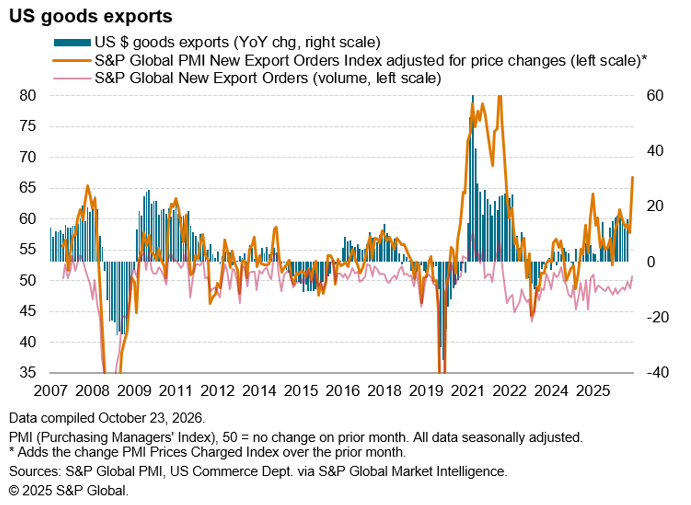
While the upturn in orders was again principally a reflection of rising domestic demand, boosted partly by precautionary stock building, October saw export sales gain traction, registering the strongest gain since May 2022. Export orders for goods rose in volume terms for the first time since June of last year, accompanied by the largest rise in services exports since July 2023.
When adjusted to include price changes (as captured by the PMI Prices Charged Index), export sales in value terms rose especially sharply in October, posting the largest gain since the COVID-19 rebound.
Jobs created at fastest rate for over four years
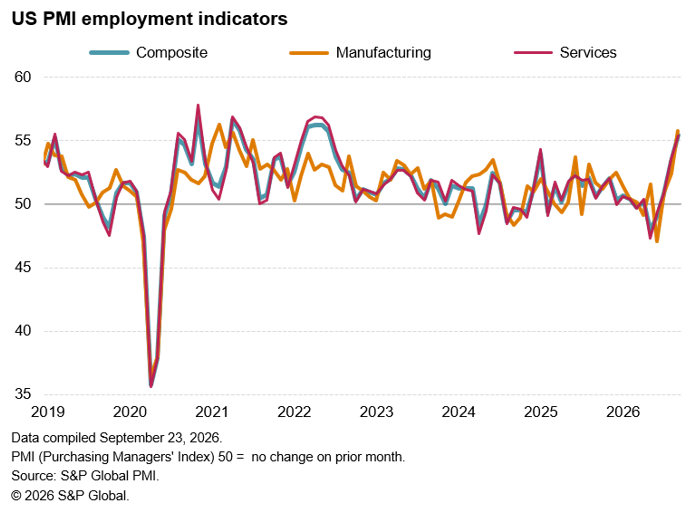
Employment also rose sharply in September, with jobs added at a pace not seen for over four years (since June 2022) and at a rate rarely exceeded since comparable data were first available in 2009, as firms across both manufacturing and services sought to meet rising demand in growing numbers.
Capacity constraints
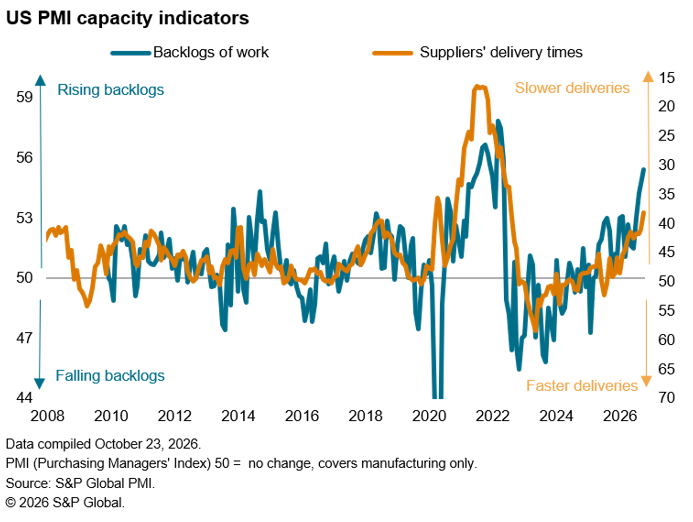
Companies’ backlogs of uncompleted orders, a key indicator of capacity utilization and future business growth, rose sharply again, the latest increase being the largest since May 2022. Backlogs accumulated at stronger rates in both manufacturing and services.
The indication of strained operating capacity from the Backlogs of Work Index was matched by a further marked lengthening of suppliers’ delivery times, which is also a widely-used gauge of capacity constraints.
Supplier delivery times lengthened to the greatest extent since 2022 amid material shortages, low stock levels, overloaded suppliers, labour shortages, rising back orders and shipping or import delays. Service providers also widely noted higher wage rates and increased utility and insurance costs.
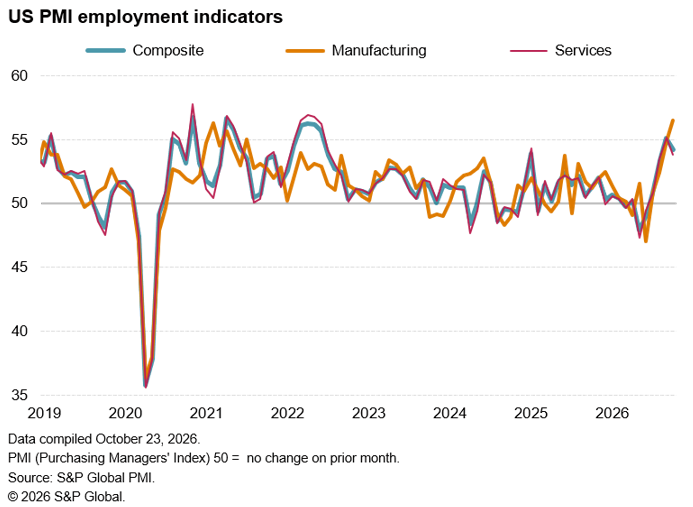
The rise in backlogs of work again encouraged firms to take on more staff. Employment rose in October at the fastest rate since June 2022, second only to the jump in payrolls reported a month prior. Both service sector and manufacturing payrolls increased, the latter notably at the fastest rate since March 2012, while the service sector jobs gain was below that seen in September but still the third largest for over four years.
Prices rise at fastest rate since 2022
Selling price inflation picked up further momentum in October. The overall rise in prices across goods and services was the largest since August 2022. The upturn in price pressures was also broad-based: while services inflation edged up to the steepest since August 2022, manufacturers’ selling prices rose at a pace not seen since July 2022, with the rate of inflation accelerating markedly.
At its current level, the PMI selling price gauge is indicative of consumer price inflation accelerating further in the coming months, therefore continuing to run well above the Fed’s 2% target.
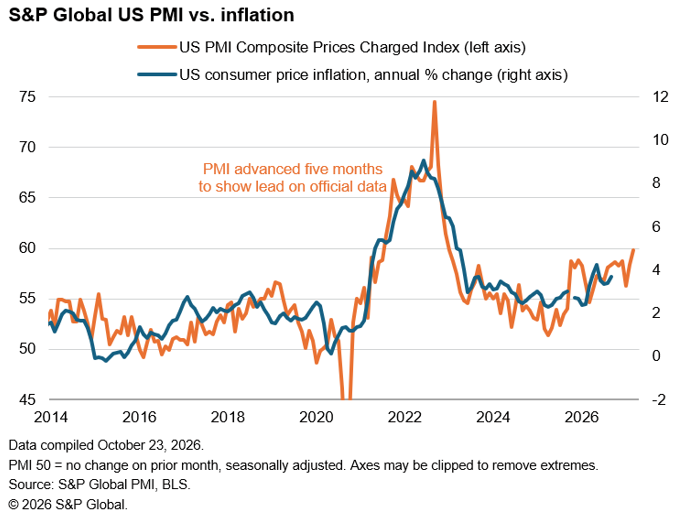
Higher prices reflected a further sharp increase in companies’ costs. Average input costs measured across both goods and services rose at the fastest pace since November 2022, excluding only the rise seen in September. The surge in cost pressures was most prominent in the manufacturing sector, though service sector costs also rose sharply again.
Respondents commonly cited oil-based inputs, energy, fuel and freight rates as having pushed costs higher, but various other raw materials including steel, aluminum and copper were also up in price, often due to tariffs or shortages.
Strong profits and earnings
The combination of strong demand growth, often exceeding supply, forms a strong basis for profits growth, and a PMI-based indicator which wraps together various survey data series such as sales and selling prices, together with derived data series including margins and productivity from the PMI’s sub-indices, points to some of the strongest earnings growth recorded by the surveys. The current earnings growth signal has only been exceeded by that seen in the economic rebounds from the global financial crisis and the COVID-19 pandemic.
Economy runs hot
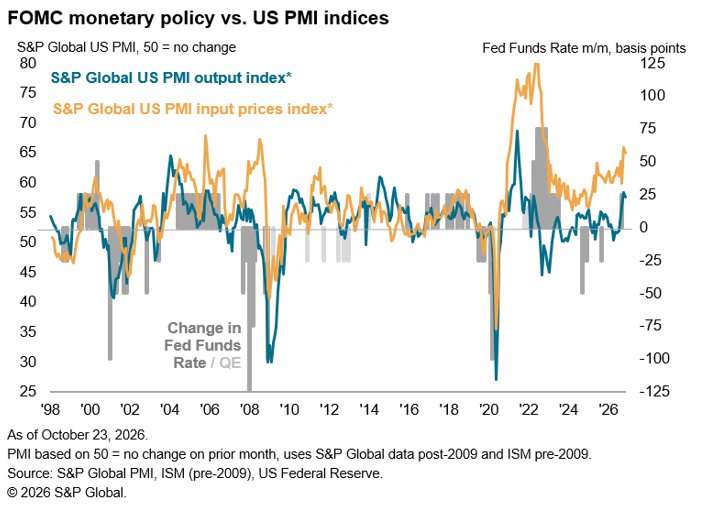
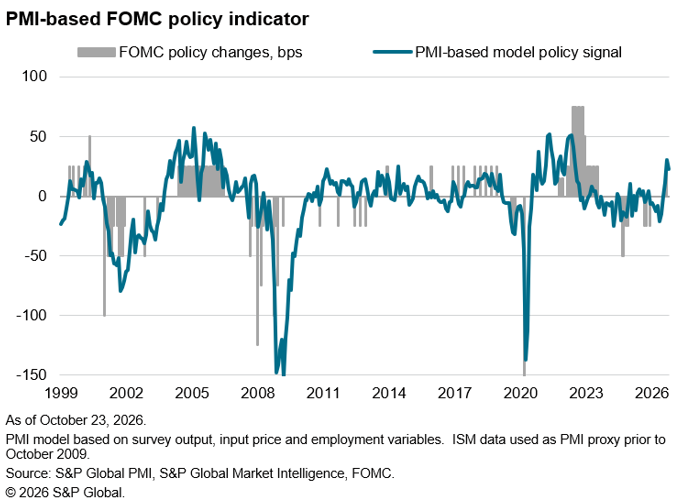
The survey data also hint at further rate hikes to come. A composite indicator based on the three PMI variables covering output, employment and costs has remained elevated into October, according to the flash data. Having hit its highest since June 2022 in September, the policy indicator has dipped only modestly in October, sitting very much in rate hike territory.
Access the latest PMI press release here.
© 2026, S&P Global. All rights reserved. Reproduction in whole or in part without permission is prohibited.
Purchasing Managers' Index™ (PMI®) data are compiled by S&P Global for more than 40 economies worldwide. The monthly data are derived from surveys of senior executives at private sector companies, and are available only via subscription. The PMI dataset features a headline number, which indicates the overall health of an economy, and sub-indices, which provide insights into other key economic drivers such as GDP, inflation, exports, capacity utilization, employment and inventories. The PMI data are used by financial and corporate professionals to better understand where economies and markets are headed, and to uncover opportunities.
Read our latest PMI commentary here.
This article was published by S&P Global Market Intelligence and not by S&P Global Ratings, which is a separately managed division of S&P Global.
Theme
Location
Products & Offerings