ECONOMICS COMMENTARY — 10 Sep, 2026
Hiring upturn ends longest recruitment downturn for over 30 years

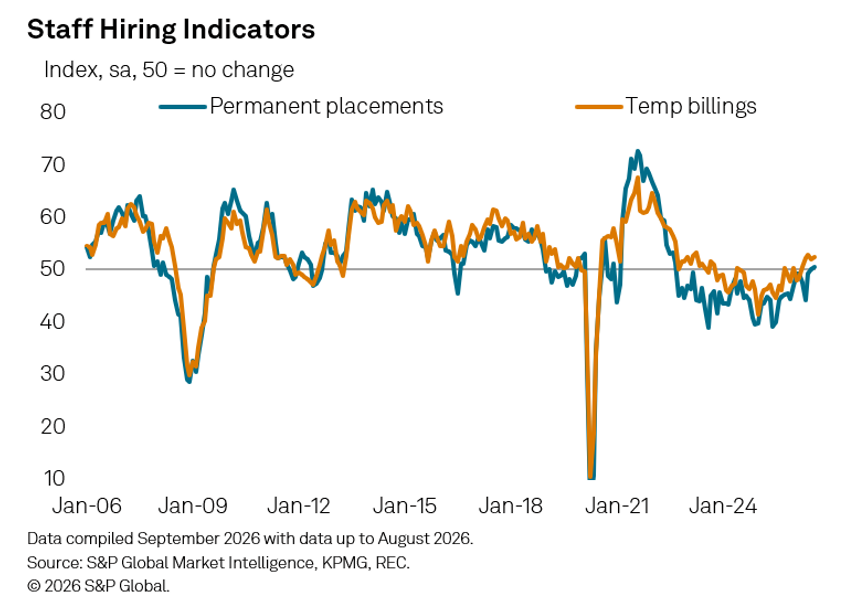
The latest survey of UK recruitment consultancies signalled the first broad-based improvement in hiring activity for nearly four years during August. The upturn ends the longest downturn in permanent hiring in almost 30 years of data collection.
There was also some improvement on the pay front, as starting salaries and wages both rose solidly amid competition for highly skilled workers and efforts to keep pace with the rising cost of living. However, pay growth remained softer than historical averages, as recruiters signalled another sharp rise in candidate numbers, ongoing pressure on hiring budgets and a sustained fall in vacancies.
Permanent staff hiring up for first time since September 2022
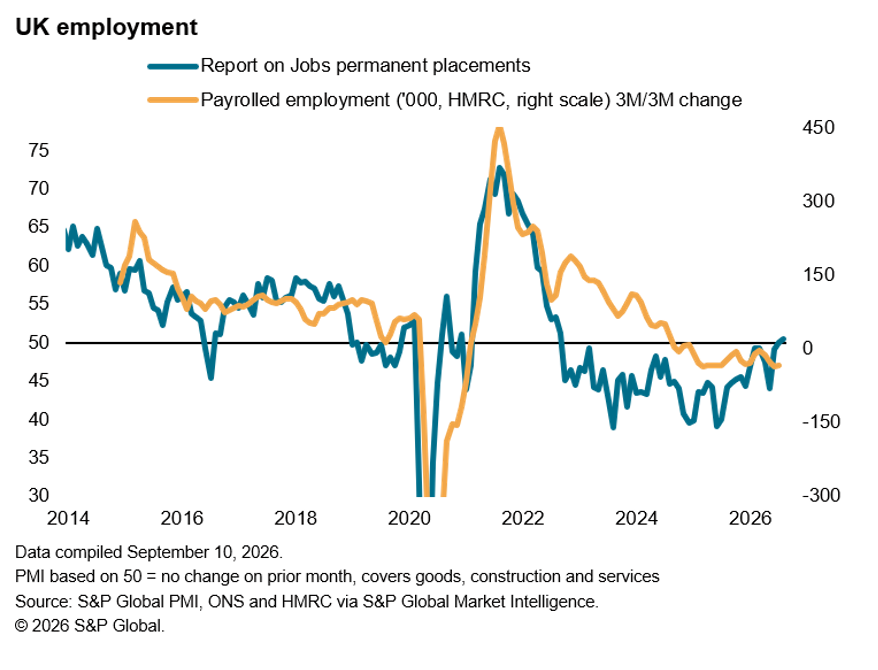
The latest KPMG and REC UK Report on Jobs survey, compiled by S&P Global, showed that the number of people placed into permanent jobs rose slightly in August. At 50.5, the respective seasonally adjusted index was up from the neutral value of 50.0 in July. The rise in placements, although only modest, notably ends the longest period of falling placements in the survey’s near 30-year history, which persisted between October 2022 and June 2026. Recruiters commented that a relative improvement in business confidence – in part due to a new government, but also signs of firmer overall market conditions – encouraged more employers to step up hiring and build capacity to meet customer demand.
This slightly brighter business environment was highlighted in the latest Purchasing Managers Index (PMI™) survey data for the UK, also compiled by S&P Global, that monitors conditions across the manufacturing, services and construction sectors. While overall expectations regarding output over the next 12 months across the UK private sector remain below their long-run trend, optimism was the highest since the outbreak of the war in the Middle East back in February.
Temp billings continue to see strong growth
Positive news was also seen with regard to temp billings, which rose for the fifth straight month in August. The survey indicated that businesses often preferred the employment of temp staff, reflecting reluctance to commit to long-term hires across some sectors amid elevated inflation, global geopolitical uncertainty and concerns over domestic policy ahead of the new Burnham government’s first Budget statement in October.
Pay growth remains below historical average
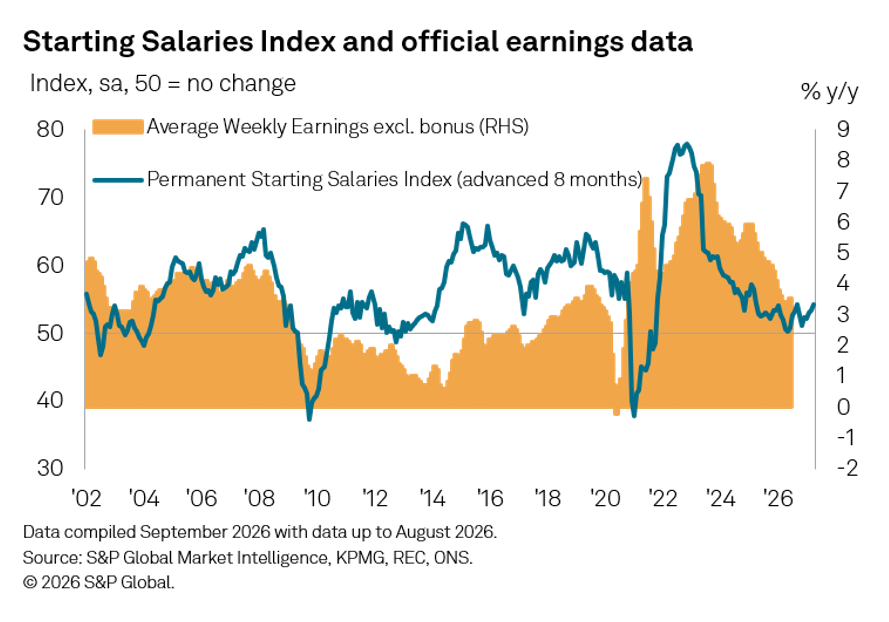
The recruitment industry survey also signalled a further increase in starting pay during August, though overall wage pressures remained softer than historical norms. The latest official earnings data published by the Office for National Statistics (ONS) showed that pay rose 4.1% over the second quarter, down from 4.4% in the first quarter and among the slowest rates of expansion recorded since the end of 2020.
This broader pay moderation had been signalled in advance by the UK Report on Jobs data. However, the Permanent Starting Salaries Index moved higher in August, with salaries rising at the quickest rate since January, while temp wage growth remained among the strongest seen in more than two years, pointing to some renewed upward wage pressures.
Recruiters linked the latest uplift in pay to higher living costs and competition for particular skillsets. Nevertheless, squeezed hiring budgets, lower overall demand for staff and improved candidate availability continued to limit the extent of pay inflation.
As a result, while the official measures of pay growth may soften further in the near term, the August survey results suggest that momentum could begin to improve again around the turn of the year.
Redundancies remain key driver of ongoing rise in labour supply
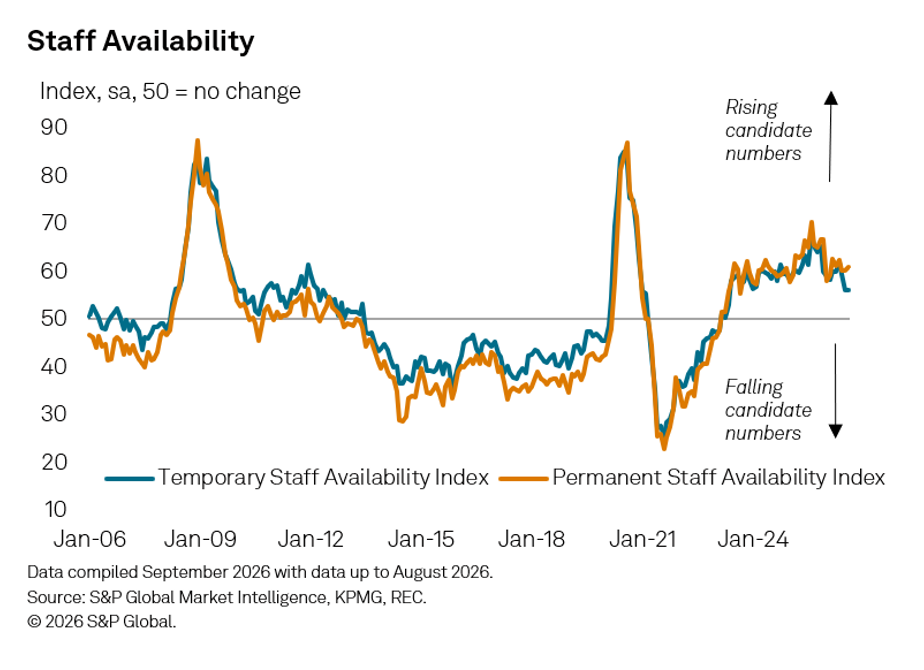
UK recruiters meanwhile signalled a further substantial increase in candidate availability during August, with the rate of labour supply expansion the sharpest since May. This was also a stark contrast to the survey’s long-run trend of falling candidate numbers.
Where recruiters reported a rise in staff availability, redundancies were again frequently cited as a key factor, often linked to cost-cutting initiatives and restructuring efforts, though to a lesser degree than at any time in the last two years, further adding to a sense of labour market improvement.
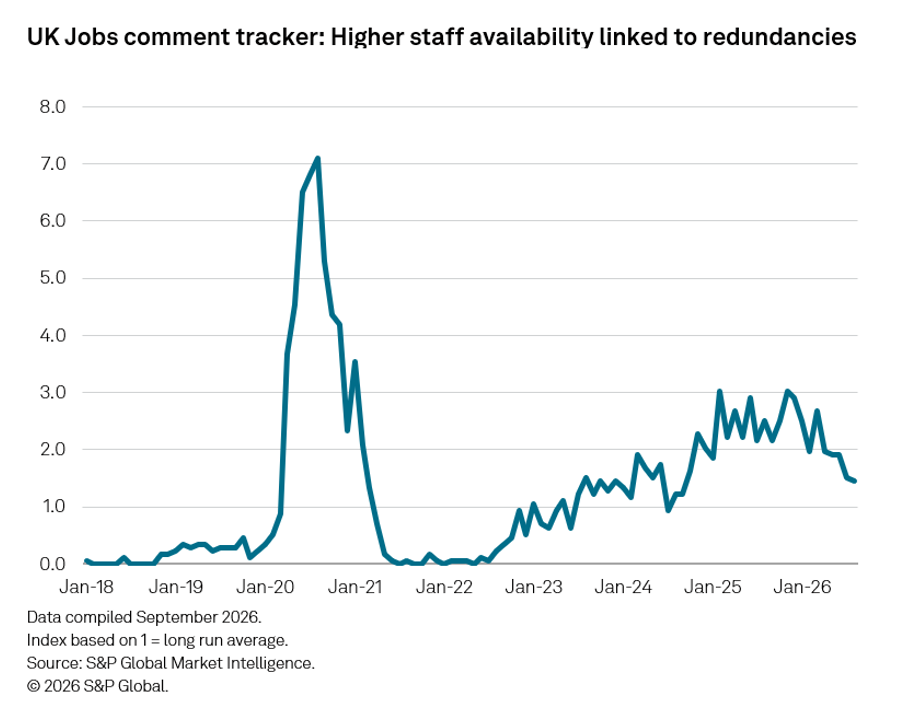
Underlying data showed that the supply of permanent workers rose to a greater degree than that of temporary staff. Notably, permanent labour availability increased at the quickest pace for three months, while growth in the supply of temporary workers picked up only slightly from July’s 38-month low.
The current sequence of rising candidate availability – at three-and-a-half years – is now the longest recorded since the survey began in 1997.
Access the latest PMI press release here.
© 2026, S&P Global. All rights reserved. Reproduction in whole or in part without permission is prohibited.
Purchasing Managers' Index™ (PMI®) data are compiled by S&P Global for more than 40 economies worldwide. The monthly data are derived from surveys of senior executives at private sector companies, and are available only via subscription. The PMI dataset features a headline number, which indicates the overall health of an economy, and sub-indices, which provide insights into other key economic drivers such as GDP, inflation, exports, capacity utilization, employment and inventories. The PMI data are used by financial and corporate professionals to better understand where economies and markets are headed, and to uncover opportunities.
Read our latest PMI commentary here.
This article was published by S&P Global Market Intelligence and not by S&P Global Ratings, which is a separately managed division of S&P Global.
Theme
Location
Products & Offerings