ECONOMICS COMMENTARY — 23 Sep, 2026
Eurozone growth hits highest since April 2023 according to flash PMI

It’s no surprise to see eurozone inflationary pressures on the rise again in September, given the increase in energy prices emanating from the ongoing conflict in the Middle East, so it’s all the more encouraging to see resilience of economic growth being reported in the September flash PMI. Growth hit the highest since April 2023 amid a broad-based expansion of output. However, the combination of higher output with rising price pressures will add to the likelihood of the ECB hiking interest rates again in the near future.
Eurozone growth accelerates in broad-based expansion
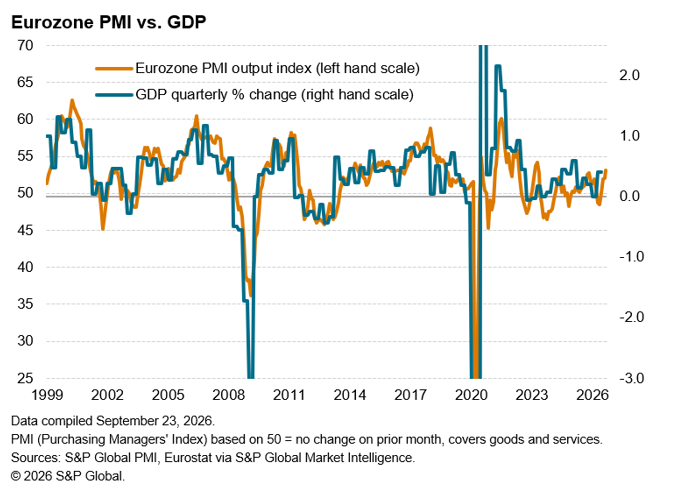
A further acceleration of business activity growth in September points to strengthening economic growth. The seasonally adjusted S&P Global Flash Eurozone Composite PMI Output Index, based on approximately 85% of usual survey responses, rose to 53.1 in September from 52.0 in August. The latest reading signalled a third consecutive monthly expansion in business activity in the eurozone, and the fastest expansion in almost three-and-a-half years.
The acceleration of business growth means the flash PMI survey is indicative of GDP rising at a quarterly rate of 0.4%.
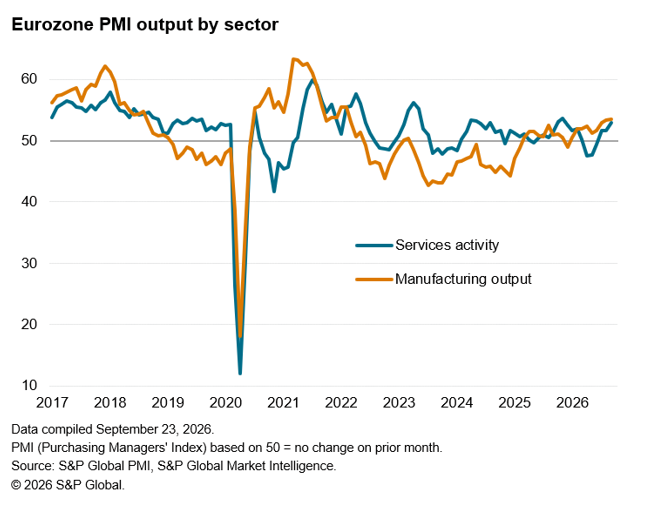
Solid growth was registered across both the manufacturing and services sectors. Manufacturing, spearheaded by Germany, is enjoying its best growth spell for over four years, spurred by rising AI and defence spending, but service sector growth is also perking up to signal a broad-based improvement in the economic growth story.
Moreover, with order book growth picking up further momentum across both manufacturing and services in September, the flash PMI data hint at sustained momentum heading into the fourth quarter.
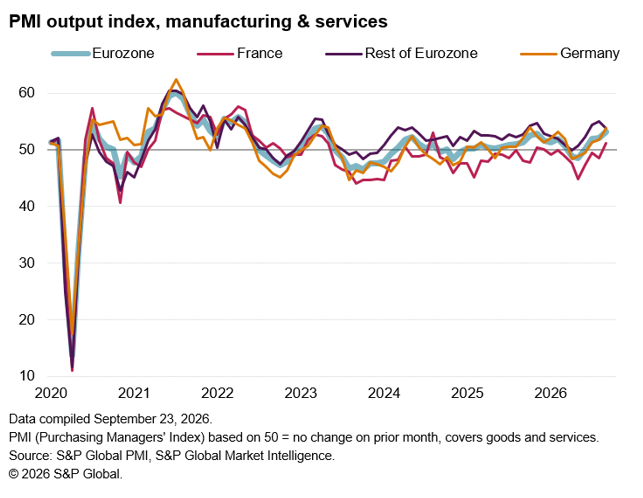
The latest rise in output was also broad based across the region. Germany posted an expansion for the third month running, with the rate of growth the fastest in just under a year, while activity increased in France for the first time in 10 months. The rest of the eurozone as a whole registered a solid but softer rise in output.
Job market improves
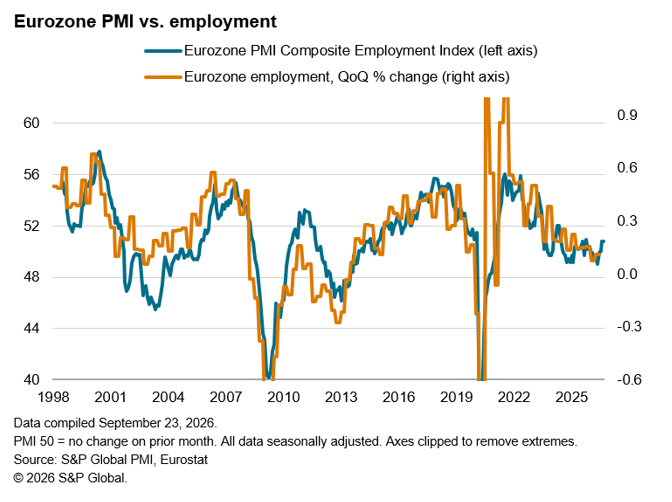
The rate of job creation meanwhile remains subdued, according to the flash PMI, as business confidence continues to be dampened by caution over geopolitics, notably the ongoing impact on energy prices and the cost of living. However, employment edged higher again in September, up for a second month, suggesting more companies are returning to the jobs market.
Eurozone inflation pressures rise again on energy prices
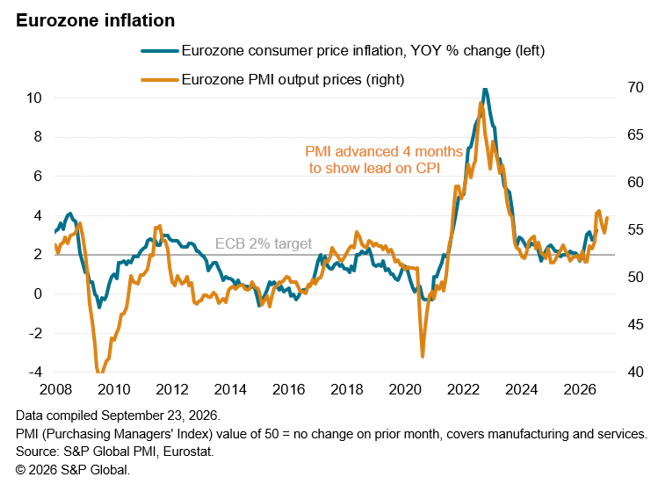
It was no surprise to see inflationary pressures on the rise again in September, given the increase in energy prices emanating from the ongoing conflict in the Middle East. Both input costs and output prices increased at the sharpest rates in four months, the latter running at a level broadly indicative of consumer price inflation at approximately 4%. Official inflation data, which tend to lag the signal from the PMI, show headline inflation at 3.2%, in line with the prior signal from the PMI and its joint-highest since September 2023.
Hawkish signals
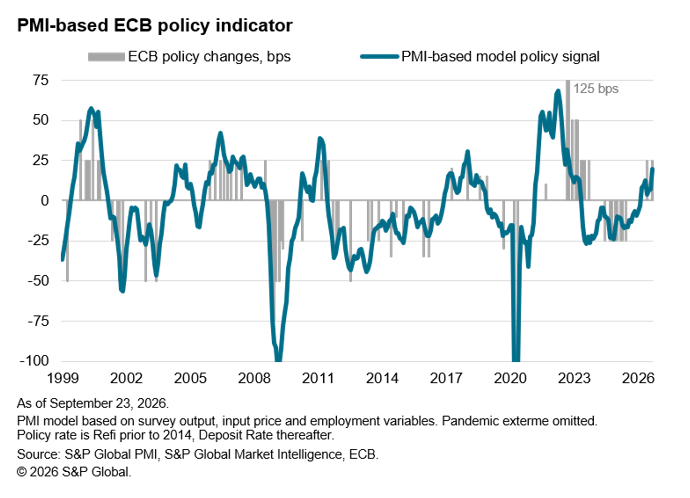
The resilience of economic growth amid the headwinds of geopolitical issues and rising prices will likely embolden the ECB to hike interest rates again before the end of the year, adding to the case for rates to rise sooner rather than later and putting an October hike very much on the table.
A composite policy indicator, based on PMI output, input cost and employment indices, has risen further into rate hike territory in September, sending the most hawkish signal for rates for almost four years.
Much will depend, however, on oil prices. While much of the September flash PMI data collection period saw crude oil prices running above $100 per barrel, recent days have seen the price fall on encouraging developments in the Middle East.
© 2026, S&P Global. All rights reserved. Reproduction in whole or in part without permission is prohibited.
Purchasing Managers' Index™ (PMI®) data are compiled by S&P Global for more than 40 economies worldwide. The monthly data are derived from surveys of senior executives at private sector companies, and are available only via subscription. The PMI dataset features a headline number, which indicates the overall health of an economy, and sub-indices, which provide insights into other key economic drivers such as GDP, inflation, exports, capacity utilization, employment and inventories. The PMI data are used by financial and corporate professionals to better understand where economies and markets are headed, and to uncover opportunities.
Read our latest PMI commentary here.
This article was published by S&P Global Market Intelligence and not by S&P Global Ratings, which is a separately managed division of S&P Global.
Theme
Location
Products & Offerings