


Research — April 30, 2026
Pittsburgh takes center stage for the 2026 NFL Draft

The National Football League Inc. (NFL) Draft, the premier event of the league’s offseason, will be held this year in Pittsburgh. With the Las Vegas Raiders holding the first overall pick, the selection process and emerging storylines are attracting widespread attention from fans and sports media alike. The draft is expected to provide a significant boost to Pittsburgh’s economy and bring in a substantial crowd of attendees. As a major fixture on the NFL calendar, the draft not only sustains fan engagement during the offseason but also drives extensive media coverage, underscoring the league’s ongoing influence and presence in the sports industry throughout the year.

➤ The NFL Draft is a major media spectacle, attracting large audiences and generating substantial local revenue.
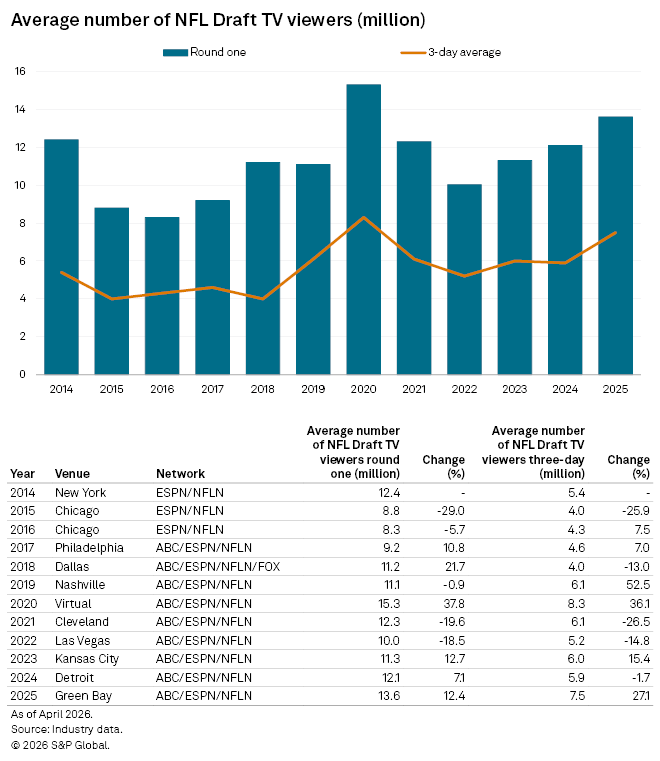
➤ The first round of the NFL Draft has averaged nearly 12 million viewers during the last five years, on par with notable US sports events annually.
➤ Additional media rights negotiations are anticipated after the NFL Draft, as the league advances its broadcast strategy and broadens its digital presence.

From humble origins to a massive three-day festival
The NFL Draft, which began as a modest event in 1936, gained widespread attention after ESPN (US) started broadcasting it in 1980 and moved it to primetime in 2010. ESPN’s in-depth coverage and analysis have turned the draft into a major media spectacle that captivates audiences and sparks fan discussions. Since the draft was held virtually in 2020, the event has averaged approximately 400,000 in-person attendees, with the first round drawing over 10 million TV viewers annually for the last eight years.
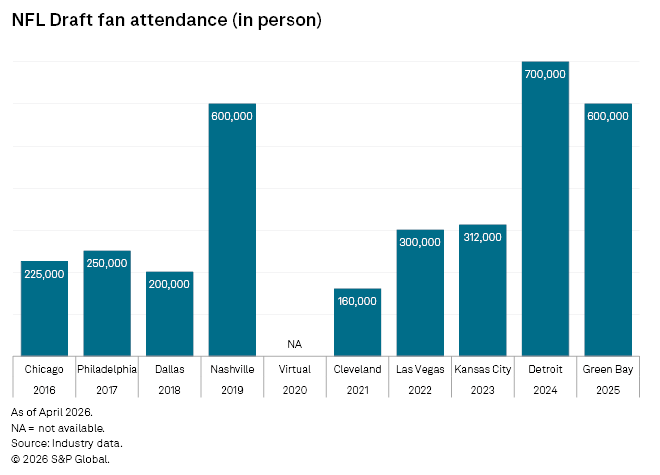
The NFL excels at keeping fans engaged year-round, seamlessly transitioning from the Super Bowl to marquee offseason events like the Scouting Combine, Free Agency, and the NFL Draft. In 2025, Green Bay, despite being the league’s smallest market, welcomed approximately 600,000 attendees over three days, more than doubling initial projections and matching the second-highest draft attendance since the event began rotating cities in 2015. The first round alone reportedly drew 205,000 fans on-site.
Television and digital viewership remained robust, with the first round of the 2025 NFL Draft averaging 13.6 million viewers across ESPN, NFL Network, ABC (US), ESPN Deportes, and online platforms, a 12% increase over 2024 and the second highest first-round audience on record, behind 2020’s 15.3 million. First-round viewership has averaged almost 12 million over the last five drafts, underscoring the NFL’s ability to continually generate substantial media attention and revenue well beyond the regular season.
For perspective, average viewership for other major US sporting events in 2025 included 16.1 million for the MLB World Series featuring the Dodgers and Blue Jays, 10.2 million for the NBA Finals between the Thunder and Pacers, and 2.5 million for the NHL Stanley Cup Final between the Panthers and Oilers. Additional comparisons include the final round of the April 2026 Masters, which attracted 14.0 million viewers, and February’s Daytona 500, watched by 7.5 million.
ESPN-NFL Network draft dynamic
With NFL Network now integrated into ESPN, this year’s NFL Draft offers fans more viewing options than ever, featuring three distinct ESPN-driven broadcasts. On draft night, viewers can choose from multiple broadcasts, each offering its own unique team of hosts, analysts, and presentation style, ranging from traditional coverage to more relaxed or story-driven approaches. Beyond the main broadcasts, alternative options like ESPN’s energetic Pat McAfee show provide a fresh and entertaining perspective. Throughout the event, a variety of analysts, including Adam Schefter and Ian Rapoport, will deliver real-time updates and insights, ensuring fans stay engaged and informed with every selection and trade. In addition, the league will now enforce an eight-minute interval between first-round picks. This new limit shortens the previous 10-minute gap for first-round selections. Prior to 2008, teams were allowed 15 minutes between picks in the first round.
NFL Draft provides local economic surge
Hosting the NFL Draft brings considerable economic benefits to its host cities and states. Discover Green Bay officials reported that the three-day event in 2025 generated almost $73 million locally and over $100 million statewide. Detroit saw an estimated $210 million in economic impact from the 2024 draft, while Kansas City reportedly generated more than $150 million in 2022. The prestige of hosting the draft has sparked intense competition among cities, similar to the bidding process for the Super Bowl. This surge in economic activity is further amplified by the NFL’s ability to monetize fan engagement, offering lucrative opportunities for media partners to leverage the event’s widespread popularity.
After this year’s draft in Pittsburgh, Washington D.C. is scheduled to host the event in 2027, while the Vikings have already submitted a bid to bring the 2028 NFL Draft to Minnesota.
NFL media rights news and notes
The NFL recently completed the third year of its sweeping media rights agreements with CBS (US), NBC (US), FOX (US), ESPN, and Amazon.com Inc., valued at nearly $110 billion over 11 years. Netflix Inc. remains an active player, with an annual deal worth about $150 million to air NFL Christmas games.
A major storyline is the league’s option to opt out of most current network deals. Many industry observers expect the NFL to exercise this provision, as Commissioner Roger Goodell and league executives have already signaled a desire to renegotiate terms and potentially shift more content to streaming platforms. The possibility of higher rights fees has sparked debate among broadcasters, who must weigh the costs against the value of retaining NFL content.
The NFL’s expanding footprint in streaming is evident, with Netflix and YouTube both in advanced talks for new game packages. Netflix is looking to potentially add more holiday and international games, while YouTube, which already carries NFL Sunday Ticket, is negotiating for a five-game package. ESPN’s acquisition of NFL Network has freed up additional inventory, and the league is taking a flexible approach to selling these games, fielding offers from multiple suitors.
Additionally, the NFL is preparing to allow teams to sell local preseason game rights and original content — such as coaches’ shows — to streamers, potentially opening new revenue streams for individual franchises.
As rights fees escalate and streaming platforms become more central, legacy broadcasters face tough choices. Analysts warn that some networks may reconsider their involvement in TV altogether if costs become unsustainable. The NFL’s leverage remains strong, but the shifting economics of media could force new approaches, including reduced bidding for other sports or even exits from traditional television. As the league continues to evolve its broadcast strategy and expand digital offerings, expect more innovation and negotiation in the months ahead.
Economics of Networks is a regular feature from S&P Global Market Intelligence Kagan.
This article was published by S&P Global Market Intelligence and not by S&P Global Ratings, which is a separately managed division of S&P Global.
Content Type
Segment
Language