Research — April 24, 2026
Global chemicals manufacturer supercharges production, profits, sales and capex with S&P Global PMI® and CIS data
The challenges facing the multinational chemicals manufacturer’s corporate strategy and planning team:
The corporate strategy and planning team needed up to date information to best inform their decision-making processes for investment and organisational timelines. Using official data alone proved to be challenging due to availability, revisions and capacity within the team to monitor such indicators.
The team needed a service which could support their aims by:
- Piecing together fragmented time horizons.
- Providing greater clarity in identifying turning points in the market.
- Mitigating against issues arising from limited official data availability or lags in release.
By combining the expertise of PMI and CIS teams, the client was able to benefit from:
- Proprietary high-frequency data, giving insight into the near-term economic conditions and quarterly/annual sectoral forecasts projecting the medium to long term outlook.
- Breadth of information: with PMI ™ data released monthly, covering over 90% of global GDP, and CIS data updated quarterly, covering 105 market sectors in 75 countries.
- The quarterly industrial production index from the CIS dataset shows a close relationship with the PMI data. This was beneficial to the client, who used PMI data about the European chemicals industry to quickly identify the pace of change in the sectoral landscape and adapted to plans in real time.
- PMI ™ data detects more than just real time changes in business activity trends. The range of indicators available provided additional insights into trends in employment, pricing strategy, inventory holdings and backlogs of work.
PMI ™ data and sector forecasts modelled by the CIS team work together to provide key insights into industrial production and output when official data is unavailable. Near -term data is published at the start of each month and provides firms not only with an outlook for the coming quarter but also with greater detail on emerging trends in industry performance.
Being able to identify turning points in vendor performance and new order inflows across regions and sectors can be vital information when considering where to invest and how to safeguard against supply chain shocks. The availability of CIS forecasts means businesses are better able to map out the medium to long term outlook which aids the often-complicated task of bringing together disjointed timelines.
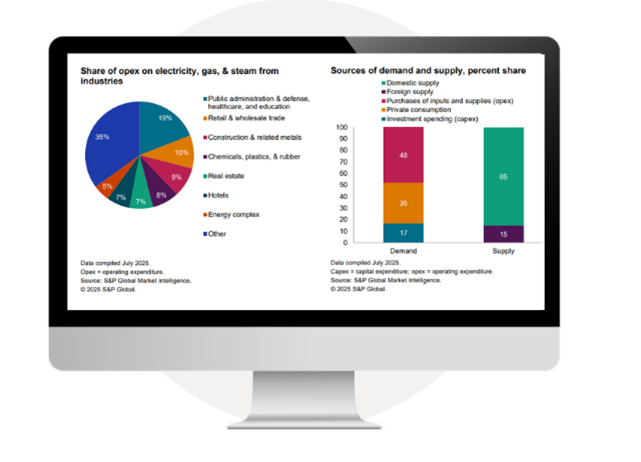
Example of comparative industry service data and analysis of end-markets for chemicals, plastics and rubber.
This article was published by S&P Global Market Intelligence and not by S&P Global Ratings, which is a separately managed division of S&P Global.
Content Type
Theme
Segment
Language