RESEARCH — Jan 21, 2026
Short Interest in US Financial Stocks Rises Following Credit Card Rate Cap Proposal
Market Reaction to Presidential Announcement
Short loan value as a percentage of market capitalization across US financial stocks has increased notably from 0.8% to 0.92% as of January 12, 2026. This 15% increase in short interest follows President Donald Trump's recent announcement proposing a 10% cap on credit card interest rates.

On January 9, 2026, President Trump stated via Truth Social that effective January 20, 2026, marking the one-year anniversary of his second inauguration, he would implement a one-year cap on credit card interest rates at 10%. The President cited concerns about consumers being "ripped off" by rates as high as 30%. A follow-up message on January 11 preceded a significant decline in bank share prices when markets opened the following day.
Short Interest Analysis
The data indicates investors are positioning for potential downside in financial stocks, particularly those with exposure to consumer credit operations. This market reaction reflects concerns about the profitability impact on financial institutions if such a proposal were implemented, despite analysts noting that Congressional approval would likely be required for any mandatory nationwide cap.
Top Shorted Financial Stocks
Top 10 most shorted US Financial Stocks
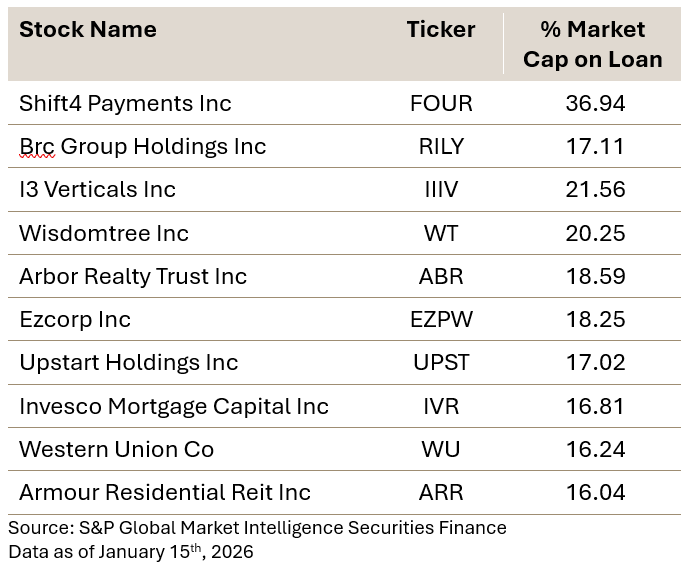
Among the most heavily shorted US financial stocks, several companies show particularly elevated short interest levels:
- Shift4 Payments Inc (FOUR): Leading with 36.94% of market capitalization on loan, this payment processor could face margin pressure if regulatory changes affect transaction economics.
- BRC Group Holdings Inc (RILY): With 17.11% short interest, this diversified financial services firm's lending operations could be impacted by interest rate restrictions.
- Upstart Holdings Inc (UPST): At 17.02% short interest, this AI lending platform is particularly vulnerable to interest rate caps as its business model relies on risk-based pricing that often results in higher interest rates for certain borrowers.
- Western Union Co (WU): With 16.24% of market cap on loan, this payment services provider could face indirect effects from changes in consumer credit markets.
- Arbor Realty Trust Inc (ABR) and Invesco Mortgage Capital Inc (IVR): These mortgage REITs show short interest of 18.59% and 16.81% respectively, reflecting concerns about broader impacts on lending markets.
Potential Market Implications
Financial analysts note that the proposed interest rate cap could have several effects that short sellers appear to be anticipating:
- Reduced profitability for credit card issuers and consumer lenders unable to price for risk appropriately
- Potential contraction in credit availability, particularly for higher-risk borrowers
- Operational adjustments including possible reductions in rewards programs and introduction of new fee structures
The increased short interest in companies like Upstart Holdings is particularly notable as its business model specifically focuses on using alternative data to price credit risk, potentially charging higher rates to borrowers who might not qualify for traditional bank loans.
Sector Outlook
The rise in short interest suggests market participants are hedging against or speculating on further weakness in financial stocks as the regulatory landscape evolves. While the proposed interest rate cap would require legislative action to implement, the market reaction indicates investors are taking the possibility seriously enough to adjust positioning.