13 Jul, 2026
Intesa-Unipol plan to carve up Monte dei Paschi poses execution risks for BPER
By Bea Laforga and Cheska Lozano
A proposal to carve out part of Banca Monte dei Paschi di Siena SpA and combine it with BPER Banca SpA could offer scale and synergies but would not be easy to pull off, analysts said.
The move is aimed at addressing potential competition concerns related to Intesa Sanpaolo SpA's €30.6 billion bid for Monte dei Paschi (MPS). Following that deal, Italian insurer Unipol Assicurazioni SpA would pay up to €3.5 billion for a carved-out MPS entity, which it aims to merge with BPER. The arrangement has been agreed to by Intesa and Unipol, but not yet publicly by BPER.
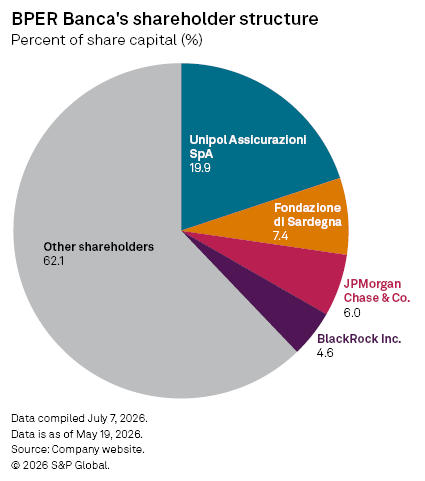
Unipol's overall position in BPER stands at roughly 30%, comprising its existing 19.9% direct stake and an additional 9.99% interest through derivatives. The insurer intends to increase its stake to around 40% after the merger to achieve de facto control over BPER without launching a tender offer.
Rating agencies said this carries operational and execution risks for BPER.
"We believe that control of a bank of this size without majority ownership could create a more complex relationship between management and ownership representation, including minority shareholder rights," Fitch Ratings said in a June 17 commentary.
Moody's in a June 11 note said it will assess potential credit implications for BPER once there is greater clarity on the structure of the agreement, adding that it will look at risks related to infrastructure and IT migrations as these are usually complex, costly and operationally demanding.
Sondrio integration in the spotlight
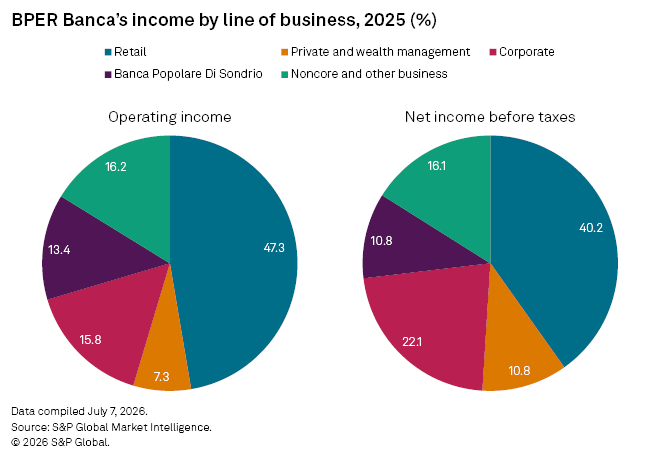
The deal also poses integration risks considering BPER only officially completed its €5.4 billion takeover of Banca Popolare di Sondrio SpA in April, according to Morningstar DBRS.
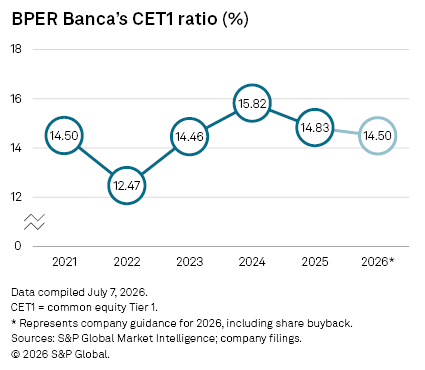
That deal has eaten into BPER's capital ratio, which declined in 2025 and is expected to fall further this year.
Enhanced market position
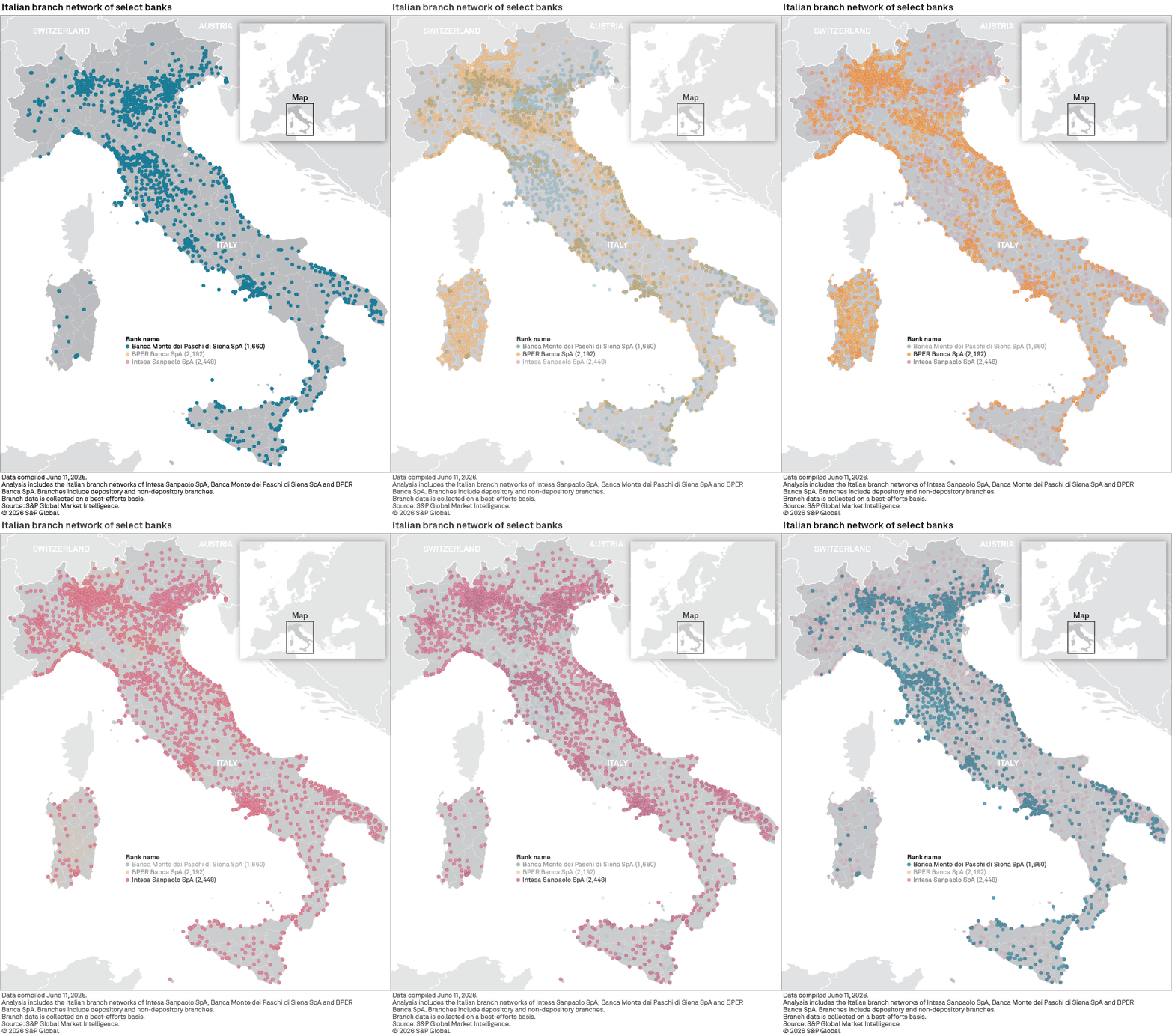
Despite the risks, the deal is "strategically meaningful" for BPER as it would propel it to become Italy's second-biggest bank by direct deposits, customer loans and branch network, Morningstar DBRS wrote in a June 8 note.
The proposed carved-out entity includes the MPS brand, around 635 branches, two million customers, €42 billion in customer loans and €55 billion in direct deposits, mainly linked to retail operations.
Intesa, meanwhile, would keep around 625 MPS branches, the large corporate and investment banking operations, consumer finance activities through Compass, Mediobanca Banca di Credito Finanziario SpA's wealth management and private banking operations, and Mediobanca's 13% stake in Assicurazioni Generali SpA, according to Moody's.
BPER has not issued a statement on the deal, but its CEO reportedly told employees in a video message that it could position the bank as one of the players in the new phase of Italy's banking consolidation.
The Italian government, which has previously used its so-called Golden Powers to intervene in major bank deals, stated that it will stay neutral on Intesa's takeover plans for MPS.
Intesa expects to obtain regulatory approvals by December. Should the offer succeed, a disposal of the carved-out MPS unit to Unipol is scheduled for the second half of 2027.
BPER did not respond to Market Intelligence's request for comment.
Case for a new financial giant
While Unipol said it does not intend to launch a public tender offer for BPER's remaining shares, the insurer's tightening grip on the bank has prompted speculation of what could be if the two were to combine.
A hypothetical merger between the two would reduce the capital required for the enlarged entity by €1.6 billion, compared to the sum of the separate capital requirements for BPER and Unipol currently, Jefferies analysts stated in a July 6 note.
It could also free up €2.8 billion in additional capital under the Danish compromise, a regulatory provision within the Capital Requirements Regulations that allows banks to make acquisitions through their insurance subsidiaries at favorable capital terms. Freed up capital could fund future buybacks and may be accretive to earnings per share, the analysts noted.