21 Jul, 2026
Commerzbank, Handelsbanken among Europe's most shorted banks
By Cathal McElroy and Uneeb Asim
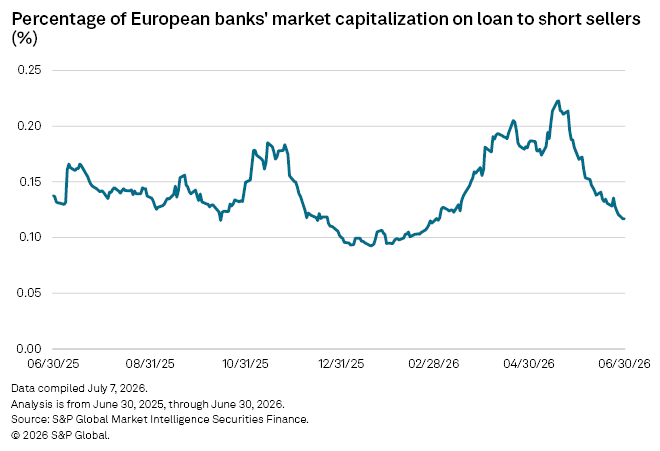
Commerzbank AG and Svenska Handelsbanken AB (publ) topped the ranking of Europe's most-shorted bank stocks at the end of the second quarter.
Outstanding Commerzbank shares on loan to short-sellers increased 888 basis points sequentially during the second quarter to 10.41%, the largest increase of any European bank during the period as of June 30, according to S&P Global Market Intelligence Securities Finance data compiled July 7.
The jump in short-seller interest came amid UniCredit SpA's €35 billion hostile takeover bid for the bank. Increased short-selling activity is common around M&A transactions when there are differences in the prices of the two companies and some degree of certainty that the deal will go through, Matt Chessum, director for securities finance, ETF and benchmarking services at S&P Global Market Intelligence, previously said.
UniCredit said July 8 that it had received acceptances equivalent to 17.6% of Commerzbank's outstanding share capital, giving it a total stake of just under 50%. UniCredit's holding gives it de facto control of Commerzbank due to the rarity of full attendance at shareholder meetings.
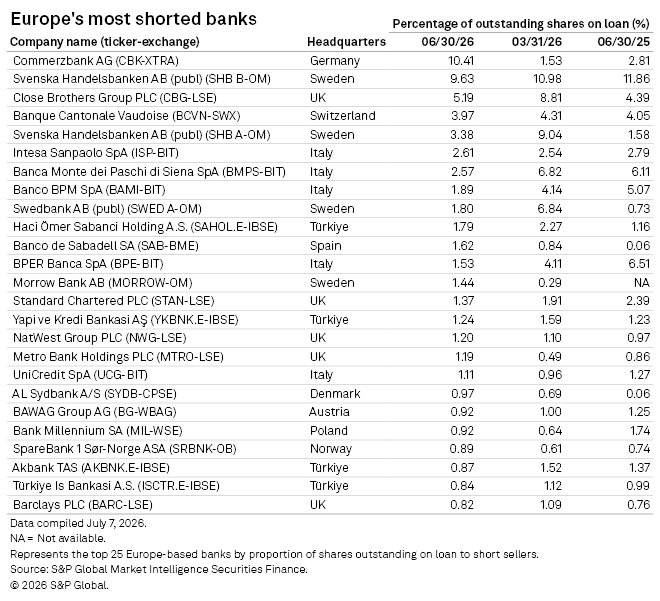
Shares of Swedish lender Svenska Handelsbanken AB (publ), both class A and class B, remained among the most shorted European bank stocks.
Short-sellers' more persistent and aggressive targeting of Handelsbanken over other Swedish banks in the last two years is also due to poor management disclosures and communication with the market, an analyst who covers the bank told S&P Global Market Intelligence. The bank's stock is also expensive versus historical averages and compared to the sector, despite much weaker fundamentals, they added.
"We do not comment on the market pricing of our stock," a spokesperson for Handelsbanken said.