09 Mar, 2026
Utilities trade focus on quarterly results for long-term outlooks

By Allison Good
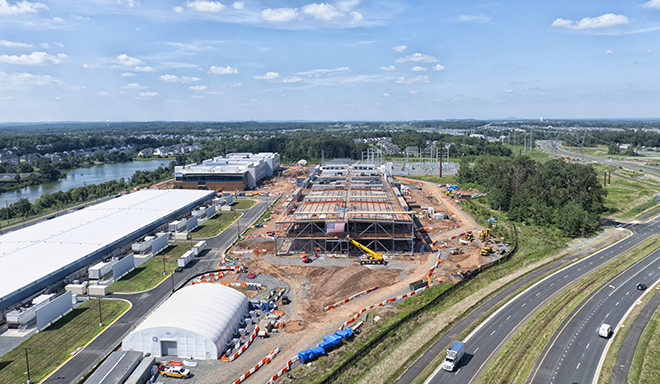
| US electric utilities with exposure to significant load growth from industrial developments such as data centers are forecasting higher earnings growth. Source: Gerville / iStock / Getty Images Plus. |
As data center development fuels an unprecedented wave of large-load customer contracts, US electric utilities are emphasizing long-term spending and growth visibility over quarterly financial benchmarks.
Companies including FirstEnergy Corp., Public Service Enterprise Group Inc., Duke Energy Corp., Southern Co., DTE Energy Co. and American Electric Power Co. Inc. significantly increased their five-year capital plans when reporting fourth-quarter 2025 earnings results. Many also extended or increased their five-year growth projections for earnings per share.
"Historically, earnings outcomes were dictated by near-term regulatory execution, completion of large [capital expenditure] projects, [operations and maintenance] discipline, weather normalization and financing mechanics," analysts at Mizuho wrote March 2. "This quarter, however, management teams consistently anchored investor discussions around longer-dated narratives."
With equity value "increasingly tied to story credibility ... utilities are trading less like their historical norm and more like infrastructure platforms whose multiples expand or compress based on narrative traction rather than marginal execution beats or misses," Mizuho analysts continued.
Smaller and mid-cap utility companies such as Portland General Electric Co., Avista Corp., NorthWestern Energy Group Inc. and Pinnacle West Capital Corp. were "missing from the growth story" because they were experiencing less load growth, analysts at KeyBanc noted March 3.
"All continue to trade at the lower end of the peer group," KeyBanc said.
Analysts at Evercore agreed that exposure to load growth is a key factor in that "bifurcation."
Utilities "facing regulatory lag, capital intensity without offsetting growth, or commodity volatility remain more valuation-sensitive," Evercore said March 5.
"Utilities are now growing EPS closer to 8% at the midpoint," according to a March 2 Barclays report. Portland General Electric reaffirmed long-term earnings growth of 5% to 7% in a Feb. 17 release while also announcing an agreement to acquire PacifiCorp.'s utility operations in Washington state for $1.9 billion.
Avista and NorthWestern both project 4% to 6% long-term EPS, though NorthWestern expects that range to increase to 5% to 7% after its planned merger with Black Hills Corp. closes later in 2026.
For utilities with exposure to significant load growth, "the biggest take investors need to know out of earnings season is that EPS growth is continuing to move higher, even in the face of affordability rhetoric and data center moratoriums."
Affordability remained a major topic of discussion during the utility earnings season.
Entergy Corp. executives said Feb. 12 that the company's center agreements could generate about $5 billion in rate offsets over the life of the contracts, equivalent to more than $5 per residential customer per month on average.
In an interview with Platts, part of S&P Global Energy, Duke Executive Vice President and CFO Brian Savoy said the company will use nuclear, renewable and battery tax credits to offset costs, along with more than $1 billion in savings through 2038 from merging Duke Energy Carolinas LLC and Duke Energy Progress LLC.
Local opposition to data centers has fueled calls for development moratoriums in places such as New York state and generated pushback against power plant developers.
Independent power producer Talen Energy Corp. had been widely expected to contract at least a portion of the 1,504-megawatt Montour gas plant in Pennsylvania with a large-load customer. However, concerns about affordability and environmental impacts led all three Montour County commissioners to vote against Talen's rezoning proposal in February.
Following fourth-quarter 2025 updates, Barclays pointed to NiSource Inc. and PPL Corp., both of which plan to add generation outside their regulated rate base.
PPL formed a joint venture with private equity giant Blackstone Inc. in 2025 to build gas-fired combined-cycle generation plants to power data centers under long-term energy services agreements, which Barclays called a long-term catalyst "currently priced out of the stock."
Following a 2025 settlement approved by the Indiana Utility Regulatory Commission, NiSource's NIPSCO Generation LLC (GenCo) is allowed to contract exclusively with affiliate and NiSource subsidiary Northern Indiana Public Service Co. LLC (NIPSCO) to meet the electricity needs of new "megaload customers" in northern Indiana.
Under a 2025 agreement with Amazon Data Services Inc., GenCo plans to build two 1,300-MW combined-cycle gas plants and 400 MW of battery storage. Barclays expects "additional customer commitments" in 2026.