Featured Topics
Featured Products
Events
S&P Global Offerings
Featured Topics
Featured Products
Events
S&P Global Offerings
Featured Topics
Featured Products
Events
S&P Global Offerings
Featured Topics
Featured Products
Events
Financial and Market intelligence
Fundamental & Alternative Datasets
Government & Defense
Professional Services
Banking & Capital Markets
Economy & Finance
Energy Transition & Sustainability
Technology & Innovation
Podcasts & Newsletters
Financial and Market intelligence
Fundamental & Alternative Datasets
Government & Defense
Professional Services
Banking & Capital Markets
Economy & Finance
Energy Transition & Sustainability
Technology & Innovation
Podcasts & Newsletters
10 Mar, 2026
By STEFAN MODRICH

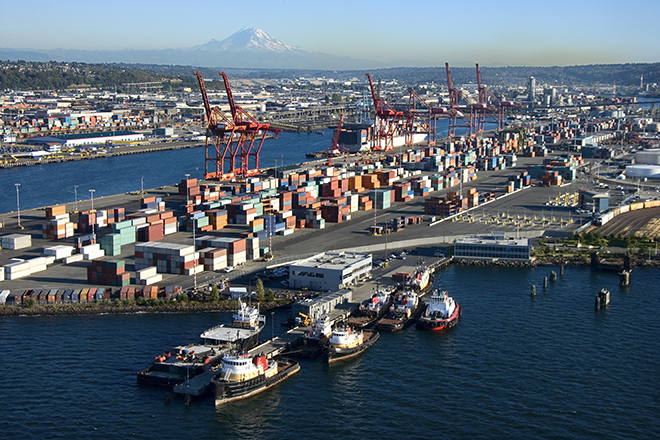
| The tech sector is awaiting more information about tariff refunds as the Trump administration moves forward with a new tariff system. Source: Jupiterimages/Stockbyte via Getty Images |
Three weeks after the US Supreme Court invalidated the Trump administration's broad import tariffs, the tech sector is navigating a new tariff system alongside a federal court order requiring the government to begin refunding hundreds of billions of dollars in collected duties.
Judge Richard Eaton of the Court of International Trade directed US Customs and Border Protection to issue refunds to all importers who paid tariffs imposed under the International Emergency Economic Powers Act (IEEPA), rejecting the government's attempt to limit relief only to companies that filed lawsuits. Estimates of total IEEPA duties collected range from $130 billion to $200 billion, with the most commonly cited figures between $170 billion and $175 billion.
The Trump administration has already pivoted to a new tariff system under Section 122 of the Trade Act of 1974. Two trade attorneys told S&P Global Market Intelligence that, unlike IEEPA, Section 122 explicitly authorizes tariffs, putting the administration on stronger legal ground for future challenges. However, regarding refunds, although the Trump administration is expected to appeal Eaton's order, the attorneys expect it to stand because the US Court of International Trade (CIT) has exclusive statutory jurisdiction over trade disputes.
"The CIT is not a typical District Court," said Daniel Pickard, a trade attorney at Buchanan Ingersoll & Rooney. "It is a true Article III court with nationwide jurisdiction over US international trade laws."
Contested foundation
Within hours of the Supreme Court's decision to invalidate the tariffs imposed under IEEPA, US President Donald Trump signed a proclamation implementing a 10% global tariff under Section 122. The law authorizes a president to impose temporary tariffs of up to 15% for 150 days. The 150-day clock runs to July 24.
"A challenge to the president's authority under Section 122 will be much more difficult," Pickard said. "The White House is on much more solid ground."
Litigation in the CIT over Section 122 is likely, regardless, Pickard added. A coalition of nearly a dozen states has already filed a lawsuit with the CIT, seeking to block the 10% global tariffs.
The administration's more immediate vulnerability may be economic. Section 122 authorizes tariffs to address a "large and serious" balance-of-payments deficit, a threshold the government's own lawyers said in the IEEPA litigation the statute was not designed to meet, telling judges it did not cover "a run-of-the-mill trade imbalance."
Andrew Caridas, a trade attorney at Perkins Coie, noted a secondary vulnerability: the flat global rate may be legally questionable because the US runs trade surpluses with some countries that are not contributing to the statute the deficit targets.
The UK, home to Arm Holdings PLC, a foundational chip designer for smartphones, runs a trade surplus with the US and would be subject to the flat 15% rate regardless.
Pending deadlines
The refund question runs parallel to three converging policy deadlines that will shape the tariff landscape through the summer and beyond.
The first arrives April 14, when the US Department of Commerce and the Office of the United States Trade Representative (USTR) must report on semiconductor trade negotiations. The January proclamation imposed a narrow 25% tariff on certain advanced chips, but reserved the right to raise it significantly. Early supply chain data suggests the industry is already responding.
Taiwan semiconductor shipments to the US ran at a daily rate about 10% above the fourth-quarter 2025 pace between Jan. 1 and March 2, with 5,037 shipments valued at $1.25 billion, according to Panjiva data. Vietnam shipments softened modestly over the same period, with 3,871 shipments valued at $1.1 billion, while South Korea declined about 12% on a daily rate basis from the fourth quarter. Mainland China shipments remained at low per-shipment values, averaging about $85,000, consistent with a longer-term shift of higher-value assembly out of the market.
"The semiconductor Section 232 came out limited in scope but could be significantly broadened if needed," said Jon Lang, former White House director for international economic affairs during the first Trump administration.
Six days after the semiconductor report, on April 20, the comment period closes on a proposed rule that would bar federal agencies from purchasing products containing certain Chinese-made semiconductors. Defense contractors face dual exposure from the procurement ban and any Section 232 expansion. The Consumer Technology Association is pressing to preserve the semiconductor and United States-Mexico-Canada Agreement exemptions that survived the IEEPA transition. US Trade Representative Jamieson Greer has announced Section 301 investigations against most major trading partners on an accelerated timeline, targeting digital services taxes and discrimination against US tech companies.
July 24, when the Section 122 tariffs must either end or be codified by Congress, is the most structurally significant deadline, coinciding with the back-to-school procurement season. Companies are committing to third-quarter sourcing now without knowing whether Section 122 will lapse, be extended, or be reset. The Taiwan front-loading pattern suggests companies are moving product while the rate environment remains clear.
"You may not know the rate you might pay that far out with US trade policy in flux, making the rate you eventually pay somewhat unknown," Lang said.
What's happening this week?
Below is a list of hearings, webinars and other technology, media and telecom-related events taking place virtually and in person in the nation's capital and beyond this week:
March 10
➤ Center for a New American Security: The Pentagon and Silicon Valley — The Future of AI in National Defense
➤ Center for Security and Emerging Technology: Future-Ready — Building Tomorrow's Tech Workforce
➤ The Hamilton Project at the Brookings Institution: AI + work — Understanding AI's impact on the labor market
March 11
➤ Information Technology and Innovation Foundation: The State of State Privacy
March 12
➤ S&P Global Market Intelligence: Track AI and Thematic Funding Flows in Private Markets
March 12–13
➤ American Bar Association Science & Technology Law Section: Privacy and Emerging Technology National Institute
March 13
➤ American Institute of Architects, Los Angeles: 2026 Technology Conference: AI: Architectural Intelligence